In a nutshell
- 🥚 Egg yolk delivers proteins and lipids that create a protective film on the cuticle, reducing friction, hygral fatigue, and breakage for softer, stronger-feeling hair.
- 🧪 Mechanism: large proteins adhere to damaged sites while lecithin and cholesterol rebuild the hydrophobic barrier; it boosts strength-on-combing but does not repair disulfide bonds.
- 🛠️ Method: whisk 1–2 yolks with olive oil and honey; apply to damp mid-lengths for 15–20 minutes, then do a cool rinse; adjust frequency by hair type and watch for protein overload stiffness.
- ⚠️ Safety and sourcing: if you have an egg allergy, skip; do a patch test, use fresh eggs, and handle hygienically; evidence supports film-forming and lubricating effects, with hydrolysed keratin or vegan lecithin as alternatives.
- ✨ Results: smoother cuticles, easier detangling, elevated shine and manageability; a low-cost complement to heat protectants and trims, offering temporary improvements you can notice quickly.
Beauty folklore rarely survives evidence. Yet one kitchen classic keeps resurfacing in salons and studies alike: the humble egg yolk mask. Rich in proteins and lipids, the yolk acts like a repair kit for overworked hair, helping seal a frayed cuticle and ease breakage without costly bottles. Stylists praise the slip and shine; trichologists point to chemistry. When hair fibres lose their natural oils and structural integrity through heat, dye, or weather, targeted nourishment matters. Used correctly, egg yolk can temporarily reinforce the hair’s surface while improving manageability and softness. Here’s the science, the method, and the safety you need to make it work.
Why Egg Yolk Strengthens Damaged Hair
Damaged hair is porous hair. The cuticle’s shingles lift, water rushes in and out, and the cortex loses strength. Egg yolk brings a compact bundle of film-forming proteins and replenishing lipids that address those weak spots. Its proteins cling to rough patches, creating a micro-thin coating that improves combability and reduces snagging. Its fats—especially lecithin and cholesterol—mimic elements of the hair’s protective fatty layer, restoring slip and reducing moisture swings. The result is less hygral fatigue, fewer split ends appearing, and a glossier finish. The treatment won’t reverse structural fractures, but it can meaningfully reduce the feel and visibility of damage between trims.
Yolk composition reads like a targeted conditioner. Where egg white offers mostly albumen proteins, the yolk adds phospholipids, triglycerides, and specialised proteins such as phosvitin and vitellogenins. These bind to the hair surface, fill micro-irregularities, and improve lubrication. Cholesterol is especially valuable: hair’s own surface lipids include cholesterol derivatives, so yolk’s profile helps rebuild that hydrophobic barrier. Think of it as a smart topcoat for frazzled fibres—simple, inexpensive, surprisingly effective for short-term strengthening.
| Yolk Component | Type | Hair Action | Expected Effect |
|---|---|---|---|
| Phosvitin | Protein | Binds to damaged sites; film forms on cuticle | Smoother feel, less friction |
| Lecithin (phospholipid) | Replenishes surface lipids; improves slip | Shine, easier detangling | |
| Cholesterol | Lipid | Supports hydrophobic barrier | Reduced moisture swelling |
| Triglycerides | Lipid | Emollient coating | Softer, less brittle hair |
How Proteins and Lipids Repair at the Cuticle and Cortex
Hair is keratin, layered: a tough cortex inside, a scaly cuticle outside. Damage lifts those scales and exposes cortex bonds, so the aim is to flatten, fill, and fortify. Yolk proteins are large; they don’t penetrate deeply like hydrolysed keratin, but they do anchor electrostatically to rougher zones, forming a cohesive film. That film reduces friction between fibres and helps cuticle plates lie flatter. Meanwhile, yolk lipids rebuild the hair’s water-repelling surface, which limits swelling and shrinking cycles that fatigue the fibre. Less swelling means less mechanical stress every wash day.
pH and temperature matter. Cool-to-lukewarm application keeps proteins supple and prevents cooking the yolk on your head. A tiny splash of acidic rinse after the mask—think diluted apple cider vinegar—can encourage cuticle tightening, locking the coating in place. Expect a temporary boost in tensile behaviour: fewer snapped hairs while brushing, improved curl clump in textured hair, and reduced flyaways in straight styles. It’s not magic; it’s materials science. By restoring lubrication and creating a protective sheath, you’re buying time and strength until your next cut. Used intermittently, it complements heat protection and bond-building products without competing with them.
A Simple At-Home Egg Yolk Mask: Steps and Variations
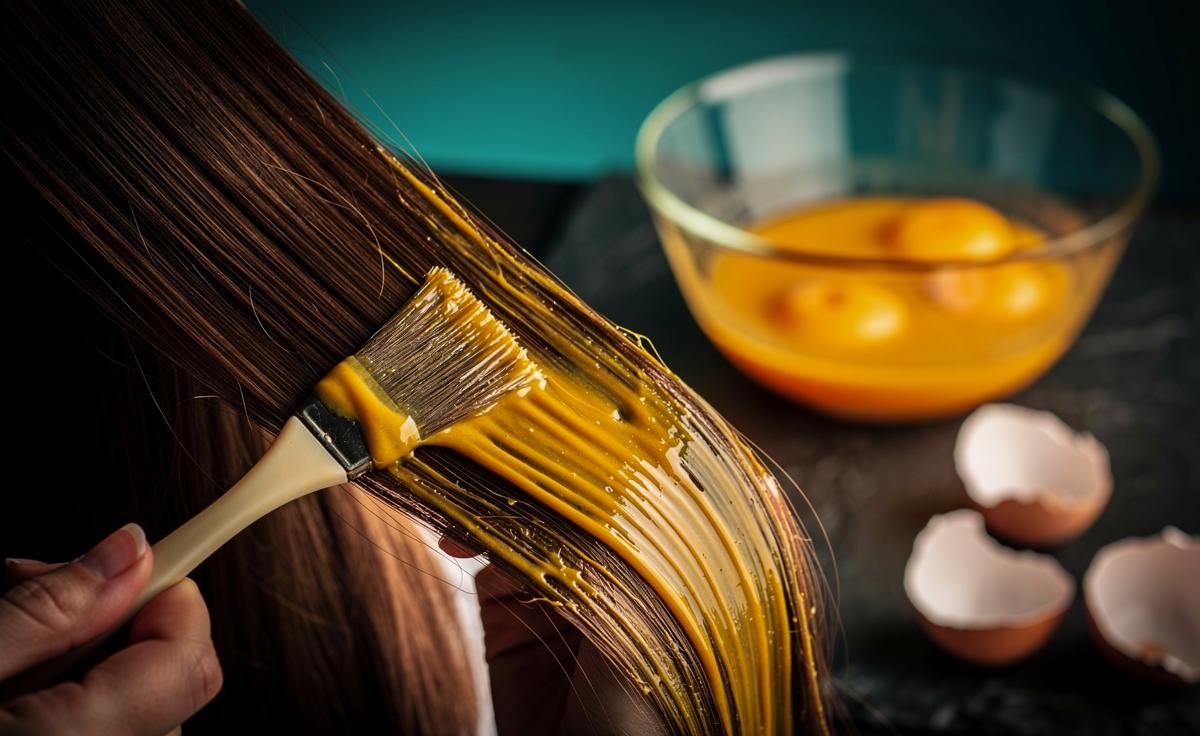
Crack one to two fresh egg yolks (one for short hair, two for thick or long). Whisk until silky. Add one teaspoon of olive oil for extra slip and a teaspoon of honey for gentle hydration; both help the yolk spread evenly. On clean, towel-dried hair, section and apply from mid-lengths to ends, lightly touching the roots only if your scalp is very dry. Comb with a wide-tooth comb. Leave for 15–20 minutes under a shower cap to prevent drying. Rinse thoroughly with cool water—never hot—and follow with a light, silicone-free conditioner if needed. Do not rinse with hot water; heat will coagulate the proteins and make removal difficult.
Frequency depends on your fibre’s needs. Fine or easily weighed-down hair: once every 3–4 weeks, minimal oil added. Coarse, high-porosity curls or bleached hair: every 2–3 weeks with a richer oil addition. If your hair feels stiff after use, you’ve had a protein overload; rebalance with a moisturising mask next wash. You can adapt the blend—few drops of argan oil for shine, a spoon of aloe gel for glide—but keep the base simple. For scalp comfort, a pinch of aloe or glycerin is plenty. Always apply to damp hair to improve spread and reduce mechanical stress during application.
Safety, Sourcing, and Evidence: What to Expect
This is food on hair, so sensible hygiene rules apply. If you have an egg allergy, skip this treatment entirely. Perform a patch test on the inner elbow before first use. Use fresh eggs, avoid contact with broken scalp skin, and wash hands and tools. Keep the bathroom warm, the water cool. As for microbes, the risk sits with ingestion; topical use is low-risk when handled cleanly, but good practice matters. Ethical sourcing? Opt for UK free-range eggs where possible; you’ll often find better freshness and thicker yolks, which spread more evenly.
What about proof? Lab and salon evidence supports the film-forming and lubricating effects of proteins and lipids on damaged fibres, and cosmetic science recognises cholesterol and phospholipids as effective cuticle aids. Raw yolk can’t rebuild broken disulphide bonds like a bond-builder does, and its proteins are not hydrolysed for deep penetration. It’s a temporary but tangible improvement in feel, strength-on-combing, and shine. If you prefer alternatives, try a hydrolysed keratin or wheat protein conditioner paired with a cholesterol-rich mask—vegan lecithin can emulate the lipid profile. Think of egg yolk as a sound, low-cost bridge between trims and pro treatments—not a miracle cure.
Used with care, the egg yolk treatment delivers a swift reset: smoother cuticles, kinder combing, fewer snaps. It pairs well with heat protection, gentle cleansing, and regular trims, fitting neatly into a routine that respects the hair’s biology. For those wary of additives or chasing value in a cost-of-living squeeze, it’s a pragmatic win. Simple ingredients, smart chemistry, visible results. Will you give your hair a yolk-powered test drive for a month—tweaking the mix to match your texture—and note how strength, shine, and frizz control respond across different weather and wash routines?
Did you like it?4.5/5 (29)