In a nutshell
- 🌸 The sugar + vinegar combo keeps blooms drinking: sugar feeds petals while vinegar lowers pH, suppresses bacteria, and clears the xylem for better water uptake.
- 📏 Use precise ratios: 2 tsp sugar + 2 tsp white vinegar per litre of water; start with a clean vase, recut stems at an angle, and remove submerged leaves for a hygienic setup.
- 🧽 Maintain diligently: change water every 48 hours, wash the vase, recut stems, and keep flowers away from heat, direct sun, and fruit (ethylene speeds ageing).
- 🌡️ Tailor by species: warmer water for roses, cooler for tulips and daffodils (use less sugar; condition daffodils separately), and open woody stems with gentle slits or light crushing.
- 🚫 Avoid common pitfalls: don’t overdose sugar or vinegar; skip gimmicks like coins or aspirin; if using commercial food, don’t double up with vinegar—consistency and cleanliness win.
How to Extend the Life of Cut Flowers Using Sugar and Vinegar: Simple Secret Revealed
Fresh bouquets brighten rooms, lift moods, and say more than words. Then reality hits: droop, slime, petals on the table. A simple kitchen duo rescues them. The pairing of sugar and vinegar revives cut flowers and keeps vases fresher for days. It’s not magic. It’s chemistry, hygiene, and a little craft. With the right ratio and a few sharp habits, you can coax more colour, more scent, and more life from shop-bought stems or garden picks. Small tweaks at the sink deliver outsized results on the mantel. Here’s the method, the science, and smart variations that florists use quietly and swear by.
Why Sugar and Vinegar Work Together
Freshly cut stems lose their supply of carbohydrates. Sugar tops up that energy, supporting petal turgor and colour while the bloom adjusts to life in a vase. Too much, though, fuels bacteria. That microbial party clogs the xylem, starving petals of water and turning clear water cloudy. The fix is balance: enough sugar to feed the flower, not the microbes. That’s where vinegar enters the picture, changing the water’s pH so fewer bacteria multiply.
Lowering pH does two things. It discourages microbial growth, and it improves water uptake by keeping the tiny water channels inside stems open. Acidic water dissolves air bubbles and mineral deposits that block flow. The result is simple but powerful: a bloom that drinks, not suffocates. If stems drink, petals live. That’s the entire game in one line.
White vinegar is ideal because it’s clear, predictable, and cheap. Apple cider vinegar can work, but its natural “mother” can haze the water. Distilled malt vinegar is fine in a pinch, though the aroma may linger. The common thread: use a mild acid and keep the vase scrupulously clean. Clean vessels, clean cuts, clean solution—that’s the unbeatable trio.
The Right Ratios and Method, Step by Step
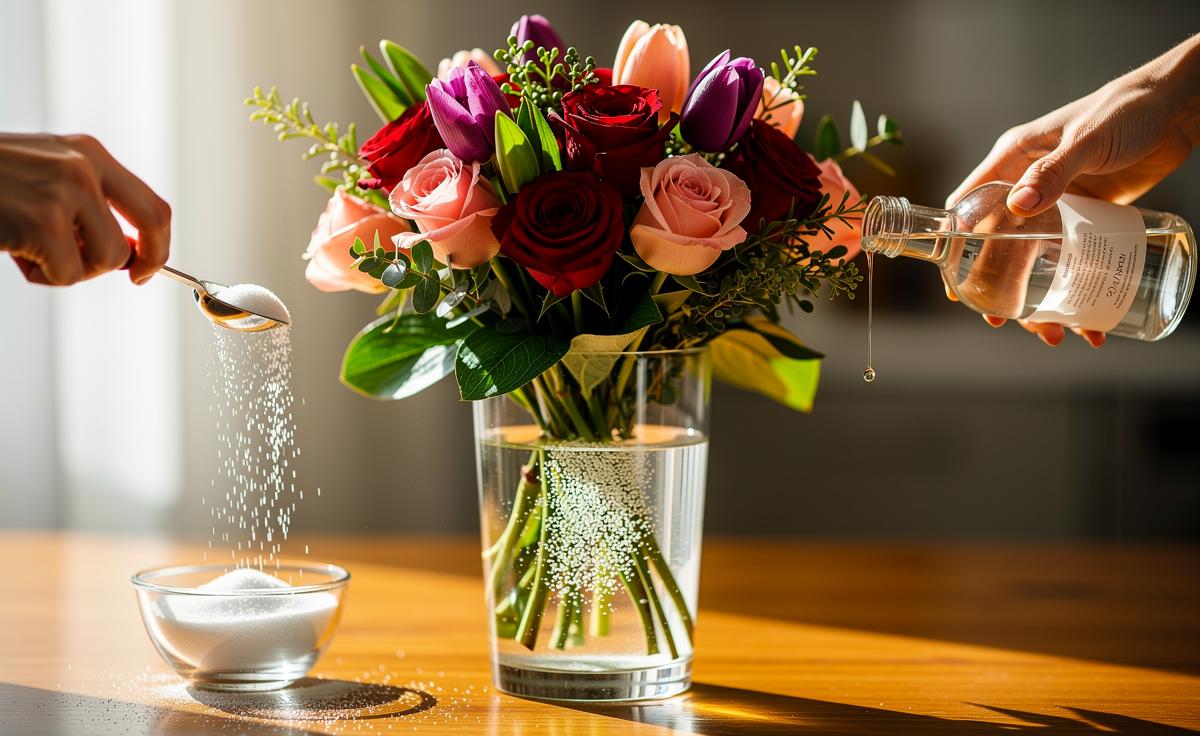
Start with a spotless vase. Wash with hot soapy water, rinse well. Fill with room-temperature water for most flowers; slightly warm for roses, cool for tulips. Dissolve your preservative: roughly 2 teaspoons sugar plus 2 teaspoons white vinegar per litre of water. Swirl until clear. Don’t guess the amounts; measure them. Recut stems at a sharp angle, 1–2 cm up, ideally under water to avoid air entering the xylem. Strip any foliage that would sit below the waterline.
| Water Volume | Sugar (granulated) | Vinegar (white) | Notes |
|---|---|---|---|
| 1 litre | 2 tsp | 2 tsp | Standard bouquet mix |
| 500 ml | 1 tsp | 1 tsp | Small jug or jar |
| 250 ml | 1/2 tsp | 1/2 tsp | Mini posy |
Place stems immediately into the prepared solution. Keep arrangements away from radiators, sunny sills, and fruit bowls—the ethylene gas from ripening fruit accelerates ageing. Top up daily. Every 48 hours, dump the water, wash the vase, recut the stems, and remake the mix. Regular refreshes do more than any fancy additive. If water ever looks cloudy or smells off, change it at once.
Adjust the water temperature to the stem. Lukewarm helps many blooms drink; cool water keeps spring bulbs crisp. Never mix vinegar with bleach or proprietary cleaners. If you want to disinfect, wash first, rinse thoroughly, then make your sugar–vinegar solution fresh. That sequence keeps chemistry safe and flowers happy.
Adapting the Mix for Different Flowers
Not all stems sip the same. Roses prefer slightly warmer water and benefit from a deeper cut—consider a 1–2 cm vertical slit up the stem to open more drinking area. Hydrate them fast, then keep them cool. Tulips and daffodils like cooler water; give tulips less sugar to avoid overgrowth and flop. Daffodils exude a sap that can harm other flowers—condition them alone in cold water for six hours, then combine. The sugar–vinegar mix can be used for both, but go easy on sugar for bulbs.
Woody stems like lilac, viburnum, and some flowering branches have tougher xylem. Use warm water and a decisive recut. Lightly crush the bottom centimetre with a rolling pin or make several vertical slits to increase surface area—gentle, not brutal. Open more pathways, don’t mangle the stem. Hydrangeas, notorious drinkers, sometimes need a quick dip of the cut end in hot water (around kettle-off-the-boil for 10–20 seconds) to clear blockages and stop wilting.
For delicate blooms—sweet peas, ranunculus, anemones—keep the solution mild: half the usual sugar and the same vinegar, plus cooler water. Tropical flowers, including anthurium and orchids, prefer stable warmth and squeaky-clean vases; stick with the standard ratio but change water diligently. The rule of thumb holds across the board: match temperature to species and tailor sugar down for bulbs and tender flowers, while keeping the acidifier steady to fend off bacteria.
Common Mistakes and Pro Tips for Longer-Lasting Blooms
Too much sugar is the classic error. It turns water syrupy, breeds slime, and suffocates stems. Overdoing vinegar is equally bad, stressing tissues and bleaching colours. Clear water and lively leaves are your feedback loop—listen to them. Skipping the 48-hour refresh, leaving leaves below the waterline, or using a grimy vase undoes everything. Another hidden culprit: fruit nearby. Ethylene ages flowers overnight; keep arrangements well away from bowls of bananas and apples.
Pro-level habits pay off. Recut stems every two days. Rotate the vase a quarter turn daily for even light. Mist petals lightly for humidity-sensitive varieties (not lilies with pollen; remove lily anthers to prevent stains). For evening events, move arrangements to a cool hallway or porch overnight. Cool nights buy you extra days. If you use commercial flower food, know that it already combines a sugar, an acidifier, and a biocide—use it as directed, not alongside vinegar.
Myths persist. Copper coins don’t purify water reliably. Aspirin muddles pH. Lemonade varies too much to be consistent. The sugar–vinegar method stays reliable because it’s measurable and repeatable. When stems slump, look first to basics: fresh cut, clean vase, right ratio, regular changes. Those four steps—executed well—outperform gimmicks every time and turn a three-day bunch into a week-long pleasure.
Simplicity wins. A measured spoon of sugar, a measured spoon of vinegar, and a clean start extend the life of almost any bouquet. Add species-aware tweaks—warmer water for roses, cooler for bulbs, deeper cuts for woody stems—and you’ll see brighter petals and fewer fallen leaves. Consistency is the quiet secret behind “lucky” long-lasting flowers. Ready to try the mix with your next market bunch, experiment with ratios, and keep notes on what each flower family loves most in your home’s light and temperature?
Did you like it?4.5/5 (26)