In a nutshell
- 💧 Adopt sensor-led drip irrigation to water by soil need, not habit, and use morning timing plus forecast “skip” functions to cut waste.
- 🌱 Build a living reservoir: apply 5–8 cm mulch, boost soil biology with compost and biochar, and choose drought-tolerant perennials for resilience.
- 🌦️ Capture every drop via linked water butts, first-flush diverters, permeable paths, and wicking planters that reduce surface evaporation.
- 🗺️ Redesign with hydrozoning, shrink thirsty lawns, add west-side shade canopies, and upsize containers with peat-free mixes to retain moisture.
- 🔧 Optimise maintenance: fix leaks fast, weed early, pause fertiliser in heat, and use safe greywater on ornamentals to stretch supplies.
Water feels different in 2026. The UK’s gardeners are juggling lush borders with leaner supplies, sharper heatwaves, and patchy downpours that vanish into drains. Rather than despair, experts are redesigning the everyday routine: when to water, how to store, which plants to favour, and what data to trust. The result is a set of new gardening hacks that save litres, cut bills, and still deliver colour. Some are simple, like thicker mulch. Others lean on smart sensors and quiet engineering. The common thread is precision: watering only what’s thirsty, only when it matters. Here’s how to make every drop count, garden-wide.
Smarter Irrigation and Data-Led Watering
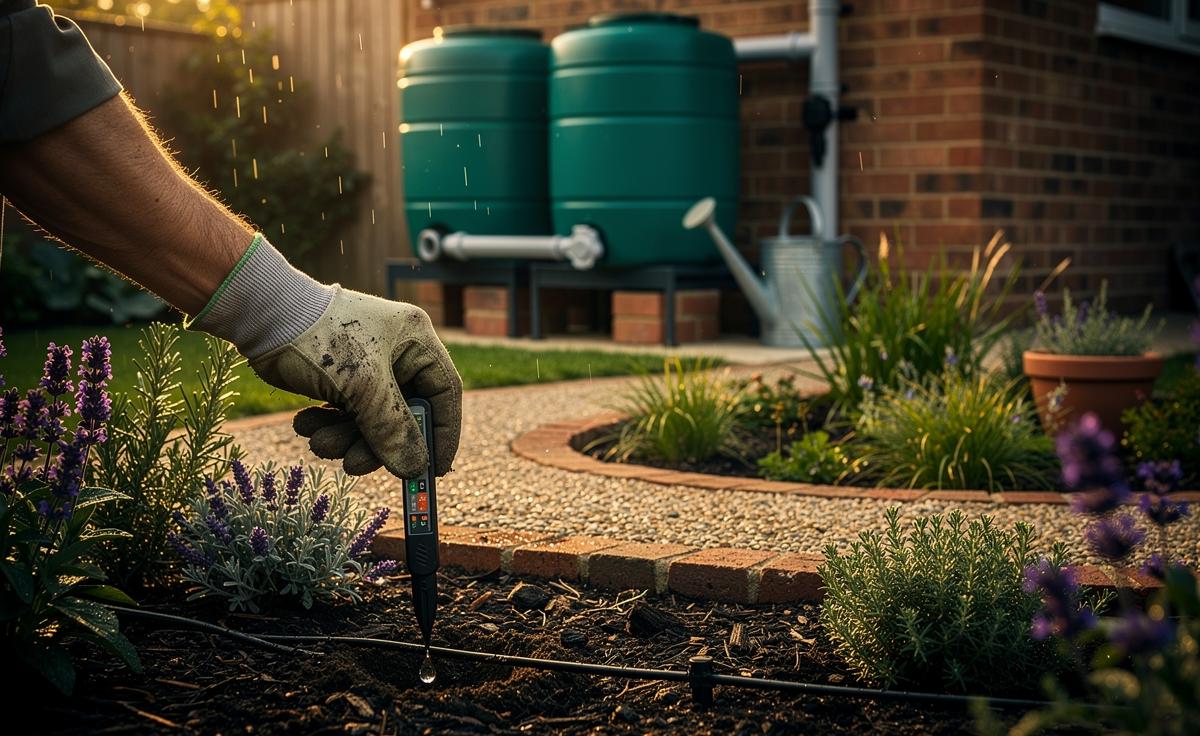
The biggest leap is moving from guesswork to sensor-led irrigation. A £20 soil probe can tell you more than a fortnight of squinting at leaves. Pair a soil moisture sensor with a programmable timer and you’ll water by need, not habit. Never water on a schedule alone; water on verified soil dryness. For beds and borders, switch to drip irrigation with pressure-compensating emitters. It delivers slow, targeted moisture to roots, slashing evaporation and splashing. Microsprays are a halfway house for dense plantings, but keep them low and sheltered from wind.
Timing matters. Early morning watering reduces losses and disease risk. Evening can work in heatwaves, but avoid leaving foliage wet overnight. Link your controller to a local forecast feed or use the rainfall “skip” function many budget timers now include. In small gardens, a humble watering can is still king: measure, pause, observe runoff, adjust. For households, consider simple greywater reuse from baths or showers via a diverter into a settling bucket, then onto ornamentals (not edibles). Strain lint, avoid harsh cleaners, and rotate application areas. Water the soil, not the leaves, and never the paving.
Mulch, Soil Biology, and Climate-Ready Planting
Soil is your reservoir. Double its capacity and you halve your top-ups. Start with a 5–8 cm layer of mulch—shredded bark, leaf mould, composted woodchips—topped up as it settles. Keep soil covered year-round to lock in moisture and suppress weeds. Beneath the blanket, improve structure with well-matured compost and a pinch of biochar charged with compost tea; it acts like a sponge. Encourage mycorrhizal fungi, either via inoculants or simply by reducing digging. Fungal networks help roots access water beyond the immediate dripline.
Plant choice is strategy, not style police. Swap thirsty bedding for drought-tolerant perennials—achillea, salvia, nepeta, gaura—and Mediterranean herbs like rosemary and thyme. Go “right plant, right place”: sun lovers in hot, free-draining spots; shade-tolerant species where moisture lingers. Lawns? Raise the mower to 6–8 cm to shade the soil and retain dew. Trial a microclover mix or “no-mow” patches that bounce back after stress. Young plants are the thirstiest: water deeply at planting, then reduce frequency to encourage roots to dive, not dawdle near the surface. Deep, infrequent watering builds resilience.
Capturing Every Drop: Rain, Dew, and Storage
Free water falls from the sky; most gardens just watch it leave. Fit covered water butts to every downpipe and link them with inexpensive hoses so overflow cascades to the next tank. Add a first-flush diverter to shunt roof debris away. Slimline wall tanks hide neatly in alleyways, while collapsible bladders slide under decks. Site containers slightly higher than beds to use gravity pressure. Paths can harvest too: replace solid paving with permeable surfaces that feed a raingarden or swale. In beds, consider wicking planters with sub-surface reservoirs; they reduce surface evaporation and deliver steady moisture to roots.
Dew is small but real. Dense planting and night-time shade cloth can improve condensation that drips back to soil at dawn. Keep gutters clean, add leaf guards, and use simple rain chains to guide runoff into basins. Below is a quick-reference snapshot for planning.
| Method | Typical Kit | Estimated Saving | Notes |
|---|---|---|---|
| Drip + Sensor | Dripline, timer, soil probe | 30–60% vs hose | Target roots only |
| Mulch 5–8 cm | Bark, leaf mould | Up to 50% loss cut | Top up annually |
| 200 L Water Butt | Butt, diverter, stand | 1–2 weeks’ watering | Link multiples |
| Hydrozoning | Grouping by thirst | 20–40% efficiency | Redesign beds |
Design Smarter: Hydrozoning, Shade, and Maintenance Timing
Good layouts save more water than good gadgets. Start with hydrozoning: group plants by water demand and isolate high-thirst areas—veg beds, new trees—on their own circuit. Put drought lovers on a separate line or on manual watering. Shrink lawn footprint; widen mulched paths that double as infiltration strips. Plant a deciduous shade canopy on the west side to blunt late-day scorch while allowing winter light through. In containers, upsize pots, use peat-free mixes with added bark fines for structure, and line the inside with a thin coir mat to slow evaporation.
Maintenance is timing. Deadhead to prevent wasteful seed set, weed early so competitors don’t drink your reserves, and stake tall perennials to reduce wind stress. Fix leaks quickly—one pinhole can waste hundreds of litres. Fit quick-shut couplers and keep hose nozzles in good order. In hot spells, pause fertiliser; it pushes soft growth that demands water. Where restrictions apply, adapt: watering cans from stored rainwater and drip lines fed by gravity often remain permissible, but always check local rules. The mantra holds: water the plant, not the path, and less often, more deeply.
These are not hairshirt tactics. They’re practical upgrades that make gardens calmer to run, cheaper to maintain, and better prepared for spiky weather. You’ll still get colour, scent, and birdsong—just with lighter footprints and fuller butts. Start small this weekend: lay mulch, fix that leaky connector, set a sensor, and capture the next shower. Then build from there as budgets allow. Precision beats routine, and design beats effort. Which of these water-saving hacks will you test first, and how will you adapt them to your own patch of ground?
Did you like it?4.3/5 (30)