In a nutshell
- 🌡️ Create microclimates and monitor temperature, humidity, and airflow; buffer roots, group plants, and automate small tweaks with smart plugs and fans for stable conditions.
- 💡 Use dimmable LED grow lights on timers, maintain a steady photoperiod, and track DLI; prioritise consistent light delivery over erratic sunshine.
- 💧 Optimise watering with fast drainage, steady aeration (perlite/pumice/bark), and wicking or capillary mats; water on evidence, keep roots warm, and feed lightly after chills.
- 🚨 Follow an emergency playbook for power cuts, heatwaves, and snap frosts: consolidate warmth, add fleece and battery fans, increase shade and evaporative cooling, and check for pests post-shock.
- 📊 Equip a simple toolkit—thermo-hygrometer, smart plugs, USB fans, frost fleece—and build a calm routine so plants barely notice outdoor volatility.
Britain’s weather doesn’t ask permission before changing its mind, and indoor plants feel every lurch. Central heating kicks in, humidity crashes. A sunny spell vanishes, light falls off a cliff. The secret to a thriving indoor garden is not mystical; it’s measured, planned, and quietly resilient. Think microclimates, not rooms. Swap guesswork for sensors, emergency kits, and a few clever hacks that buy your plants time when conditions nosedive. This guide gathers the best tactics from growers, botanists, and tinkerers, tuned for city flats and draughty terraces alike. The goal is simple: stabilise the essentials so your plants barely notice the chaos outdoors.
Reading the Room: Temperature, Humidity, and Airflow
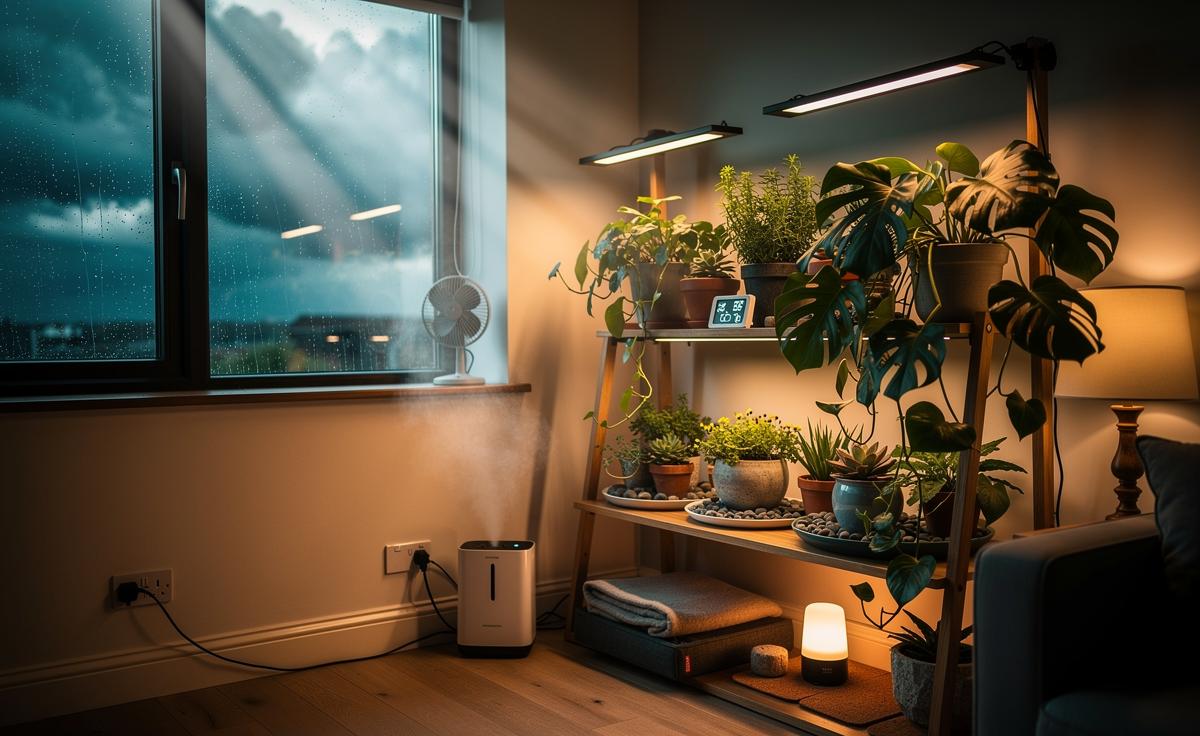
Indoor gardens live or die by three invisible forces: temperature, humidity, and airflow. Place a cheap digital thermo-hygrometer at canopy height and move it around: near windows, beside radiators, behind curtains. You’re mapping microclimates. If your figures swing wildly, buffer them. Add trays of water and pebble beds for gentle humidity. Use USB desk fans for a soft breeze that dries leaf surfaces without chilling. Avoid blasting plants with vents. Stable numbers matter more than perfect numbers. Aim to keep short-term fluctuations under control, especially overnight when homes cool quickly.
Cold sills sabotage roots; warm shelves risk crispy foliage. Lift pots with cork feet, preventing cold-soak, and insulate with a thin foam mat under planters. In winter, group plants to raise local relative humidity by a few percentage points. In summer, crack a window or run an extractor on a schedule to prevent fungal pressure. For precise control, consider a smart plug cycling a humidifier and a desk fan. Automate small adjustments; save your attention for bigger shifts. Use the simple guide below to prioritise targets during swings.
| Plant Type | Temp Range (°C) | RH Target (%) | Airflow Note |
|---|---|---|---|
| Tropical foliage (Monstera, Philodendron) | 18–26 | 50–65 | Gentle, continuous breeze |
| Succulents & Cacti | 16–24 | 30–45 | Dry air, brief circulation |
| Herbs & Leafy greens | 15–22 | 45–60 | Good exchange, avoid drafts |
When the outside swings, protect the roots first and even out the air second. A small, steady environment beats reactive firefighting every time.
Light That Adapts When the Sky Does Not
Cloud banks roll in. Days shrink. Your plants still need a consistent dose of photons. Swap uncertainty for control with dimmable LED grow lights on timers, set to maintain a reliable photoperiod. Track the Daily Light Integral (DLI) with a phone app or an inexpensive PAR sensor; think of it as a weekly budget of light. When a bright week hits, dim or raise the fixture. When gloom returns, lower it a little or extend runtime. It’s easier to change the lamp than to change the weather.
Mind the spill. Line the back wall with white card or mylar to reflect light without baking leaves. Keep LEDs 20–40 cm above most foliage; closer for herbs, higher for shade lovers. If a heatwave turns lamps into radiators, reduce intensity by 20% and increase airflow for a fortnight. For window growers, rotate plants one quarter-turn each week to prevent lopsided growth. Consistency is the true secret here. Even modest light, delivered predictably, outperforms erratic bursts that confuse plant rhythms and stall new growth.
When in doubt, pick stable light over “bright sometimes.” Plants bank regularity like savings.
Smart Watering and Soil That Forgives Mistakes
Weather whiplash plays havoc with water use. Hot, dry air drinks from leaves; cold snaps stall roots. Build a forgiving system. Choose mixes with fast drainage and stable aeration: add perlite, pumice, or bark to houseplant compost until it feels springy and crumbly. Use pots with side holes or breathable fabric sleeves to stop perched water. Wet roots plus cold air is the classic recipe for rot.
Now make watering less binary. Introduce wicking setups or capillary mats for slow, steady uptake. Create a moisture ladder by grouping thirstier plants on mat edges and desert types on risers above it. Press a finger into the mix, or use a simple soil probe, and water on evidence, not habit. In dry spells, humidity rises often solve “thirst” more safely than heavy pours. In damp cold, err on the dry side and wait an extra day. It’s not just how much you water, it’s how quickly excess escapes. Let containers breathe, and the rest gets simpler.
Finally, feed lightly but consistently. Switch to a balanced, dilute fertiliser during active growth and pause after abrupt chills. Plants can’t eat when shivering.
Emergency Playbook: Power Cuts, Heatwaves, and Snap Frosts
When things go wrong, move fast and think in layers. For power cuts, consolidate plants in the warmest room, close doors, and add thermal mass: jugs of warm (not hot) water beneath benches. Drape a breathable fleece over a simple frame to trap a microclimate. Battery fans keep air moving. For light-sensitive seedlings, a USB backup lamp buys hours of growth. Protect roots before leaves; recovery begins below the soil line.
In a heatwave, shade first, then cool. Deploy sheer curtains or shade cloth, raise lights, and increase ventilation. Stand pots on damp towels or shallow trays of pebbles and water for evaporative cooling without waterlogging. Freeze water bottles and place them near—not touching—containers to drop local temperature a couple of degrees. For snap frosts, pull plants off window glass, use insulating mats, and seal draughts with removable strips. After any shock, inspect for pests. Stressed plants invite them. A quick rinse, yellow sticky traps, and a neem or soap spray can prevent a mini-outbreak.
Keep a grab-and-go kit: frost fleece, USB fan and lamp, smart plugs, hygrometer, perlite, and contact spray. Preparedness turns a crisis into a minor adjustment.
Weather will always be wilful, but your indoor garden doesn’t have to be fragile. Anchor the basics—light, water, and microclimate—with tools that smooth the spikes. Buffer roots, automate small corrections, and drill a calm routine for emergencies. The payoff is visible: sturdier stems, cleaner leaves, new growth that doesn’t miss a beat when the forecast wobbles. Make your space predictable, and your plants will write their own success story. What piece of your setup will you stabilise first—the light, the airflow, or the watering rhythm?
Did you like it?4.5/5 (23)