In a nutshell
- 🚶♂️ Daily walking is a low-impact, weight-bearing exercise that boosts cardiovascular health, supports blood sugar control, and helps maintain bone density with minimal joint stress.
- 🧠 It delivers potent mental health gains—lower cortisol, clearer focus, enhanced creativity—and outdoor light steadies circadian rhythms for better sleep.
- 💼 Highly accessible and budget-friendly: no fees, flexible routes, and simple intensity cues (speak in short sentences) to find a brisk pace.
- 🛠️ Build the habit with anchors and low friction—shoes by the door, short streaks, micro-goals, and social accountability to sustain consistency.
- 🎯 Actionable targets: post-meal walks 10–15 min, a daily base of 30 min at ~100 steps/min, and 35–45 min with hills or intervals for progression.
There’s a quiet revolution at pavement level. While gyms thrum with music and metrics, daily walking slips under the radar, offering profound benefits for body and mind with almost no barrier to entry. It’s free. It’s flexible. And it’s forgiving when life gets messy. Think of it as the reliable friend of fitness: always available, rarely demanding, surprisingly transformative. Ten to thirty minutes can reset your day; forty-five can reshape your week. Whether you’re returning from injury, juggling care duties, or simply seeking calm in a frantic schedule, a purposeful walk may be the missing link in your routine.
Why Walking Works for Your Body
Physiologically, walking is a low-impact, weight-bearing activity that quietly strengthens the engine room: your heart, lungs, and leg muscles. At a brisk pace—around 100 steps per minute—it nudges your cardiovascular health upward by improving blood pressure, enhancing circulation, and building endurance. The repetitive, rhythmic motion boosts mitochondrial efficiency, which helps your cells produce energy more effectively. Over weeks, that means easier stair climbs, less huffing on hills, and a tangible lift in stamina. Consistency matters more than heroics. Even five short bouts across a day can add up to measurable conditioning.
There’s also a metabolic dividend. Regular walking helps regulate blood sugar by recruiting large muscle groups that sponge up glucose, particularly valuable after meals. It can subtly shift body composition by raising daily energy expenditure without stressing joints. Bones, too, benefit: the gentle repetitive loading supports bone density maintenance, especially when routes include inclines or mixed terrain. While it won’t replace high-intensity training, walking is a powerful foundation: a base that stabilises weight, supports joint health, and primes the body for anything more demanding you choose to add.
Mental Health Gains You Can Feel
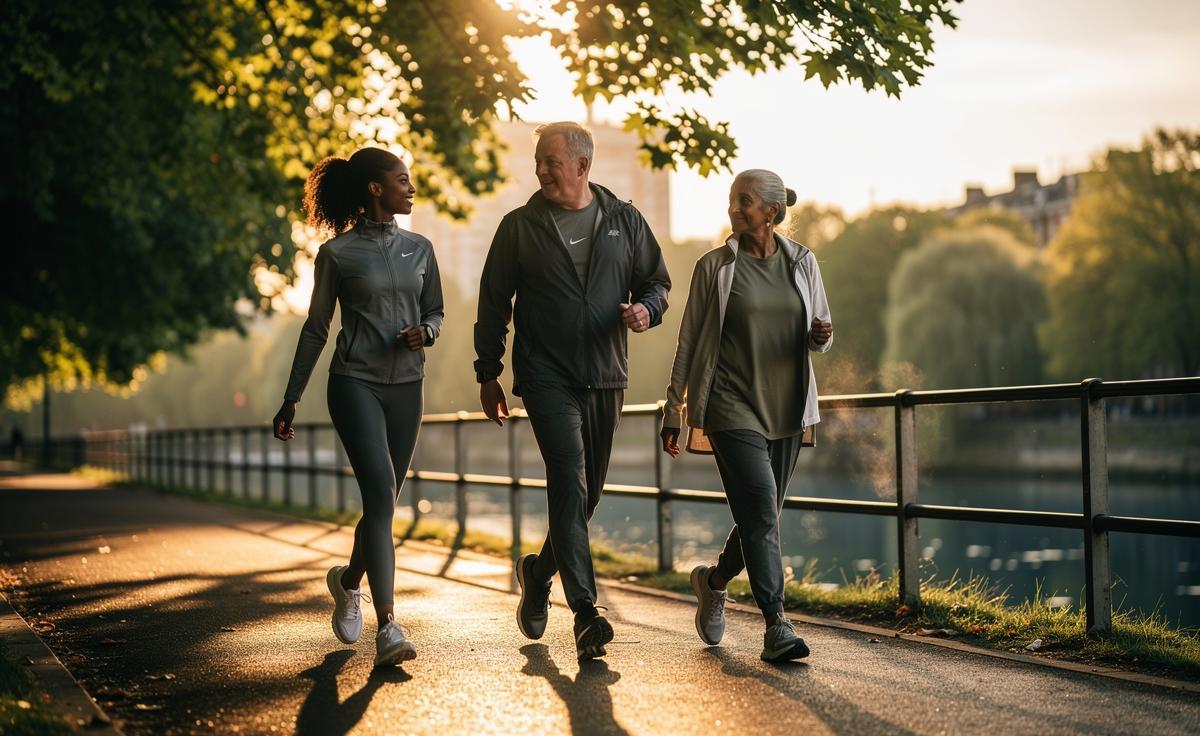
Walking is not simply motion; it’s mood medicine. The steady cadence of footfall tempers the stress response, reducing circulating cortisol and loosening the grip of rumination. A ten-minute stroll can lift mental fog; thirty minutes often delivers a clearer head and calmer breathing. In open air, the effect is even stronger. Natural light regulates circadian rhythms, improving sleep quality and daytime alertness. Add a park or riverside path and you’re layering in “soft fascination”—gentle sensory stimuli that refresh attention without overwhelming it.
There’s a creativity kicker, too. Studies suggest walking boosts divergent thinking, the kind linked to brainstorming and problem-solving. Shifting your body moves your perspective; ideas that felt stuck at a desk dislodge on a pavement. Social walking compounds the benefits by offering connection without the pressure of face-to-face intensity. You talk side by side, not head-on, and conversations flow. If anxiety spikes, pace and breath become a reset button you can press anywhere. Few habits offer such a fast, accessible return on mental clarity.
Time, Money, and Accessibility: The Practical Edge
Walking’s greatest strength might be its logistical simplicity. No kit lists. No monthly fees. A pair of supportive shoes and a route you know—job done. That frugality matters in a cost-of-living squeeze, as does the ability to weave movement into errands: school runs, station commutes, lunch-break loops. It’s inclusive, too. People across ages and fitness levels can start today, adjust intensity tomorrow, and improve steadily without intimidation. When life is complex, the most practical habit wins.
Use intensity cues to tailor your walk. If you can speak in short sentences but not sing, you’re likely at a brisk pace. Hills, stairs, or intervals of faster cadence elevate the effect without extending time. The table below outlines simple targets that fit busy diaries.
| Goal | Pace/Cadence | Time/Steps | Expected Benefit |
|---|---|---|---|
| Post-meal control | Easy–moderate | 10–15 min | Helps regulate blood sugar |
| Daily fitness base | Brisk (~100 steps/min) | 30 min or 4–6k steps | Cardio, mood, energy |
| Progress stimulus | Brisk + hills/intervals | 35–45 min | Endurance, leg strength |
How to Make Walking a Habit
Rituals beat willpower. Anchor your walk to cues already in your day: after breakfast, right before lunch, as the first five minutes of a meeting on earphones. Keep friction low—shoes by the door, weather-proof layer on a hook, a go-to loop you can do on autopilot. Track streaks, not perfection. Miss a day, and simply restart the next. Two short walks often outperform one long one because they slot into gaps you already have.
Turn progress into play. Pick a landmark finish line you like—a café, a viewpoint, a mural—and let the route delight you. Increase challenge with micro-goals: an extra hill on Wednesdays, a faster final five minutes on Fridays, steps nudged up by 500 each fortnight. Use audio prompts or a favourite podcast to create a cue-and-reward loop. And recruit people: a neighbour, a colleague, a family WhatsApp. Shared accountability powers consistency, and consistency powers change. The habit you enjoy is the habit you keep.
In an age of quantified everything, walking remains beautifully human-scale: simple, social, adaptable, and reliably effective. It cushions stress, steadies energy, and lays the groundwork for bigger ambitions without demanding a re-engineered life. If you’re edging back into activity or chasing a sustainable boost, daily walking may be the exercise you’ve been missing. Lace up, step out, and let your streets, parks, and paths do the rest. What would make it easiest for you to begin—time of day, a companion, or a destination that makes every walk feel like a small win?
Did you like it?4.4/5 (27)