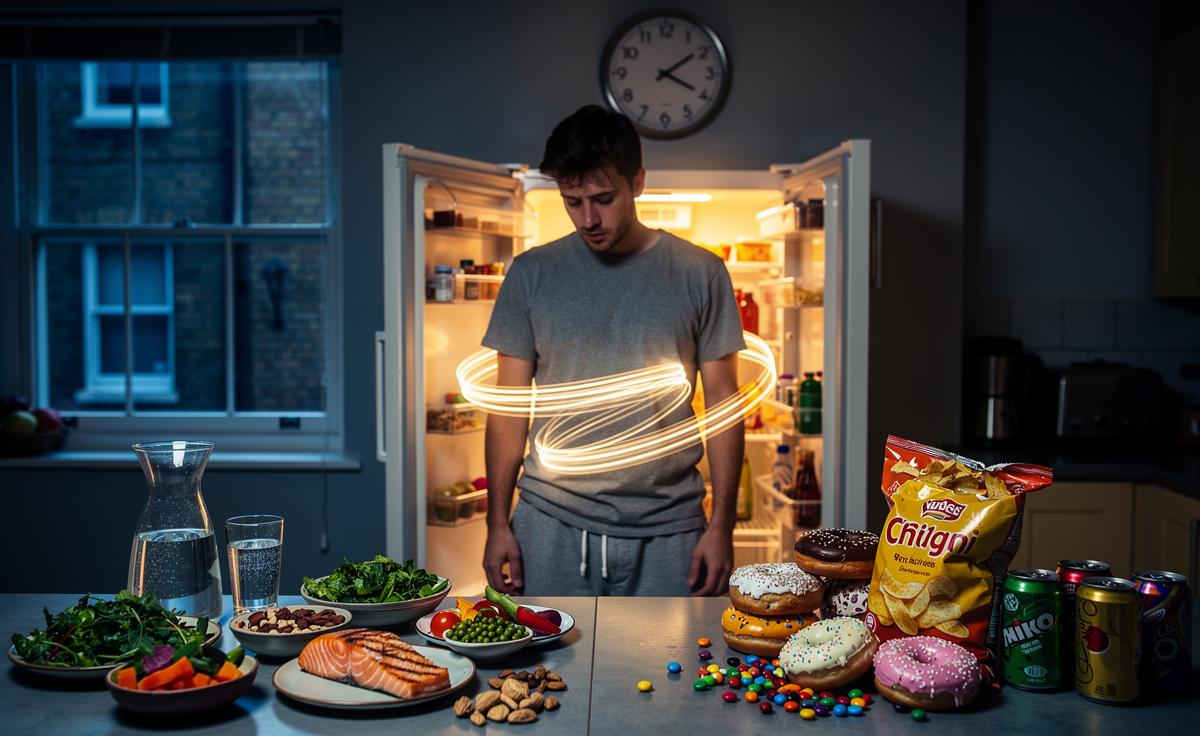
In a nutshell
- 🔬 Hormonal drivers: Appetite is steered by ghrelin (hunger), leptin (fullness), and gut signals like GLP-1/PYY; disrupted signalling and leptin resistance can keep you hungry.
- 🍟 Ultra-processed foods: Engineered textures and high calorie density blunt satiety; low protein and fibre plus liquid calories speed intake and restart hunger. Aim for 20–40g protein per meal with fibre and healthy fats.
- 😴 Sleep, stress, and rhythm: Short sleep raises ghrelin, lowers leptin, and boosts cravings; cortisol nudges comfort eating. Regular meal timing and daylight exposure reinforce your circadian clock and tame appetite.
- 💧 Hydration and nutrient gaps: Mild dehydration and sugary drinks mimic hunger; shortfalls in magnesium, iron, B vitamins and the national fibre gap sap satiety. Use water “anchors” and plant-rich plates.
- ✅ Practical pivots: Eat slower, prioritise whole foods, structure meals for protein + fibre + fats, and keep a consistent bedtime routine—small, repeatable tweaks that quiet constant hunger.
Hunger is not simply an empty-stomach alarm. It is a multi-channel broadcast from your gut, brain, and environment, often amplified by habits you barely notice. Some days you graze relentlessly; others, you forget to eat until mid-afternoon. That volatility isn’t a moral failing. It’s biology, timing, and cues colliding. When you understand the machinery—hormones, sleep, stress, food design—you can adjust the dials rather than white-knuckling willpower. The real reason you’re always hungry is rarely just “lack of discipline”. It is a system slightly out of tune. Tune the system and appetite stops shouting. It starts whispering, as it should.
Hunger Hormones: Ghrelin, Leptin, and the Brain
At the heart of appetite lie three axes: the gut, the brain, and the food you eat. The gut produces ghrelin, a hormone that rises before meals and nudges the brain’s hypothalamus to seek food. Fat tissue releases leptin, signalling longer-term energy sufficiency. The intestine adds GLP-1 and PYY, which tell your brain to slow down after eating. When this orchestra plays in time, hunger feels reasonable. When it’s out of sync—through sleep loss, stress, or ultra-processed diets—signals get noisy and you feel hungry again, quickly. Understanding the signal makes it easier to change the response.
| Hormone | Main Source | Trigger | Primary Effect |
|---|---|---|---|
| Ghrelin | Stomach | Emptying, meal timing | Increases appetite |
| Leptin | Fat tissue | Energy stores | Decreases appetite |
| GLP-1 / PYY | Intestine | Nutrients in gut | Promotes fullness |
Here’s the rub: chronic low-quality diets can dull leptin’s message, a phenomenon dubbed leptin resistance. The brain “hears” less fullness, even when stores are ample. Ghrelin can also rebound higher after highly refined meals. Protein, fibre, and intact fats push back, extending satiety. Hunger isn’t the enemy; mis-signalling is. Fix the inputs, and the chemistry usually follows.
Why Ultra-Processed Foods Hijack Satiety Signals
Ultra-processed foods are engineered for bliss. Soft textures, intense flavours, and rapid swallow-ability let you eat faster than your gut can report back. Your brain gets a dopamine tickle; your stomach gets a volumetric shrug. Calorie density soars as food volume shrinks. Fibre is diluted, protein per calorie drops, and fats and sugars co-mingle in ways rare in nature. The result: weak stretch signals, late hormonal responses, and a rollercoaster of blood glucose that restarts hunger within hours. It’s not gluttony; it’s design.
Protein is the keystone. A low-protein day drives you to chase calories until a minimum protein threshold is met, a phenomenon researchers call the “protein leverage” effect. Pair that with liquid calories—sugary drinks or even “healthy” smoothies—and you’ve built a perfect storm. Liquids empty quickly, barely nudge GLP-1, and leave you prowling the kitchen soon after. Contrast this with meals rich in whole-food fibre and chew time. Crunchy vegetables, legumes, and intact grains slow eating and amplify gut–brain feedback. Speed of eating changes the appetite story as much as what’s on the plate.
Practical pivot: anchor each meal with 20–40g of protein, add a fist of fibre-rich plants, and include a thumb of healthy fats. Keep ultra-processed choices in the minority of your weekly intake. Small swaps. Big returns.
Sleep, Stress, and Your Circadian Clock
Skimp on sleep and hunger hunts you down. One poor night can raise ghrelin, lower leptin, and boost cravings for energy-dense snacks. After a week, the bias compounds. You’re not weak; you’re wired for survival. Sleep loss makes the hedonic pathway louder and the homeostatic pathway quieter. Translation: you want crisps, not carrots. Cortisol, the stress hormone, adds fuel. It nudges insulin, ups appetite, and makes comfort foods unusually persuasive.
Timing matters too. Your circadian clock expects food in daylight and rest after dusk. Late-night eating collides with metabolic rhythms, producing larger glucose swings and a hazier satiety response the next morning. People then wake up less hungry, skip breakfast, and arrive ravenous by 11am, setting a cycle of compensatory snacking. Light exposure in the morning, movement during the day, and regular meal timing pull you back into sync. A regular rhythm is an appetite superpower.
Practical pivot: aim for 7–9 hours, roughly consistent bed and wake times, and a wind-down without screens. Front-load protein earlier in the day. Build a short evening ritual—dim lights, stretch, a book. These look small. They move mountains.
Sneaky Drivers: Dehydration, Liquid Calories, and Nutrient Gaps
Sometimes “hunger” is thirst in disguise. Mild dehydration impairs attention, sours mood, and mimics low energy. People eat when they meant to drink. A glass of water before meals can modestly reduce intake, not by magic, but by restoring basic physiology. Liquid calories, by contrast, are slippery. Fruit juices, milky coffees loaded with syrups, alcohol—each packs energy with scant satiety. When calories bypass chewing, they often bypass fullness.
Another underreader: micronutrient shortfalls. Chronic low intakes of magnesium, iron, or B vitamins won’t scream in week one, yet they can sustain fatigue and low mood that feel like hunger. Add the fibre gap—most Britons fall short of 30g per day—and you get sluggish digestion and blunted gut-hormone release. The fix is unglamorous: more pulses, nuts, seeds, colourful veg, and oily fish. Build plates with volume and texture—soups thick with lentils, salads with crunch, stews with beans and barley. Satiety loves structure.
Practical pivot: carry a water bottle, set two hydration “anchors” (after waking and mid-afternoon), and swap one daily liquid calorie for sparkling water or tea. If appetite feels chaotic, a simple daily multinutrient can act as a safety net while you improve diet quality, not as a replacement for it.
Always hungry rarely means “you” are the problem; it means your system needs a tune-up. Align hormones through better sleep, cut the static from ultra-processed foods, and let fibre, protein, and consistent timing do their quiet work. Small acts compound. One more forkful of plants. Five more minutes of chewing. A bedtime that actually sticks. When signals get clearer, appetite stops shouting. What single change will you experiment with this week to test how your hunger truly responds?
Did you like it?4.6/5 (30)