In a nutshell
- 🧊 The myth persists that winter is allergy-free, but allergies don’t hibernate; they shift indoors as pollen drops.
- 🏠 Indoor culprits dominate: dust mites, mould spores, and pet dander thrive with central heating, closed windows, and condensation.
- 🔍 Know the difference: allergies vs colds vs flu—itch, repetitive sneezing, clear mucus, and indoor worsening signal allergy; flu brings fever and body aches.
- 🛠️ Practical fixes that work: wash bedding at 60°C, use a HEPA vacuum, maintain 40–50% humidity, ventilate wet rooms, groom pets and consider room air purifiers.
- 💊 Evidence-backed relief: daily saline rinses, intranasal steroids, non-drowsy antihistamines, and, for stubborn cases, allergen immunotherapy.
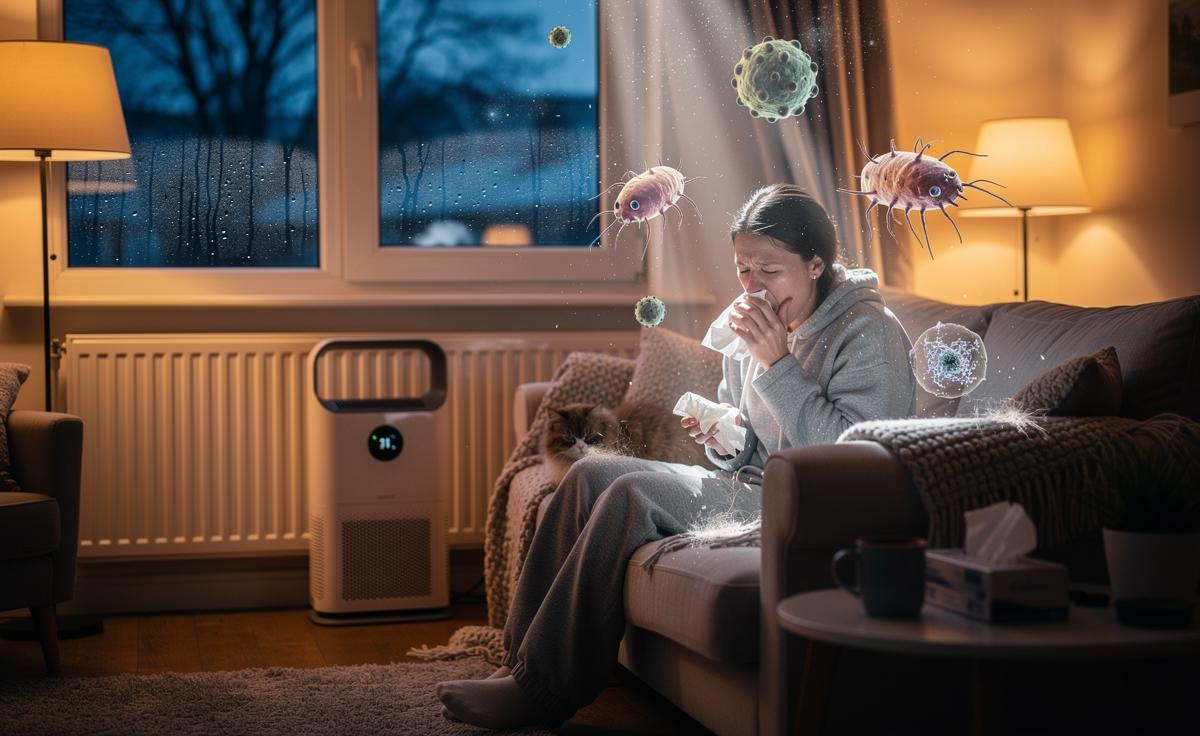
Every winter, a familiar refrain rings out: “Allergies are a spring problem.” It sounds comforting. It’s also wrong. While the British countryside rests, our homes do the opposite. Central heating hums, windows stay shut, and the air dries out. The result is an indoor cocktail of hidden irritants. Allergies do not take a seasonal holiday, they simply change venue. From dust mites and mould spores to pet dander, winter presents a different battleground, one that plays out in bedrooms, bathrooms, and on the sofa. If you’ve blamed every December sniffle on a cold, the science suggests you may be missing the real culprit.
The Myth: Winter Means Allergy-Free Days
The comforting belief that cold weather wipes out allergies persists because one visible trigger, pollen, largely disappears. Yet the absence of pollen does not equal the absence of allergens. Many winter symptoms — that morning congestion, the nightly cough, itchy eyes that refuse to calm — stem from indoor exposures that peak when we seal up our homes. Central heating stirs settled dust. Closed windows trap airborne particles. Dry air irritates airways, making them more reactive to small amounts of allergen. For sensitive people, that’s enough to set off inflammation.
There’s also a timing trick. Early-flowering trees like alder and hazel can release pollen in late winter during mild spells, catching sufferers off-guard. Meanwhile, mould thrives where condensation forms — on window frames, behind wardrobes, in bathrooms. Add pet dander from cats and dogs, which is sticky and persistent, and you’ve got a winter-perfect storm. Allergies don’t hibernate when temperatures fall; they move indoors and intensify with our habits. Recognising this shift is the first step to tackling symptoms that seem to arrive like clockwork every January.
Indoor Culprits: Dust Mites, Mould, and Pets
Start with dust mites. They feed on skin flakes and thrive deep in mattresses, pillows, and soft furnishings. Heated rooms create warm microclimates; even when ambient humidity drops, bedding can hold enough moisture for mites to persist. Your bed can be the most allergenic square metre in the house. Practical fixes work: wash sheets at 60°C weekly, use mite-proof encasements for pillows and mattresses, and vacuum carpets slowly with a HEPA-filtered machine. Keep indoor humidity around 40–50% to make life harder for mites, not your sinuses.
Mould is the stealth operator of winter. Spores bloom where condensation lingers — bathrooms, kitchens, unventilated corners. Wipe seals, run extractors, and open windows briefly after showers or cooking to evacuate moisture. Pets? Love them, yes. Underestimate their dander, no. Groom outdoors when possible, keep them off beds, and consider a room-based air purifier with a certified HEPA filter. The goal isn’t sterile perfection; it’s steady reduction. Small, consistent changes compound into fewer sneezes and calmer nights.
| Myth | Reality | Common Triggers | Practical Step |
|---|---|---|---|
| “No pollen, no allergies.” | Indoor allergens dominate in winter. | Dust mites, mould, pet dander | HEPA vacuum, wash bedding 60°C |
| “Cold air cures congestion.” | Dry, cold air can worsen irritation. | Airway dryness, irritants | Use saline sprays; maintain 40–50% humidity |
| “It’s just a cold.” | Allergies can mimic viral symptoms. | Itchy eyes, clear drip, sneezing fits | Track patterns; try non-drowsy antihistamine |
Cold, Flu, or Allergy? What to Watch and Do
How to tell? Allergies tend to produce itch — eyes, nose, throat — plus repetitive sneezing and clear, watery mucus. Symptoms persist for weeks and often worsen indoors or in specific rooms. Colds usually unfold over days and resolve within a week; a sore throat and mild aches are common. Flu hits fast: fever, body pain, and a “hit by a bus” feeling. Colour of mucus helps little; duration and triggers tell more. If you feel worse on the sofa than on a brisk walk, suspect indoor allergens. Keep a brief diary: time, place, activity. Patterns leap off the page.
For relief, start simple. Rinse with isotonic saline once or twice daily to clear allergens. Regularly use intranasal steroid sprays for congestion and non-drowsy antihistamines for itch and sneezing — both are mainstays for allergic rhinitis. Limit decongestant nasal sprays to a few days to avoid rebound. Improve ventilation after steamy showers and cooking, and aim for that 40–50% humidity sweet spot. Persistent or severe cases? Discuss allergen immunotherapy with a clinician; it can retrain the immune system over time. The winning strategy pairs medical treatment with targeted indoor changes. That’s how winter becomes bearable again, not just tolerable.
Winter allergies are easy to dismiss because they’re invisible. Yet the clues are everywhere: a stuffy bedroom, a steamy bathroom, a long-haired cat commandeering your pillow. Understanding the myth — that cold weather kills allergies — empowers you to break it. Tackle the home first, then fine-tune your routine with proven therapies. Relief isn’t about perfection; it’s about smart, steady prevention. When you change the environment, your symptoms change with it. So, what will you test this week — the bedding wash at 60°C, a HEPA vacuum routine, or a switch to saline and a steroid spray — and what do you expect to notice first?
Did you like it?4.5/5 (20)