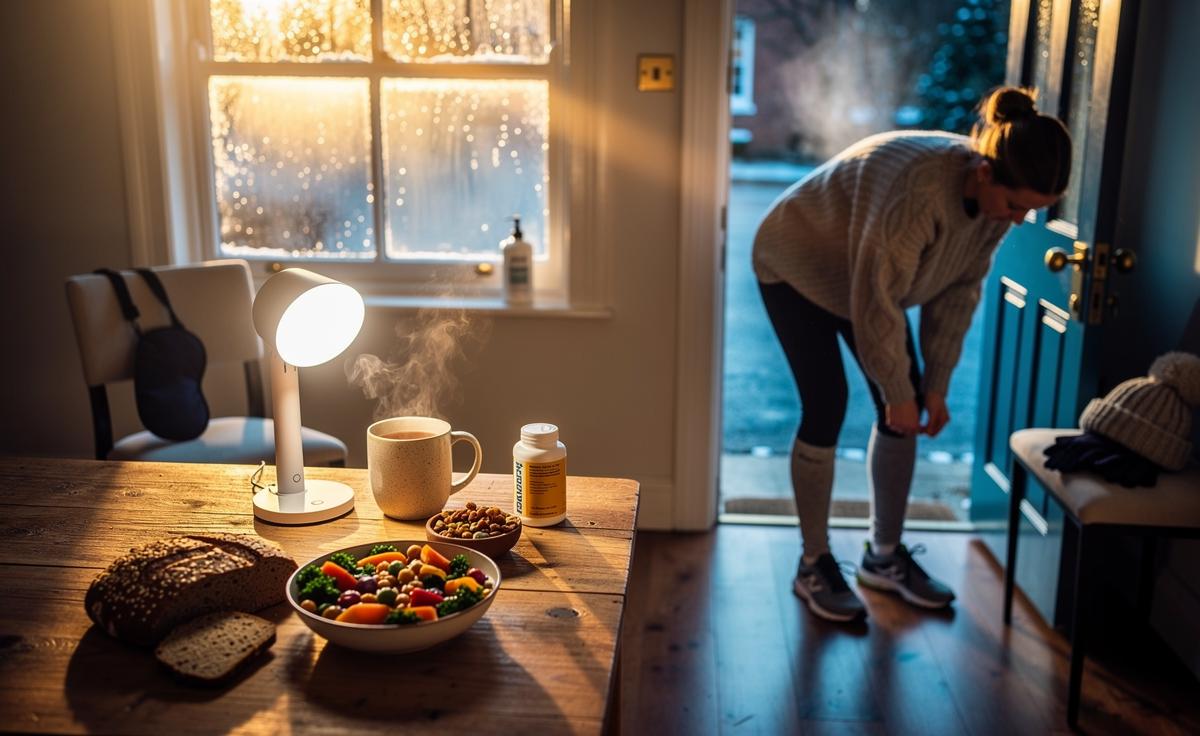
In a nutshell
- 🥗 Eat for warmth and steady energy with complex carbohydrates, protein, and healthy fats; prioritise fibre, omega‑3, and vitamin B12, and taper caffeine after lunch for steadier days.
- 🏃 Train smart in the cold: extend warm-ups, layer clothing, prioritise daylight walks, and use short, focused sessions—because consistency beats intensity when temperatures drop.
- ☀️ Synchronise circadian rhythm with morning outdoor light or a 10,000‑lux light box, dim evenings, a cool dark bedroom, and brief early naps to protect sleep and mood.
- 🛡️ Guard immunity with handwashing, ventilation, up-to-date vaccinations, a daily vitamin D supplement (10 μg), and foods rich in vitamin C, zinc, and live cultures.
- 📈 Keep it sustainable: make small, steady choices, stack habits, plan low-effort wins (prepared snacks, scheduled walks), and aim for durable momentum through to spring.
Winter can feel like a slow battery drain: fewer daylight hours, unhelpful commutes in the dark, and a social calendar that swings from festive feasts to quiet evenings. Staying energised until spring isn’t about superhuman willpower; it’s about gentle systems that carry you through. Think nutrient-dense plates, light exposure that nudges your body clock, movement that sparks warmth, and routines that protect sleep. Small, steady choices beat grim determination every time. The goal isn’t peak performance but sustainable momentum. With a little intention, you can exit winter strong, alert, and ready for the longer days ahead.
Eat for Warmth and Steady Energy
The winter plate should be a thermostat and a fuel tank. Build meals around complex carbohydrates (oats, barley, sweet potatoes) for slow-release energy, then anchor them with protein (eggs, beans, fish, tofu) and healthy fats such as olive oil or nuts. Fibre matters in cold months; it stabilises blood sugar and feeds your gut microbes, which can influence mood and immunity. Soups, stews, and dal deliver warmth and hydration together. Add spices like ginger, cinnamon, and chilli; they don’t just taste bold, they can make meals feel instantly comforting.
Watch caffeine. Enjoy your morning brew, then taper by early afternoon to protect sleep. For snacks, aim for two-part combos: an apple with peanut butter, yoghurt with seeds, or rye crackers and hummus. Iron and vitamin B12 support tiredness management; if you’re plant-based, lean on lentils, fortified cereals, and nutritional yeast. Oily fish twice a week supplies omega‑3; if that’s not your thing, consider algae-based alternatives. Think of each plate as a quiet intervention against winter fatigue—colourful, warm, and deliberately balanced.
Train Smart When It’s Cold
Cold air can be bracing or brutal. Choose smart. Start with a longer warm-up: gentle mobility, then light cardio to coax heat into joints and muscles. Layer clothing you can peel off as you warm. Outdoor movement is a two-for-one because daylight supports your body clock. A brisk 20-minute walk at lunch can outperform a sluggish evening gym session for mood and alertness. When streets are icy, swap impact for control: strength circuits at home, resistance bands, or yoga flows that build fire from within.
Short, focused sessions are potent in winter. Try intervals that lift heart rate without drenching you in sweat. Or sprinkle energy “sparks” through the day—three sets of squats between emails, calf raises while the kettle boils. Consistency beats intensity when weather fights back. Hydrate even if you don’t feel thirsty; central heating dehydrates. If you train early, add a small carb snack to wake the system. Below is a simple menu of quick wins:
| Activity | Duration | Intensity | Energy Benefit |
|---|---|---|---|
| Brisk daylight walk | 15–25 mins | Moderate | Circadian boost, mood lift |
| Bodyweight circuit | 12–18 mins | Moderate–High | Warmth, metabolic spark |
| Mobility + core | 10–15 mins | Low | Less stiffness, steady energy |
Light, Sleep, and Mood Management
Winter plays tricks on circadian rhythm. Anchor it with morning light: step outside soon after waking, even under cloud, to signal “daytime” to your brain. If mornings are dark, consider a 10,000‑lux light box used safely upon rising; many find it sharpens focus and steadies mood. In the evening, dim lamps and reduce blue light from screens. A warm shower before bed drops core temperature afterwards and cues sleep. Keep the bedroom cool, dark, and quiet; think cave, not caveat. Protect sleep and you protect your daytime energy budget.
Plan gentle mental hygiene. A five-minute “closure ritual” at day’s end—jotting tomorrow’s top tasks—stops late-night rumination. Breathwork, like a slow 4‑6 cadence, can settle the nervous system. If naps are necessary, keep them early and short (15–20 minutes) to avoid disrupting night sleep. Magnesium-rich foods such as pumpkin seeds or leafy greens support relaxation without overstating their powers. Seek sunlight breaks where possible; they’re not indulgent, they’re strategic. And keep social touchpoints alive. Low-key chats, shared meals, a phone call—these guard against the winter blues and recharge the mind.
Practical Immunity Safeguards
Energy vanishes fast when colds circulate. Start with basics that work: handwashing with soap for about 20 seconds, tissues for coughs and sneezes, and better ventilation when guests gather. The UK advice is clear on vitamin D: consider a daily 10 microgram (10 μg) supplement in autumn and winter, particularly when daylight is scarce. Focus your plate on vitamin C-rich produce (kiwi, peppers), zinc sources (pulses, seeds), and fermented foods such as kefir or sauerkraut to support gut diversity. Prevention is kinder to your energy than any cure.
Keep vaccinations up to date as advised, particularly for flu and COVID‑19, which can derail weeks of progress. Manage stress with realistic workloads; relentless pressure suppresses immune function. If you commute, carry a small hand sanitiser; use it after busy trains or lifts. Saline nasal rinses can help when indoor heating dries sinuses. Sleep remains the master lever here. When the body repairs well at night, you’re more resilient by day. Build these safeguards into routine, so they’re habits, not chores, and you’ll feel the difference by late winter.
Winter needn’t be an energy blackout. With a balanced plate, strategic movement, light-savvy routines, and immune-friendly habits, you create a steady power supply that lasts until the first blossom appears. Pick two changes this week, then layer others when they feel easy. Keep it humane, keep it repeatable, and celebrate small wins—warm gloves laid out, lunch planned, walk booked. Your winter is shaped less by weather than by your rhythm. Which one or two shifts will you commit to today to stay energised until spring—and who might join you for extra accountability?
Did you like it?4.4/5 (28)