In a nutshell
- 🔧 The two-hour thermal tune uses simple, reversible tweaks—lower boiler flow, seal draughts, and zone rooms—to preserve comfort and cut heating costs by up to 40%.
- 🌡️ Lowering the boiler flow temperature to 55–60°C boosts condensing efficiency and steadier heat; balance radiators while leaving hot-water settings unchanged.
- 🚪 Targeted draught-proofing (doors, windows, loft hatch, unused chimneys) plus radiator reflectors and heavy curtains delivers quick, low-cost comfort gains.
- 🧭 Smart zonal control with TRVs heats lived-in rooms (19–20°C) and trims unused spaces (15–17°C); a 1°C thermostat drop saves about 5%.
- 💷 In a typical UK home (~10,000 kWh), combined measures yield 20–40% space-heating savings (£140–£280), with gas work reserved for Gas Safe engineers.
Facing another winter with bills that bite? Here’s a smart, practical fix that doesn’t require ripping out radiators or taking out a loan. The “two-hour thermal tune” is a targeted set of tweaks—part settings, part sealing—that can trim space-heating costs by up to 40% in many UK homes. It focuses on the biggest wins: lowering your boiler’s flow temperature, tightening cold-air leaks, and heating rooms only when they’re used. It’s quick. It’s largely reversible. And it preserves comfort. Lowering boiler temperature and zoning rooms deliver the lion’s share of savings without sacrificing warmth. Here’s exactly how it works, why it works, and what to expect in pounds and pence.
The Two-Hour Thermal Tune: The Clever Home Hack
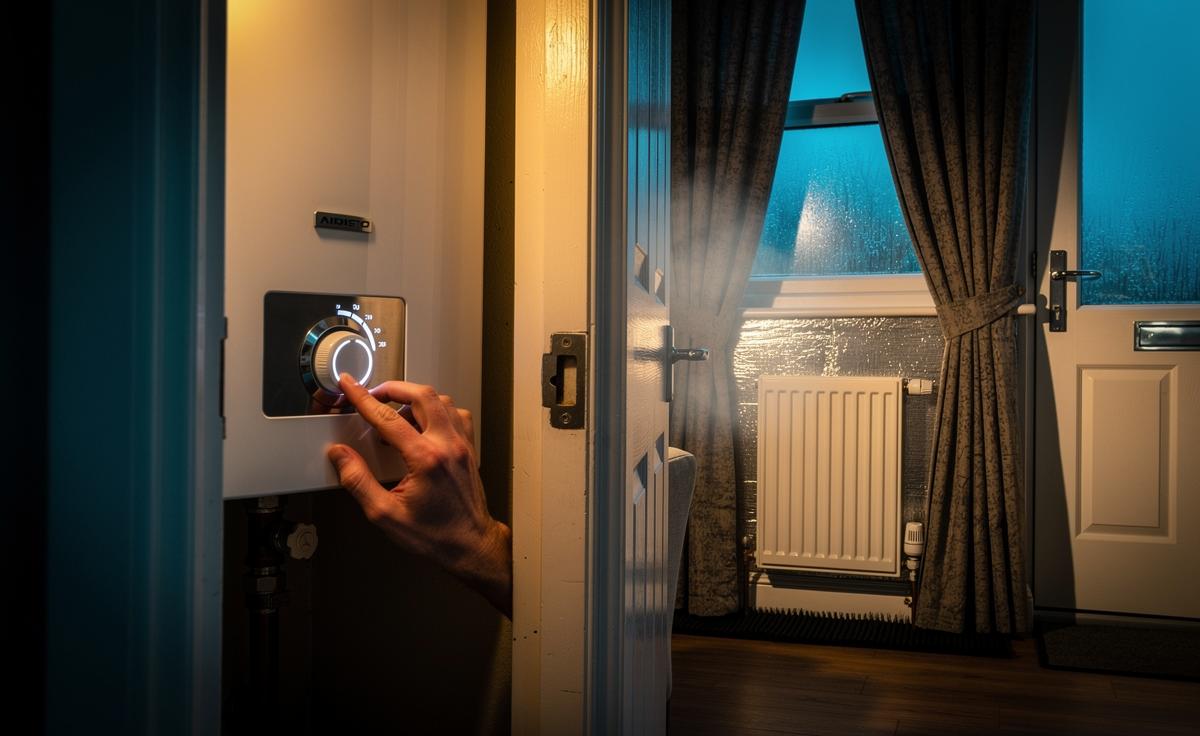
Start with the boiler. If you’ve a modern condensing gas boiler, its efficiency jumps when return water comes back cool enough to condense flue vapour. That’s easiest to achieve by lowering the flow temperature from the typical 70–80°C to around 55–60°C for radiators, or 40–50°C for underfloor heating. It’s safe, simple, and reversible—check your manual, then turn down the radiator flow setpoint, not the hot-water setting. Give it a day to stabilise; rooms should still hit set temperatures, just with longer, gentler radiator cycles.
Next, attack draughts. Fit brush or rubber seals to front and back doors, a flap on the letterbox, and foam strips around the loft hatch. If you’ve an unused fireplace, a removable chimney balloon or plate can stop a significant warm-air escape. A roll of self-adhesive strip and a £20–30 seal kit often delivers a serious comfort lift. Add reflective foil behind radiators on external walls to push heat back into the room. Small outlay, quick wins.
Finally, heat where you live. Use TRVs (thermostatic radiator valves) or smart TRVs to set lower targets in spare rooms and hallways. Schedule the living room and bedrooms for your routine, then cut the hallway and utility to a background 16–17°C. Every degree trimmed from a rarely used space avoids paying to warm the outdoors via your walls. Shut internal doors. Heavy curtains at dusk. Simple habits, big effect.
Why It Works: The Science Behind Big Savings
Three principles drive the savings. First, condensing mode. A condensing boiler only reaches its headline efficiency when return water is cool enough—ideally under ~55°C—for condensation to occur in the heat exchanger. Lowering the flow temperature makes that easier, often yielding a 5–15% efficiency gain without touching hardware. Less cycling, more steady-state operation, steadier comfort.
Second, heat loss scales with temperature difference. The bigger the delta-T between indoors and outdoors, the faster warmth leaks away through walls, windows, and roofs. Sealing draughts reduces infiltration—the sneaky exchange of warm indoor air for cold outdoor air—and trimming setpoints in low-use rooms narrows delta-T. This means every kilowatt-hour you buy lingers longer. Stop the leaks and you cut the treadmill of reheating the same air.
Third, zonal control prioritises occupied rooms. Heating a whole house to 20–21°C for twelve hours wastes energy on corridors and spare rooms. Directing heat only where needed reduces the heated volume and runtime. Add radiator reflectors on external walls and you nudge more heat into the room rather than warming the brickwork. The cumulative effect is large: moderate gains from efficiency, moderate gains from reduced losses, and substantial gains from selective heating—together, that’s where “up to 40%” lives in the real world.
Step-By-Step: Settings, Materials, and Quick Checks
On the boiler, set radiator flow to 55–60°C and leave hot water as-is. If rooms lag on the coldest days, nudge up to 60–65°C temporarily, then step back down. Balance radiators so each heats evenly: open lockshields on cool radiators a quarter-turn at a time until all rooms warm within a similar timeframe. Balanced radiators help keep return temperatures low, boosting condensing efficiency.
Seal priority gaps: door frames, letterbox, keyholes, loft hatch, and any obvious window draughts. Fit a brush strip to the bottom of the front door. In an unused fireplace, install a removable chimney draft excluder (and add a visible warning so it’s removed before any future use). Hang thick, lined curtains and close them at dusk. Behind radiators on external walls, fit reflective panels to bounce heat back.
Set zones: living areas 19–20°C when home, 16–17°C when out or asleep; bedrooms 17–18°C at night; hallway and spare rooms 15–17°C. Use TRVs or smart TRVs; shut doors to contain heat. Drop the main thermostat by 1°C if comfortable—often an instant ~5% cut to heating demand. If you feel chilly, adjust clothing first, not flow temperature.
| Action | Typical Cost | Time | Indicative Saving (space heating) |
|---|---|---|---|
| Lower boiler flow to 55–60°C | £0 | 10 minutes | 5–15% |
| Room-by-room zoning (TRVs/smart TRVs) | £0–£60 per room | 30–60 minutes | 5–15% |
| Draught-proof doors/windows/loft hatch | £20–£80 | 1–2 hours | 5–10% |
| Radiator reflectors on external walls | £10–£30 | 30 minutes | 1–3% |
| Thermostat down by 1°C | £0 | 1 minute | ~5% |
What Savings Look Like in a Typical UK Home
Consider a three-bed semi with annual space-heating demand of around 10,000 kWh of gas. At 7p per kWh, that’s £700 a year just for warmth. If the thermal tune delivers a conservative 20% cut, you save about £140. Push towards 40%—realistic in leakier homes adopting zoning, seals, and lower flow temperatures together—and the bill shrinks by roughly £280. Those are ballpark figures, but they reflect typical UK fabric and occupancy patterns.
Comfort usually improves too. Draught sealing removes cold blasts that make 20°C feel like 18°C. Lower, steadier flow temperatures reduce radiator scald risk and that yo-yo heat feeling. If radiators seem too tepid on frosty mornings, schedule heat-on a little earlier rather than cranking flow to 80°C. Smart TRVs or simple daily habits maintain control without fuss.
There are limits. Very small radiators or badly insulated homes may need a slightly higher flow temperature in deep winter. Heat pumps require a different optimisation approach but love low temperatures. And any work on flues or gas appliances must be done by a Gas Safe engineer. Within those guardrails, though, the two-hour tune is a standout—low cost, low risk, high return.
This winter, think like a building scientist. Tune the boiler for efficiency, stop the sneaky leaks, and only heat rooms that matter. The combination can be striking, often cutting heating costs by up to 40% while making your home feel calmer and warmer. It’s a rare upgrade that pays back in weeks, not years. Will you try the two-hour thermal tune this weekend—and, if you do, which room will be your first target for seals, zoning, and a gentler flow temperature?
Did you like it?4.5/5 (20)