In a nutshell
- 🧭 Tighter consents demand fuller Heritage Statements, detailed method specs, and a repair-first approach, lengthening timelines and increasing costs for owners.
- 🌱 The heritage–Net Zero balance favours reversible, breathable measures (secondary glazing, draught-proofing, careful internal insulation), with heat pumps and solar scrutinised on visual and noise grounds under a public benefit test.
- 📜 Consent rules diverge for listed buildings and conservation areas, making Listed Building Consent pivotal, while tougher enforcement reduces retrospective approvals and raises risks for non-compliant works.
- 🛠️ Demand surges for specialist trades (lime, sash repair, energy modelling), but a skills shortage means costs rising; green finance exists via retrofit-linked mortgages yet often excludes listed homes.
- 📷 Owners who prioritise documentation, prove necessity, and design for reversibility fare best; staged projects protect value as the market rewards compliant upgrades and craftsmanship.
The nation’s love affair with period properties has hit a new and uncomfortable chapter. Ministers and local authorities have tightened oversight on how owners may restore, extend, or retrofit the UK’s historic housing stock. Conservationists welcome the brakes; many owners feel blindsided. The result is a febrile debate about whether the state is protecting heritage or freezing homes in time. At stake are comfort, carbon, and character—three values that rarely align neatly. For thousands who live in Georgian terraces, Victorian villas, and interwar cottages, the rules now demand more evidence, more patience, and more money. The policy gamble is clear: prioritise authenticity without trapping communities in draughty, inefficient homes.
What the New Scrutiny Means for Owners
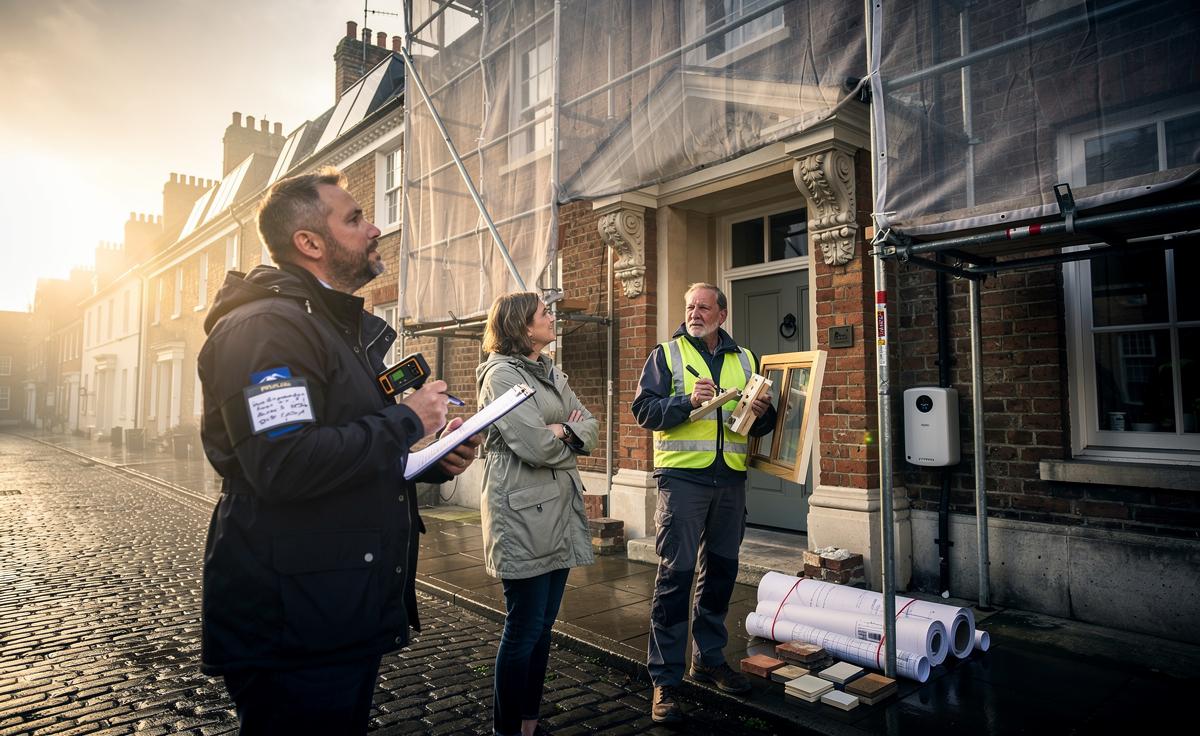
For homeowners, the headline change is procedural. Planners are asking for fuller Heritage Statements, rigorous method statements, and precise product specifications before consent is considered. Applications that once hinged on a sketch and a promise now require measured surveys, archival references, and, where fabric is removed, a repair-first justification. Applications that were once waved through now attract site visits and detailed conditions. Expect requests for reversible fixings, lime-based mortars, and repair over replacement wherever possible.
Timelines are lengthening. Conservation officers—already overstretched—are triaging risk, so even simple works like window repairs can sit in an inbox. Fees and consultant costs mount. Owners report being asked for sample panels to prove colour, texture, and breathability before wholesale works proceed. Contractors, wary of enforcement, document everything. This paper trail protects both sides but can turn a kitchen refit into a semester-long project in technical writing.
There is also sharper enforcement. Councils have signalled fewer retrospective approvals and more enforcement notices where historic fabric is altered without consent. The message is blunt: act first and you may pay twice—once in remedial works, then in reputational damage when you sell. Lenders are taking note; conveyancers now probe past alterations, and missing consents can derail a seemingly straightforward exchange.
Heritage Versus Net Zero: The Policy Tightrope
The climate imperative has forced a new vocabulary into old rooms. Embodied carbon, fabric-first retrofit, and whole-life cost now sit alongside cornice profiles and sash horns. The rule-of-thumb? Minimise harm to significance while maximising energy gains through reversible, breathable measures. That often means secondary glazing over wholesale replacement, draught-proofing over foamed frames, and internal insulation designed to let walls dry, not suffocate.
Heat pumps create flashpoints. Noise, visual impact, and space needs collide with aesthetics. Planners may demand discreet siting, acoustic enclosures, or ground loops rather than prominent air-source units on street elevations. Where the kit cannot hide, it may not be allowed. Solar panels face similar scrutiny on principal facades, pushing installations to rear slopes or outbuildings. The compromise is imperfect but evolving as products become slimmer and finishes more sympathetic.
Policy language increasingly weighs public benefit against less than substantial harm. That calculus is case-by-case. A mid-terrace with crumbling timber may justify new sashes; an intact Regency façade probably will not. Crucially, councils are starting to recognise that retaining and repairing original fabric usually beats the carbon cost of replacement. The best applications quantify that trade-off, using simple heat-loss models and moisture risk assessments to show why a chosen detail is the least harmful path to warmth.
Consent Requirements at a Glance
Rules vary by council and by the status of the building, but patterns are emerging. The matrix below summarises common expectations—always check local guidance and secure Listed Building Consent where required.
| Work Item | Listed Building (I/II*/II) | Conservation Area (Unlisted) |
|---|---|---|
| Window replacement | Consent usually required; repair preferred | May need permission on principal elevation |
| Secondary glazing | Often acceptable if reversible | Generally acceptable; design-sensitive |
| Internal wall insulation | Consent often required; moisture assessment | Usually permissible; building regs apply |
| External wall insulation | Rarely acceptable on street facades | Controlled on street-facing walls |
| Solar panels | Case-by-case; avoid principal roofs | Permitted in some cases; placement critical |
| Air-source heat pump | Consent likely; careful siting and noise limits | Permitted development with constraints |
| Boundary wall alterations | Consent typically required | Permission often required |
Two practical lessons follow. First, documentation wins arguments: photographs of existing defects, timber moisture readings, and sample joinery drawings demonstrate necessity and care. Second, reversibility is a golden thread. If the work can be undone without scarring original fabric, it stands a far better chance. Many owners now stage projects—repairs and draught-proofing first, heavier interventions later—so that incremental gains build a case for more ambitious measures if needed.
Winners, Losers, and the Market Impact
Conservation architects and specialist trades are in demand. Lime plasterers, sash-window restorers, energy modellers versed in historic fabric—these are the new rock stars of renovation. Their diaries are full, their prices buoyant. Insurers, too, are recalibrating, pricing in the risks of non-compliant works and the higher costs of like-for-like repairs. Badly judged alterations do not just annoy planners; they can void cover and depress resale value.
But costs do not fall evenly. Owners of modest Grade II terraces face the same scrutiny as grander houses, often without deep pockets. The skills shortage slows projects and inflates quotes. Green finance helps—some lenders offer retrofit-linked mortgages—yet many products exclude listed homes or require EPC gains that are unrealistic without unacceptable loss of fabric. The result is a patchwork of help, with savvy applicants stacking small wins: loft insulation where breathable, chimney balloons, secondary glazing, thermostatic controls.
Markets notice friction. Buyers ask sharper questions and pay premiums for properties with well-documented, consented upgrades. Conversely, houses with uPVC on a Georgian frontage or polystyrene-clad Victorian brickwork face price chips and longer sales. The new rules are not a freeze on progress; they are a demand for craftsmanship, patience, and evidence. That may yet produce better houses—warmer, healthier, still themselves—but only if authorities match rigour with speed and clear guidance.
The crackdown on careless renovation is, at heart, an attempt to merge two public goods: cultural memory and climate action. It asks more of owners and professionals alike: better research, better materials, better records. When it works, the results sing; when it stalls, the process feels punitive. The next test is delivery—consistent decisions, shorter queues, and incentives that reward doing the right thing the right way. As your own home beckons for repairs or retrofit, how will you navigate the new scrutiny—and what compromises are you prepared to defend in the name of warmth and heritage?
Did you like it?4.5/5 (30)