In a nutshell
- 🍋 Power duo: lemon and salt—citric acid emulsifies grease while salt delivers controlled abrasion, cutting film and neutralising odours without harsh chemicals.
- 🧽 Step-by-step clean: cool hob, remove parts, pre-wipe, add 1–2 tsp salt, scrub with halved lemon, allow 5–10 minute dwell, mist and wipe with a microfibre cloth, then buff to a streak-free shine.
- 🔥 Burnt-on fixes: form a lemon–salt paste, cover with a warm cloth as a gentle poultice, use a flat plastic scraper, repeat light passes instead of force to lift carbonised spots.
- 🧰 Surface tweaks: follow the grain on stainless steel; use fine salt and feather-light pressure on glass-ceramic; tolerate coarse salt on enamel; keep acid brief and dry fast on cast iron.
- ♻️ Smart, safe routine: low-cost, eco-conscious, no harsh fumes; avoid flooding electrics/igniters; rinse and dry components fully; turn post-cook cleaning into a five-minute habit.
Greasy rings around the burners, sticky splatters across the surface, that faint whiff of last night’s fry-up—your stovetop tells a story. But turning to a cupboard staple duo, lemon and salt, delivers a fast, low-cost clean with a gleaming payoff. The trick is simple chemistry married to gentle abrasion. It’s quick. It’s satisfying. It’s kinder to your kitchen air than heavy-duty aerosols. No harsh fumes, no complicated kit, no waiting in rubber gloves for half an hour. With a couple of household ingredients and the right technique, you can lift stubborn film, neutralise odours, and reveal a bright, streak-free shine in minutes.
Why Lemon and Salt Beat Grease
At the heart of this method is citric acid, the naturally occurring compound that makes lemons tart. It behaves like a light degreaser, helping to emulsify fats and loosen the polymerised oils that cause that grimy film on hob surfaces. The juice cuts through smears, while the peel releases gentle solvents and a clean, uplifting fragrance. This is targeted chemistry without the cost or chemical clutter.
Enter salt, nature’s mild, controllable abrasive. Its crystalline edges disrupt caked-on residue without the bite of scouring powders. Use coarse grains for enameled and stainless areas, fine grains for delicate glass-ceramic zones. Together, lemon and salt create a scrub that is both effective and surprisingly respectful of finishes when used with sensible pressure. Used properly, you polish rather than punish the surface.
There’s a practical bonus too. This method is cheap, fast, and reduces reliance on multi-product cleaning arsenals. You’re not masking odours; you’re neutralising them. You’re not spreading grease; you’re lifting it into a wipeable suspension. The result is a surface that feels clean to the fingertips, not just to the eye—dry, squeak-pristine, ready for tonight’s supper.
Step-by-Step: The Citrus and Salt Method
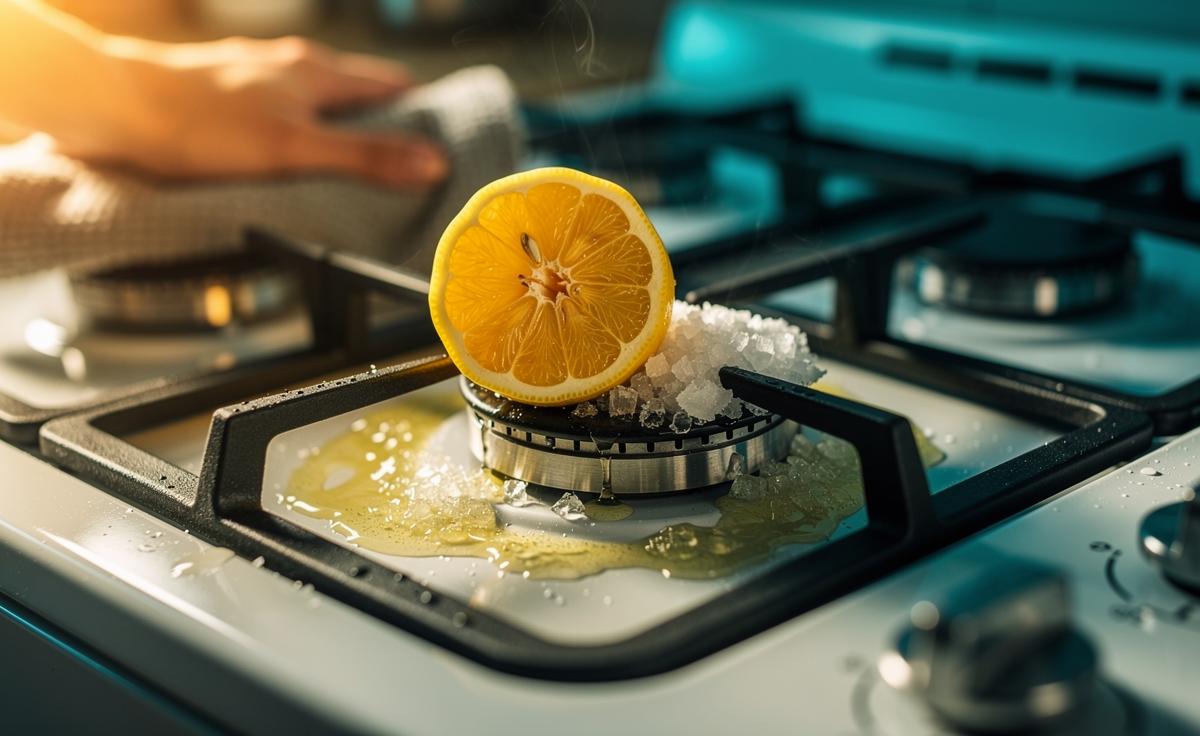
Start with the hob switched off and cool. Remove grates, burner caps, and rings, tapping away loose crumbs. Wipe the surface with a warm, damp cloth to lift loose debris. Halve a fresh lemon; sprinkle 1–2 teaspoons of salt directly onto greasy zones. Using the cut side as your “sponge”, scrub in small circles. The juice flows, the salt bites, and the grime loosens. Let the citrus sit for 5–10 minutes on stubborn patches to soften baked-on film. Do not flood electrics or ignite any pilot—this is a wet clean, not a soak.
| Item | Purpose | Quick Note |
|---|---|---|
| Lemon half | Degrease and deodorise | One half per average hob |
| Salt (coarse/fine) | Mild abrasion | 1–2 tsp per zone |
| Warm water spray | Rinse aid | Light mist, not a soak |
| Microfibre cloth | Lift residue, buff | One damp, one dry |
After dwell time, mist with warm water and wipe using a damp microfibre cloth, lifting the citrus-salt slurry and suspended grease. Rinse the cloth, repeat until the surface feels squeaky to the touch, then buff dry with a clean towel for a streak-free finish. Clean grates and caps in the same way over the sink, rinse thoroughly, and dry fully before reassembly. Finish with a final dry buff—this is where the shine truly appears.
Dealing With Stubborn Burnt-On Residue
Sometimes last week’s curry splatter has bonded to a high gloss you didn’t ask for. For these stubborn patches, make a targeted paste: sprinkle salt thickly over the spot, press in fresh lemon juice until it forms a grainy slurry, and cover with a warm, damp cloth for 10 minutes to keep it active. This creates a gentle poultice that coaxes, rather than forces, the bond to release.
After the pause, scrub with the lemon cut-side or a non-scratch pad, keeping the area moist. A plastic scraper held flat can lift brittle, carbonised flecks without gouging the surface—avoid steel wool on stainless and glass-ceramic, which will scratch. For burner caps and trivets, the same paste works well; finish by rinsing under hot water, then drying immediately to prevent water marks or rust on cast components. Persistence matters—light passes, several times, beat one aggressive attack.
If a halo remains, repeat once more or extend dwell time. Work methodically, inch by inch, and follow with a thorough rinse and dry. The goal is control: maintain just enough abrasion to lift residue while protecting finishes, edges, and printed hob markings. Your reward is an even, uniform sheen that doesn’t reveal where the problem spot used to be.
Care for Different Stovetop Surfaces
Not all hobs are alike, and the lemon-salt duo benefits from small tweaks. On stainless steel, scrub in the direction of the grain to minimise micro-swirls, then rinse very well; citric acid can spot if left to dry. For glass-ceramic tops, choose fine salt and feather-light pressure, focusing on lubricating with juice to glide rather than grind. Gentle contact trumps brute force on smooth, glossy glass.
| Surface | Adjustment | Pressure |
|---|---|---|
| Stainless steel | Follow grain, rinse promptly | Light–moderate |
| Glass-ceramic | Use fine salt, short dwell | Feather-light |
| Enamel | Coarse salt acceptable | Moderate |
| Cast iron grates | Quick citrus contact, dry fast | Moderate |
Enamel is robust, so coarse salt and longer scrubs usually pose no issue, but still finish with a clean rinse. With cast iron grates, keep acid contact brief and dry thoroughly to avoid flash rust; a drop of neutral oil on a cloth can seal them after cleaning. Electric coil elements should never be soaked—wipe only the drip pans and surrounding surfaces. Always ensure the hob is off and cool, and avoid flooding gaps or igniters. The right match of technique to material is what makes the finish look professionally maintained.
A shining hob changes the tone of the whole kitchen. The fresh lift of citrus, the tactile squeak under a fingertip, and the even sheen around each burner are small satisfactions that add up. With lemon and salt, you’ve got an eco-conscious routine that’s cheap, quick, and quietly effective. Once mastered, it becomes a five-minute habit after heavy cooks, not a Saturday chore. Will you try the citrus-and-salt approach tonight, or is there a specific surface or stain you’d like help tailoring this method to first?
Did you like it?4.5/5 (24)