In a nutshell
- ✨ Understand the enemy: soap scum forms when minerals bind with soap; vinegar (acetic acid) dissolves scale while baking soda (sodium bicarbonate) adds gentle abrasion and fizz to lift residue.
- 🧼 Follow the method: warm surfaces, spray vinegar, allow 5–10 minutes of dwell time, apply baking soda paste/sprinkle, scrub top-to-bottom, then rinse, squeegee, and dry for a streak-free shine.
- 🧪 Tailor to surfaces: use neat vinegar on glass/ceramic, dilute for acrylic; go gentle on sealant; avoid acids on natural stone; for limescale, wrap taps in vinegar-soaked cloths before scrubbing.
- 🛡️ Safety first: never mix vinegar with bleach; use non-scratch pads and microfibre; test in a hidden spot; don’t over-scour—repeat the cycle instead for tough patches.
- ♻️ Keep it gone: daily squeegee, ventilation, switch to syndet body wash, weekly 1:1 vinegar spritz and buff, and consider a water softener—consistency beats intensity.
Soap scum creeps up quietly, turning glass milky and tiles dull, then clinging harder the more you scrub. The quickest, safest remedy in a UK home is already in your cupboard: vinegar and baking soda. This classic duo slices through residue without pricey chemicals or harsh smells that linger. Used correctly, it restores gleam in minutes and keeps taps, showers, and tubs looking professionally cleaned. It’s simple, fast, and surprisingly satisfying. Below, you’ll find the science that makes the method work, the exact steps to follow, smart tweaks for different surfaces, and daily habits that stop the haze from returning. Prepare to see chrome and glass sparkle again.
Why Soap Scum Builds Up and How Vinegar and Baking Soda Work
Soap scum is the stubborn film formed when true soap reacts with hard water minerals. Calcium and magnesium ions bind with fatty acids to create an insoluble residue that sticks to glass, tile, and metal. That’s why showers in hard-water areas dull so quickly. Enter the household heroes: acetic acid in vinegar loosens mineral deposits, and sodium bicarbonate—baking soda—adds gentle abrasion and fizz that lifts grime. This chemical one-two punch breaks the bond between minerals and soap, so residue releases instead of smearing.
Warm white vinegar (5% acidity) dissolves the alkaline scale that helps scum anchor itself. When it meets baking soda, carbon dioxide bubbles form, mechanically agitating trapped debris while the mildly abrasive particles scour without gouging. It’s effective, cheap, and safe for most household plumbing. Better yet, there’s no chlorine odour or respiratory sting. Do note one important caveat: avoid vinegar on natural stone such as marble, limestone, or travertine, where acids can etch and dull the surface. On enamel, ceramic, glass, chrome, and stainless, the combination shines—literally.
In practice, vinegar softens the scale; the bicarbonate paste then scrubs it free. Rinse, and what’s left is a clean, smooth surface that resists fresh buildup because micro-pitting is not increased by harsh scouring. Result: clearer glass, brighter grout, shinier taps.
Step-by-Step Method for Spotless Showers and Tubs
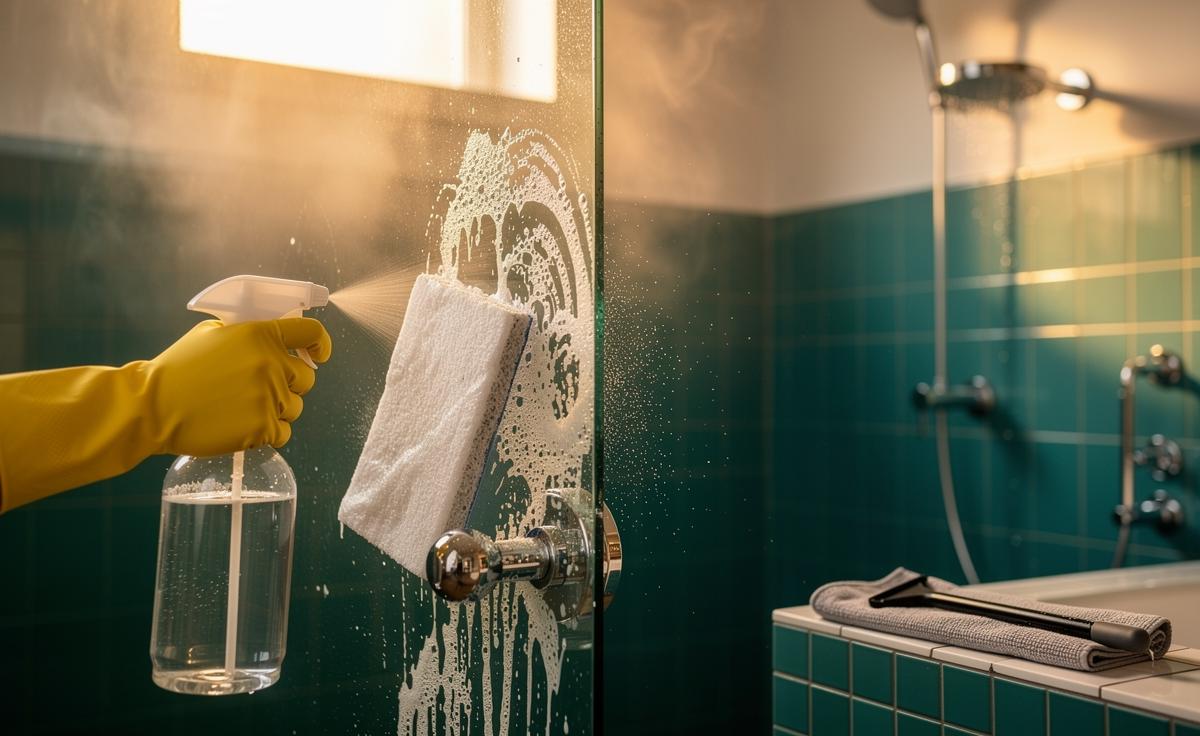
Start by running a hot shower for one to two minutes to warm the surfaces. Heat opens microscopic pores, letting the vinegar work faster. Fill a spray bottle with warm white vinegar; for heavy scum, use it neat. For light maintenance, a 1:1 vinegar–water mix suffices. Spritz until the glass, tiles, taps, and tray are lightly wet but not dripping. Let it dwell for 5–10 minutes—contact time is your silent workhorse.
Next, apply baking soda. You can either sprinkle it directly onto a damp non-scratch pad or whisk a paste (3 parts soda to 1 part water) and dab on trouble spots. Working from top to bottom, scrub in overlapping circles. The mild grit lifts softened scum while the fizz nudges residue from corners and grout lines. For taps and fittings, use a soft toothbrush to get into creases. If the fizz fades fast, add a little more vinegar to reactivate it.
Rinse thoroughly with hot water. Squeegee glass and wipe fittings with a microfibre cloth to prevent drying marks. For stubborn patches, repeat the vinegar dwell and a shorter scrub; don’t just press harder. On silicone sealant, go gently to avoid peeling. Finish with a quick polish using a dry cloth on chrome for a showroom shine. Tip: Keep a small caddy with a spray, soda, and pad in the bathroom so quick clean-ups take seconds, not chores.
Tailored Tips for Different Surfaces
Different materials benefit from slight tweaks. Use stronger vinegar on dense, resilient surfaces like ceramic and glass, but dilute for plastics to prevent haze. Keep tools gentle: microfibre cloths, non-scratch pads, and soft brushes. Metal razor blades are only for flat glass and only at a shallow angle. Always spot-test in an inconspicuous area first. The guide below gives fast reference points for dilution and dwell time; adjust if your water is extremely hard.
| Surface | Vinegar Dilution | Dwell Time | Notes |
|---|---|---|---|
| Glass shower screens | Neat | 8–10 mins | Squeegee after rinse for a streak-free finish. |
| Ceramic tiles & enamel tubs | Neat or 1:1 | 6–8 mins | Non-scratch pad; avoid aggressive scouring. |
| Chrome & stainless taps | 1:1 | 5–7 mins | Polish dry with microfibre to prevent spots. |
| Plastic/acrylic trays | 1:1 to 1:2 | 4–6 mins | Use very light pressure to avoid haze. |
| Grout | Neat | 10–12 mins | Use a soft brush; rinse well. |
Never mix vinegar with bleach or products containing chlorine—this produces dangerous chlorine gas. Avoid acids on natural stone; use a pH-neutral cleaner instead. If you have limescale “crusts” around taps, wrap the area with a vinegar-soaked cloth for 15 minutes, then proceed with baking soda. On etched glass, cleaning will improve clarity but can’t reverse true etching; prevention matters most. Finish every clean with a wipe-dry to slow the return of scum.
Preventive Habits That Keep Scum Away
Prevention is faster than scrubbing. After showers, run a squeegee down glass and tiles; it takes 20 seconds and removes the mineral-laden water that seeds soap scum. Crack a window or run the extractor fan for 15 minutes to reduce humidity and drying marks. Switch from traditional bar soap to a syndet (synthetic detergent) body wash; fewer calcium soaps, less film. Small changes, big gains.
Once a week, spritz a 1:1 vinegar solution on glass and taps, leave for three minutes, then buff dry—no scrubbing needed if you’ve been squeegeeing. Keep a dish wand filled with 2 parts vinegar, 1 part water, plus a spoon of baking soda nearby; a quick midweek swipe keeps corners pristine. Consider a simple inline filter or water softener in very hard-water postcodes; it dramatically reduces mineral deposits. Wipe shampoo drips and soap trays before they cake. For families, assign “last out” to squeegee duty. It sticks if it’s simple.
Consistency beats intensity: a daily 30-second routine prevents the need for weekend deep cleans. Finish every rinse by drying the chrome, and you’ll keep that showroom gleam long after the first sparkle. Your future self will thank you.
Using vinegar and baking soda is an elegant, budget-friendly way to defeat soap scum, combining real chemistry with everyday practicality. The method thrives on dwell time, gentle tools, and a tidy finish—spray, fizz, rinse, dry. Once you tailor dilutions to your surfaces and adopt quick preventive habits, the haze stops returning and the bathroom looks newly installed. It’s greener, cheaper, and kinder to your lungs than most bottled fixes. Ready to put the duo to work this week—and which surface will you reclaim first for that instant, mirror-bright reveal?
Did you like it?4.5/5 (27)