In a nutshell
- 🧺 Towels turn scratchy from detergent residue, fabric softener oils, and limescale; reset fibres with baking soda and white vinegar used in sequence, never together.
- 🔁 Method: add 3–4 tbsp baking soda to the wash at up to 60°C (care label permitting), then a rinse cycle with 150–250 ml white vinegar; dry low-to-medium heat or line-dry, no softener or dryer sheets.
- ⚖️ Dose by water hardness and drum size; use clear distilled white vinegar only, adjust gently, and check local hardness or signs like a cloudy kettle and chalky taps.
- 🚫 Avoid mixing vinegar and bicarb, overloading the drum, excess detergent, and high heat; leave space for turnover and test vivid colours for colourfastness.
- 🧼 Upkeep: use measured detergent for routine washes, occasional vinegar rinses, wool dryer balls, and monthly machine cleaning for fluffier, fresher, longer-lasting towels.
Towels should feel like a warm hug, not a loofah. If yours have gone rough, the culprit is rarely the fabric itself. It’s build-up. UK homes with hard water and generous scoops of detergent often end up with fibres matted by minerals and residue. The fix isn’t another bottle on the shelf. It’s a pairing found in most kitchens: baking soda and white vinegar. Used correctly, they lift deposits, restore absorbency, and leave towels air-light. No perfume-cloud. No waxy coating. Just tidy chemistry and smart laundering. Here’s how to get effortless fluff without fabric softener, along with the science and small tweaks that make a big difference.
Why Towels Go Stiff and Scratchy
Towel fibres are tiny loops. When they’re clean, those loops stand tall and springy, trapping air and water. Over time, detergent residue and fabric softener oils glue the loops together, while limescale from hard water stiffens every strand. The result? Crunch, not cloud. Add body lotions and sunscreen residues, and the pile collapses. Your machine plays a role too: cool washes and short rinses leave more behind than you realise. Smell sourness? That’s trapped moisture and a thin biofilm clinging to the weave.
Two pantry staples reverse the damage. Baking soda (bicarbonate of soda) is a mild alkali that helps soften water, loosen soil, and neutralise odours without coating fibres. White vinegar (acetic acid) dissolves mineral deposits and cuts through soap scum, helping loops stand up again. Do not use them at the same time in the same cycle; they neutralise each other and you lose the cleaning power. Used in sequence—bicarb in the wash, vinegar in the rinse—they reset towels to their natural, thirsty best.
Step-by-Step: The Baking Soda and Vinegar Wash
Start with a machine that isn’t overloaded. Towels need space to roll. For a standard 7–9 kg front-loader, add your towels and skip detergent for this refresh cycle. Sprinkle in 3–4 tablespoons (45–60 g) of baking soda directly into the drum. Choose a hot wash, 60°C if the care label allows; heat helps dissolve old residues. If your towels are heavily soiled, pre-soak them in warm water with 2 tablespoons of bicarb for 30 minutes before washing. Keep it simple. No bleach, no softener.
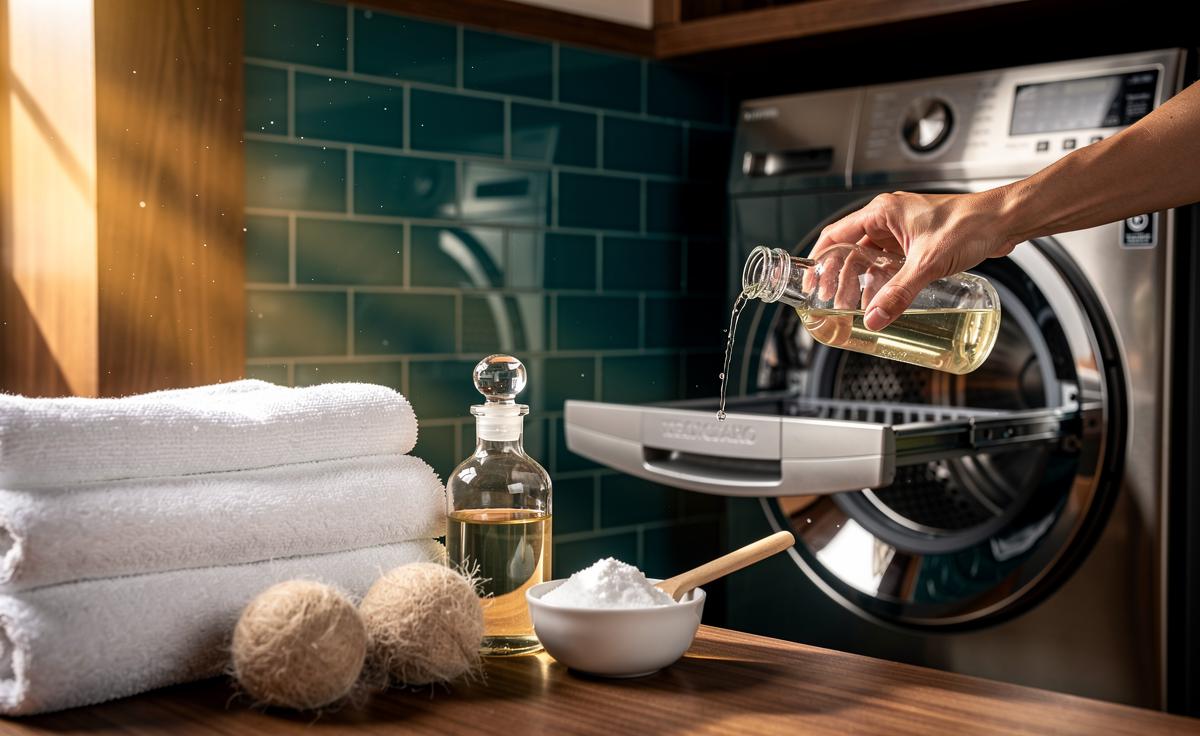
When the wash finishes, run a second cycle on rinse-only and pour 150–250 ml of white vinegar into the fabric-softener drawer. The vinegar tackles limescale and leftover suds, and it rinses clean. Don’t worry about a chip-shop tang; it vanishes as the towels dry. For drying, choose low-to-medium heat with two wool balls to lift the pile, or line-dry outdoors and finish with a brief tumble to fluff. Do not add fabric softener or dryer sheets. They flatten fibres and kill absorbency. After one reset, routine washes need just a small, measured dose of detergent and an occasional vinegar rinse.
Quantities, Water Hardness, and Drum Size
Dose depends on your water and machine. Too little and build-up lingers; too much and you waste product. If you live in a hard-water area—many UK regions do—you’ll need slightly more vinegar in the rinse. Use this quick guide to dial it in without guesswork.
| Drum Size | Water Hardness | Baking Soda (Wash) | White Vinegar (Rinse) | Notes |
|---|---|---|---|---|
| 6–7 kg | Soft | 2–3 tbsp (30–45 g) | 120–150 ml | Use 40–60°C as label allows |
| 7–9 kg | Moderate | 3–4 tbsp (45–60 g) | 150–200 ml | Add a second rinse if sudsy |
| 9–11 kg | Hard | 4–5 tbsp (60–75 g) | 200–250 ml | Consider monthly machine descaling |
If you’re unsure about hardness, check your water supplier’s map or look for tell-tales: crispy towels, cloudy kettle, chalky taps. Adjust gently. It’s better to repeat a cycle than overdo acids or alkalis. And always use clear, distilled white vinegar, not malt or balsamic, which can stain.
Common Mistakes and How to Avoid Them
The classic blunder is mixing baking soda and vinegar together in the drum. The fizz looks satisfying, but it neutralises both and cleans little. Keep them separate: alkali in the wash, acid in the rinse. Overloading is another softener-killer. When towels can’t move, water can’t reach every fibre, so residue stays put. Leave a hand’s breadth of space at the drum’s top for proper turnover. Measure detergent properly—modern formulas are concentrated, and too much leaves a film that defeats your efforts.
Skip commercial fabric softener and dryer sheets; they’re designed for smoothness, not absorbency, and they seal loops with perfume and silicone. Don’t overheat cotton either. High, prolonged heat can bake stiffness in and shorten lifespan. Stick to lower temperatures and remove promptly. Use only white vinegar, never coloured or flavoured vinegars. If colours are vivid, test for colourfastness: dab a hidden corner with diluted vinegar and blot. Finish by cleaning your machine monthly—drum, seals, and drawer—so fresh towels don’t sit in old gunge.
Brought back to life, good towels feel weightless, drink water fast, and dry quicker on the rack. The method is cheap, quick, and kind to fabrics, which means your favourite set lasts longer and smells cleaner between washes. Keep the cycle simple: measured detergent for routine laundering, baking soda and white vinegar for resets, and no fabric softener, ever. If you try it this week, what difference do you notice first—the fluff, the freshness, or the way the towel actually dries you rather than skimming the surface?
Did you like it?4.4/5 (30)