In a nutshell
- 💡 Layered lighting: blend ambient, task and accent sources, use warm colour temperatures (2700–3000K), add dimmers and renter-friendly plug-in sconces; follow room-by-room lumen targets for balanced, glare-free glow.
- 🧶 Textiles & texture: size-up wool rugs, mix bouclé, velvet and chunky knits, and choose interlined curtains for thermal comfort; keep a limited palette so tactile contrast shines and opt for washable covers.
- 🎨 Colour psychology: anchor with warm neutrals, tune hues to room orientation (warmer for north-facing), and pick finishes wisely—eggshell or matt on walls, satin on trim—for a soft, cocooning feel.
- 🌿 Small details, big impact: layer scent with natural wax candles and diffusers, soften acoustics via curtains and bookshelves, create rituals with trays and peg rails, and add houseplants plus sentimental pieces.
- 🏡 Practical, budget-friendly steps: start corner by corner, prioritise texture and low-glare lighting, use renter-friendly fixes, and aim for quiet cohesion across rooms for a snug, stylish UK home.
Your home should greet you like an old friend: warm, forgiving, and quietly stylish. Making it feel that way isn’t about spending wildly; it’s about intentional choices that heighten comfort, soften edges, and invite lingering. Small tweaks can deliver outsized cosiness. Think of light layered like clothing, textiles that beg to be touched, and colours chosen for the way they make you breathe. I’ve gathered expert décor tricks designed for British homes, where seasons shift and daylight does what it likes. Practical, beautiful, and achievable. Whether you rent a flat or own a terrace, these ideas will help you curate a snug, liveable sanctuary that still looks sharp.
Layered Lighting That Warms Every Room
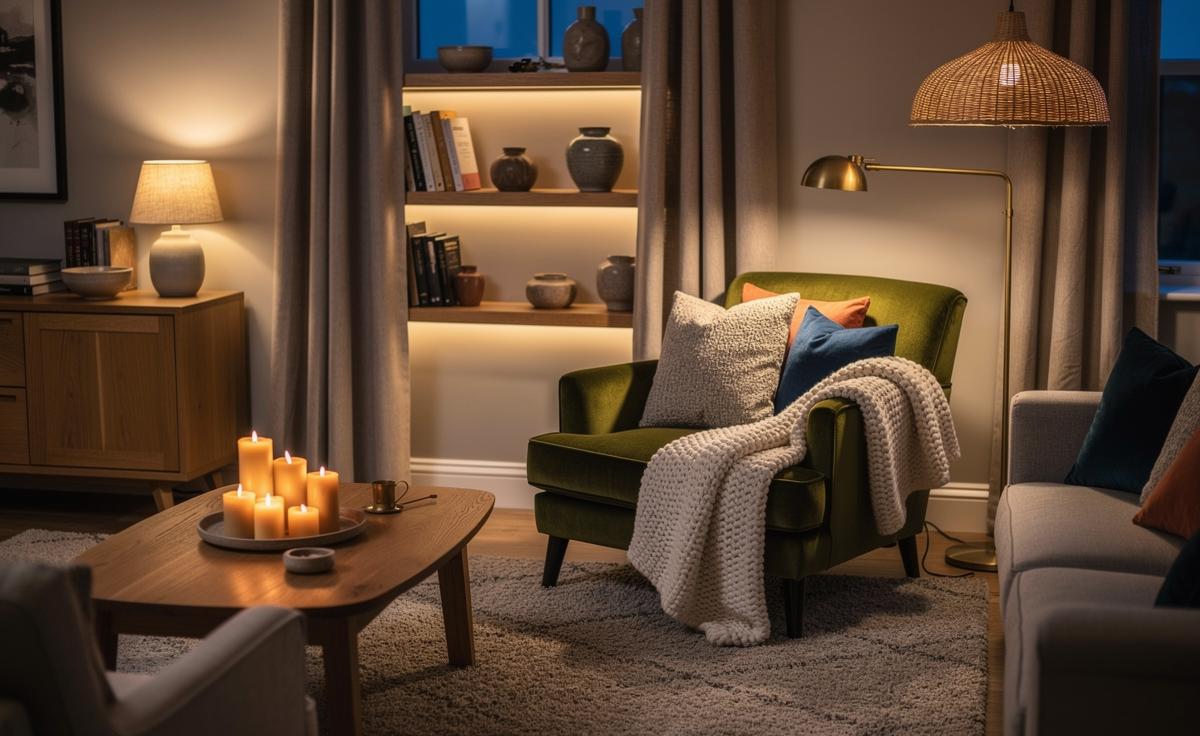
Good lighting turns a cold box into a welcoming retreat. Start with three tiers: ambient (the overall wash), task (focused for reading or cooking), and accent (to emphasise art, shelves, or architectural quirks). Relying on a single ceiling pendant makes spaces feel flat and unforgiving. Instead, distribute light sources at different heights—table lamps on sideboards, a floor lamp casting a pool on an armchair, and warm LEDs tucked under shelves. Aim for warm colour temperatures that flatter skin and surfaces, especially on winter nights.
Choose lampshades in linen, parchment, or rattan to diffuse glare. Dimmer switches are a quiet revolution, letting you steer mood from weekday chores to weekend lounging. Candles still matter—clusters in hurricanes add a lively flicker without fuss. For renters, plug-in sconces and battery picture lights are heroes. Balance is the secret: soft shadows, gentle highlights, and zero harsh hotspots.
| Room | Target Lumens | Colour Temp (K) | Fixture Tip |
|---|---|---|---|
| Living Room | 1,500–3,000 | 2700–3000 | Floor lamps with fabric shades; dimmable downlights sparingly. |
| Bedroom | 1,000–2,000 | 2200–2700 | Bedside lamps; warm LED strips behind headboards. |
| Kitchen | 3,000–5,000 | 3000–3500 | Pendants over islands; under-cabinet task lights. |
| Hallway | 800–1,500 | 2700–3000 | Wall lights to avoid glare and elongate space. |
Textiles, Texture, and Touch: The Power of Softness
Cosiness is tactile. Layer contrasting textures so the room feels collected, not showroom-stiff. Start with a substantial rug—wool or recycled wool blends beat synthetics for warmth and longevity. Place a low-pile flatweave in the hallway, a deeper pile under the sofa, and a sheepskin tossed over a bench. A rug that’s too small makes the room look mean; size up so front sofa legs sit on the rug. In the sitting room, throw a nubbly bouclé, a smooth velvet cushion, and a chunky knit blanket together. Mixed scales create richness.
For windows, interlined curtains in linen or cotton sateen add heft and thermal comfort. If you prefer blinds, layer them with lightweight drapes to soften edges. Bedrooms deserve a tactile stack: percale for crispness, washed linen for rumpled elegance, and a quilt for quick warmth. Choose a limited palette—two main shades, one accent—so the textures sing. Washability matters: removable cushion covers and machine-friendly throws keep everyday life low-stress. Texture is your secret weapon when budgets are tight; it looks luxe even when the price tag isn’t.
Colour Psychology for Calm and Comfort
Colour sets the emotional temperature. When in doubt, steer toward warm neutrals—mushroom, oatmeal, stone—then add muddy greens, terracotta, or deep blues to ground the palette. North-facing rooms love warmer tints with a hint of yellow or pink, while south-facing spaces can handle cooler, greyer notes. Test large swatches at eye level and watch them all day; the British sky can turn a perfect sample into cardboard by noon. Don’t forget the ceiling: tinting it two tones lighter than the walls lowers glare and softens corners.
Finish matters as much as hue. Use eggshell or matt on walls to hide imperfections, satin on trim for subtle sheen, and a wipeable matt in kitchens. If you crave drama, paint skirting and door frames the same shade as walls for a cocooning effect. A single saturated accent—aubergine on a bookcase back, olive on a sideboard—injects intimacy without shrinking the room. Colour should flatter your life, not dominate it. Aim for quiet coherence from hallway to lounge so every threshold feels intentional.
Small Details, Big Impact: Scent, Sound, and Ritual
The finishing touches are often invisible until they’re not. Layer scent in gentle ways—reed diffusers for constant background, candles for evening ritual, a stovetop simmer of citrus and cloves in winter. Choose natural waxes and essential oils to avoid headache-inducing sharpness. Sound is equally architectural: a soft playlist, thick curtains that dampen echo, felt pads under chair legs, a well-placed bookshelf acting as a diffuser. Quiet rooms feel warmer because hard reverberation reads as cold.
Then build rituals into the design. A tray on the ottoman corrals remotes and a book, implying invitation. A peg rail by the door holds a robe and a basket for gloves, keeping clutter off surfaces. Turn a dimmable lamp on the moment dusk lands; light signals ease. Introduce a touch of nature—houseplants, branches in a jug, seasonal flowers—to soften lines and track time. And give something sentimental a spotlight: a framed postcard, a grandparent’s jug. Comfort is personal; the room should nod to your story.
Cosiness is a choreography: light, touch, colour, and the little habits that stitch an evening together. None of it demands tearing down walls, just deliberate layers that make a home hold you. Start with one corner, then another, and keep editing until the whole place feels like a deep breath. Choose warmth, choose texture, choose low-glare glow. The result is style you can live in, not just look at. Which corner will you transform first, and what small change will set the tone for everything else?
Did you like it?4.3/5 (20)