In a nutshell
- 🚿 Natural fix: baking soda and vinegar clear slow drains and odours quickly, avoiding harsh chemicals while staying safe for PVC and copper when used correctly.
- 🧪 How it works: an acid–base reaction releases CO₂ fizz for gentle mechanical agitation; alkalinity loosens grease, acidity tackles mineral and soap scum.
- 📋 Quick method: remove standing water, pre-flush with hot water, add ~1/2 cup baking soda, pour 1–1¼ cups warm vinegar, cover 10–15 minutes, then flush with 1–2 litres of hot water.
- ⚠️ Safety and limits: never mix with bleach or commercial drain cleaners; not for fully blocked drains or toilets; persistent or deep issues call for a plumber or mechanical clearing.
- 💷 Eco and prevention: costs pennies and uses biodegradable ingredients; fit strainers, wipe grease from pans, do weekly hot-water flushes, and a monthly maintenance fizz or enzyme clean.
In kitchens and bathrooms across Britain, an old pairing is enjoying a renaissance: baking soda and vinegar. Favoured by frugal households and sustainability-minded renters alike, this fizzing duo promises clean pipes without the sting of caustic gels or fumes. It’s cheap. It’s simple. It works with the quiet confidence of a trick you’ve known forever but never quite trusted. The method harnesses a tiny chemical drama right inside the u-bend, loosening grime and nudging clogs along without warping seals or scarring metal. For stubborn but not catastrophic blockages, it’s a fast, natural option that spares your plumbing—and your lungs—harsh chemicals.
How the Reaction Works—and Why It Clears Clogs
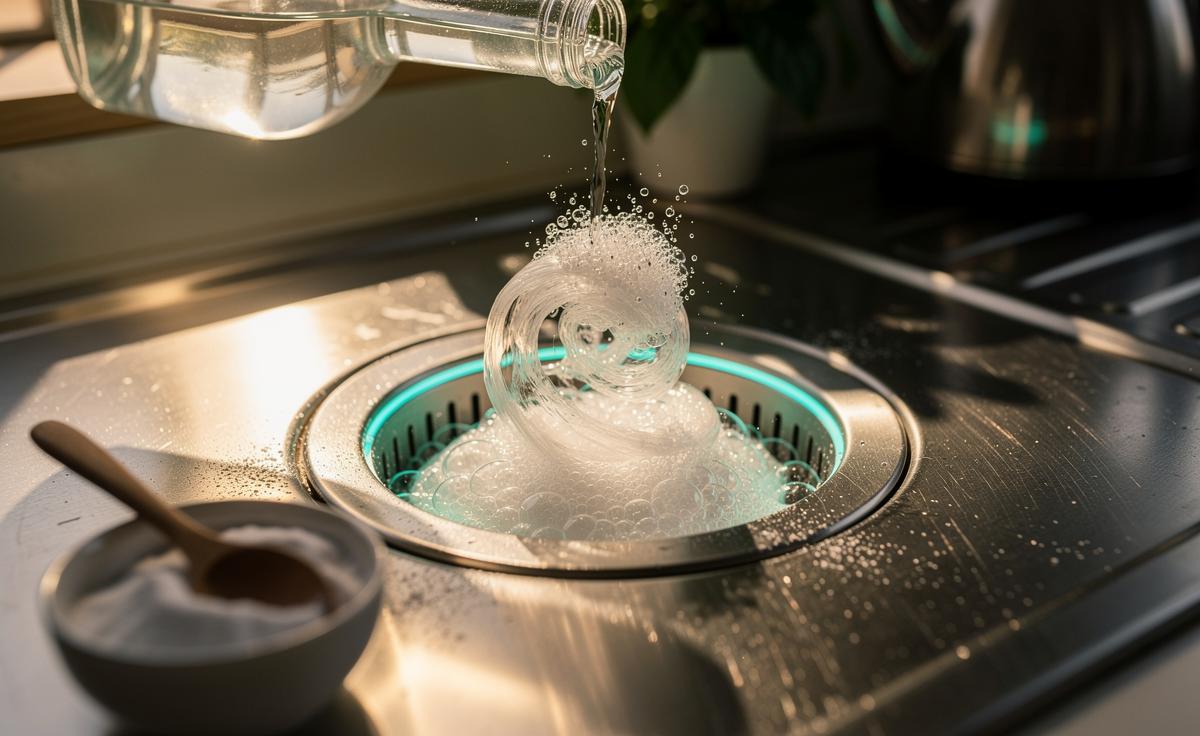
The magic isn’t magic at all. It’s an acid–base reaction. When sodium bicarbonate (baking soda) meets acetic acid (vinegar), they create carbon dioxide gas, water, and sodium acetate. That rising fizz aerates the mix, pushing it into nooks where soap scum, fine grit, and biofilm lurk. The bubbles help lift debris. The mild alkalinity of baking soda can soften fatty residues, while vinegar’s acidity can nibble at mineral deposits and soap scum, a useful one-two in hard-water areas.
Equally important is physics. In a confined pipe, expanding gas provides gentle mechanical agitation. Think tiny plunges delivered on repeat. Follow with hot water and the loosened gunk flows away. Used correctly, the reaction is safe for PVC, copper, and most sealants commonly found in UK plumbing. It won’t dissolve a solid mass of hair the way a lye-based product might, but it excels at dislodging partial blockages and neutralising odours that cling to organic matter. The result is not a scorched passage, but a nudge towards free-flowing drains.
Step-by-Step Method for a Fast, Fizzing Clear
Preparation first. Remove any standing water with a jug or sponge so the solution meets the clog, not the surface. Boil a kettle. Slowly pour about 500 ml of hot (not fully boiling) water down the drain to warm the pipe and soften congealed grease. Now add the star: 100–120 g (roughly 1/2 cup) of baking soda. Tap the pipe or jiggle the plughole cover to encourage powder into the trap.
Heat 240–300 ml (1–1 1/4 cups) of vinegar until warm to the touch; warmth speeds reaction without blasting seals. Pour it in and immediately cover the drain with a plug or a damp cloth to send the fizzing downward. Wait 10–15 minutes. You’ll hear it working. Finish with 1–2 litres of hot water to flush loosened debris. Repeat once for stubborn slow drains. Never use this method immediately after a commercial drain cleaner or with any bleach—mixing chemicals can release toxic gases.
| Step | Item | Quantity | Timing |
|---|---|---|---|
| Warm pipe | Hot water | ~500 ml | Before treatment |
| Add alkali | Baking soda | 100–120 g | Immediately |
| Trigger reaction | Vinegar | 240–300 ml | Right after soda |
| Flush | Hot water | 1–2 litres | After 10–15 minutes |
When to Use It—and When to Call a Plumber
This approach shines with slow drains, mild odours, and accumulations of soap film, toothpaste residue, and light kitchen grease. It’s ideal for sinks, baths, and shower trays, and it’s gentle enough for homes on septic systems. If water still drains, albeit reluctantly, you’re in the sweet spot. A monthly maintenance fizz can keep things moving and discourage the biofilm that gives sinks that sour smell.
Yet there are limits. A drain that’s completely still, a gurgle that suggests a deeper venting issue, or recurrent backups after rain all hint at bigger trouble. Do not combine with bleach, ammonia, or proprietary drain acids. Avoid using it as a toilet cure-all—the reaction may not reach far enough through the trap. Hair mats, foreign objects (a spoon, a cotton bud), collapsed pipes, or root ingress need mechanical clearing or professional inspection. And if you’ve used a caustic gel within the last 24 hours, wait. Chemical residues can interact unpredictably. When in doubt, pop the trap, use a drain snake, or book a plumber.
Eco Credentials, Costs, and Prevention Tips
On cost, it’s a clear win. A 500 g tub of supermarket bicarbonate of soda runs about £1–£1.50; a litre of white vinegar costs roughly 70p–£1. Per treatment, you’re spending pennies—perhaps 20–40p—versus £4–£6 for branded drain openers. Environmental scores also tally well: both ingredients are readily biodegradable and, used properly, kinder to wastewater systems and home plumbing. The method avoids the corrosive extremes that shorten pipe life and chew through rubber seals.
Prevention makes the biggest difference. Fit sink strainers and clean them daily. Wipe greasy pans with a paper towel before washing up. Run a weekly kettle of hot water down the most-used drains. Once a month, deploy a small maintenance fizz: 2–3 tablespoons of baking soda followed by 100 ml vinegar, then a hot flush. Brush hair before showers, and keep cotton pads, floss, and wipes out of the bathroom drain entirely. For kitchens that see heavy use, alternate natural fizzing with an enzyme-based cleaner to munch through organic build-up. Small, regular habits prevent big clogs.
With a little chemistry and a lot of common sense, the baking soda and vinegar combination offers quick relief for slow drains, sparing your home the harshness of aggressive chemicals and your wallet the shock of emergency call-outs. It’s a cupboard fix with newsroom-proven value: transparent, repeatable, safe when used smartly. Try it at the first sign of sluggish flow, then lock in preventative habits to keep everything gliding. When did you last rescue a drain with a fizz—and what tweaks, timings, or tricks made the biggest difference in your home?
Did you like it?4.3/5 (22)