In a nutshell
- 🔬 Explains the science: baking soda (bicarbonate of soda) plus aluminium foil triggers an electrochemical reaction that converts silver sulphide back to silver—delivering shine with no scrubbing.
- 🧪 Clear step-by-step: foil-lined heatproof bowl, hot water, 1 tbsp bicarb per cup, optional salt, ensure metal touches foil for 2–5 minutes, then rinse and dry; avoid high heat for glued settings.
- ⚠️ Smart exclusions: skip for porous gems (opal, pearl, turquoise, amber), thin plating, foiled/glued costume pieces, and intentionally oxidised details; opt for mild soap, polishing cloths, or a professional clean instead.
- 📊 Handy compatibility guide: safe for plain sterling silver, cautious for plated or oxidised pieces, limited for hard gems with low heat and short dips.
- 💡 Longevity tips: use anti-tarnish storage, keep jewellery dry, and wear pearls last after hairspray or perfume to reduce future cleaning needs.
There’s a humble pantry staple bringing heirlooms and everyday accessories back to life: baking soda, known in Britain as bicarbonate of soda. With the right setup, you can lift years of tarnish from silver and brighten dull chains without scrubbing. It’s fast. It’s cheap. And it’s oddly satisfying to watch. The method relies on a safe, gentle chemical reaction rather than elbow grease, so you’re not grinding grit into delicate surfaces. Below, I explain how it works, when it’s perfect, and when it’s not. I also share a foolproof step-by-step, a quick compatibility table, and expert tips to keep your pieces gleaming longer.
Why Baking Soda Works on Tarnish
Silver becomes dark because it reacts with sulphur in the air, forming a thin layer of silver sulphide—that’s the tarnish you see. The celebrated baking soda and aluminium foil technique uses a mild electrolyte (hot water plus bicarbonate of soda) and the aluminium to create an electrochemical swap. In simple terms, sulphur leaves the silver and bonds to the aluminium. Your jewellery isn’t abraded; the tarnish is chemically reversed. Because there’s no physical scouring, the metal’s surface remains smoother and brighter, preserving fine details, hallmarks, and engraved textures.
That lack of abrasion is crucial. Traditional pastes and harsh cloths can micro-scratch soft precious metals, leaving them hazy over time. This hack avoids that risk when used correctly, particularly on solid sterling silver. Still, not every finish is suitable. If your piece has intentional oxidised accents, artificial patina, or ultra-thin silver plating, treat with caution. The reaction can strip darkened design elements or accelerate wear on very thin coatings. Understanding the science helps you decide when this approach is the best route to a showroom shine with minimal handling.
Step-by-Step Method for Effortless Shine
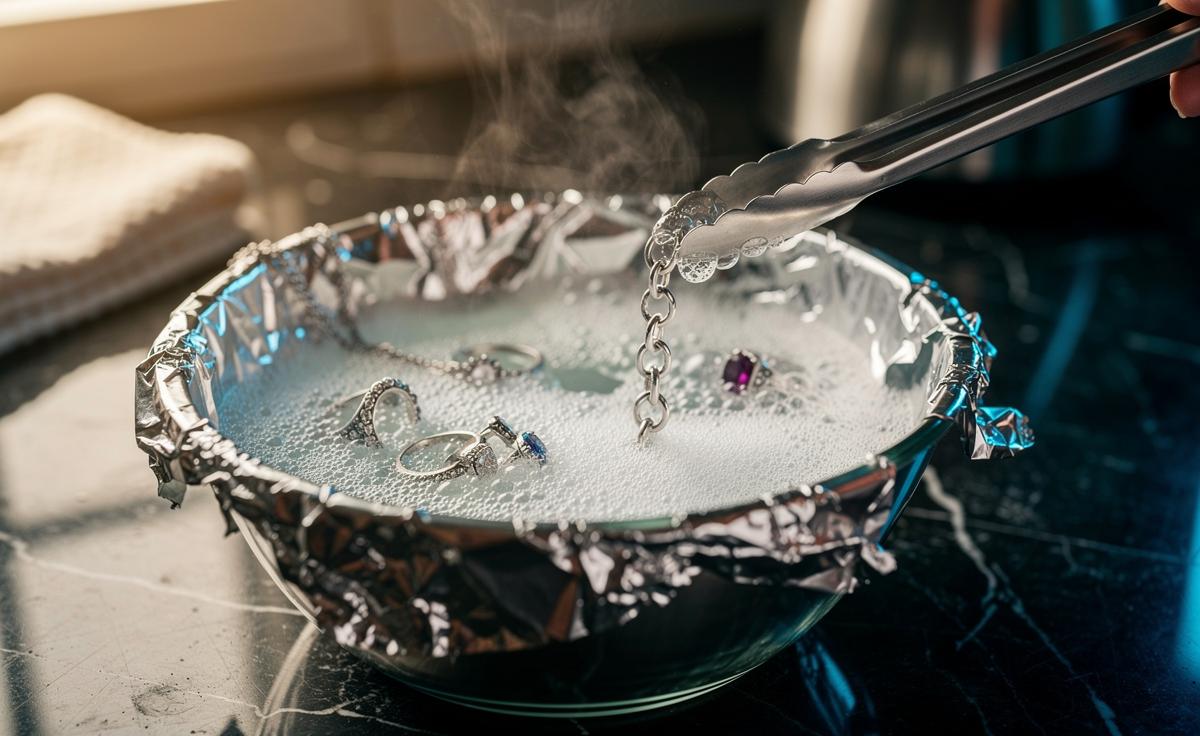
Set up a heatproof bowl and line it snugly with aluminium foil, shiny side up. Add hot water (not quite boiling if stones are present—think kettle water cooled for a minute). Sprinkle in 1 tablespoon of bicarbonate of soda per cup of water. A pinch of fine salt speeds the reaction, but it’s optional. Place your silver so it touches the foil; that contact is key. You may notice a faint sulphurous smell, a subtle fizz, and a softening of the dark cast. Leave for 2–5 minutes depending on tarnish level.
Lift items with tongs, then rinse thoroughly in cool water to remove residues. Pat dry with a lint-free cloth and buff lightly. That’s it. Do not scrub: the process has already lifted the tarnish. For chains, clasp them first to avoid tangles and lower them in looped. For badly tarnished pieces, repeat with fresh solution rather than stretching the first bath. If you’re cleaning items set with hard, non-porous gems (diamond, sapphire, ruby), keep the water below boiling and limit dwell time. For pieces glued rather than set, avoid hot water altogether, as adhesives can weaken.
When to Avoid the Hack and Safer Alternatives
This method shines (pun intended) for solid silver, many silver-plated items in good condition, and plain gold pieces with light grime. But it’s not universal. Steer clear for porous or delicate stones such as opal, pearl, turquoise, amber, coral, malachite, and emerald (often oil-treated). Avoid on costume jewellery with glued components or foiled-back stones; heat and alkalinity can cloud or lift them. Any antique with purposely darkened recesses—those smoky shadows sculptors love—can lose its character if you strip the patina. And very thin plating may look patchy if over-processed.
Choose gentler routes when in doubt. A bowl of lukewarm water with a drop of mild dish soap and a soft brush (or even a clean make-up brush) removes everyday grime from gold and platinum without risk. Use silver polishing cloths for targeted brightening that preserves patina, and specialist solutions matched to specific gems if needed. Finally, prevention saves you time: store silver in anti-tarnish pouches, keep pieces dry, and wear pearls last—after hairspray or perfume. When a piece is high value, sentimental, or uncertain, the safest route is a professional clean.
Quick Compatibility Guide at a Glance
Here’s a compact reference to help you decide whether the bicarbonate of soda + aluminium foil bath is a go or a no. It won’t cover every edge case, but it captures the common scenarios UK households encounter. If your jewellery sits at the boundary of categories, choose the safer method or ask a jeweller. One minute of caution beats a lifetime of regret.
| Material/Setting | Use Baking Soda + Foil? | Notes |
|---|---|---|
| Sterling silver (plain) | Yes | Great for heavy tarnish. Ensure metal contacts foil. |
| Silver with oxidised details | Careful | May strip dark accents. Prefer cloth on highlights. |
| Silver-plated | Sometimes | Gentle, short dip only; plating thickness varies. |
| Gold (plain, solid) | No need | Use warm soapy water; avoid abrasive pastes. |
| Hard gems (diamond, sapphire, ruby) | Maybe | Low heat, short time; check settings first. |
| Porous/soft gems (opal, pearl, turquoise, amber) | No | Stick to mild soap and a damp cloth only. |
| Costume jewellery (glued stones) | No | Heat and alkalinity can loosen adhesive. |
Use the table as a starting point, then look at the piece in front of you: is it heirloom or high street, robust or delicate, solid or plated? When uncertainty creeps in, scale down the heat and time, or pivot to a gentler clean. Your goal is preservation as much as sparkle.
In the end, the baking soda hack offers a small domestic magic trick: tarnish gone, no scrubbing required, detail intact. It respects the metal rather than scouring it, saving time and restoring confidence in the pieces you actually want to wear. Keep the kit simple—foil, heatproof bowl, bicarbonate—and the judgment careful. Store smarter, clean lighter, and you’ll polish less often. Which piece in your jewellery box deserves a second life this weekend, and what’s your plan to bring it back into daily rotation?
Did you like it?4.5/5 (21)