In a nutshell
- 🧂 A simple flour-and-salt dough lifts tarnish through gentle abrasion and mild ionic action, delivering safe, even polishing for sterling and silver plate.
- 🧪 Tarnish is mainly silver sulphide from sulphur in air and foods; sterling tarnishes faster than fine silver, while plate demands a lighter touch to protect its thin coating.
- 🧴 Method: mix 2 tbsp flour + 1 tbsp salt with warm water to a soft paste, apply with a soft cloth, wait 2–3 minutes, then rinse thoroughly and buff—always test first and avoid pressure.
- ⚖️ Compare options: bicarbonate + aluminium foil rapidly reverses heavy tarnish; mild acids clear films but can etch; toothpaste risks scratching—choose by alloy, plating, and detail.
- 🧰 Prevention matters: store with anti-tarnish strips and silica gel, avoid sulphur sources, wash after eggs/onions, and follow a light, regular maintenance routine to preserve hallmarks and finish.
In kitchens and dining rooms across the UK, treasured silver forks and heirloom teapots often dull to a greyish black, victims of the air we breathe and the foods we love. Enter a thrifty trick hiding in plain sight: a simple flour and salt dough that coaxes brilliance back without harsh chemicals or pricey creams. This pantry paste works because it blends gentle abrasion with a subtle chemical nudge, lifting grime while staying kind to precious metal. It’s tactile, low-risk, and oddly satisfying. For many households, it’s the sweet spot between environmental sense and sparkling results, turning weekend chores into a neat little ritual of restoration.
Why Silver Tarnishes and How Dough Makes It Shine
What we call dullness is usually silver sulphide—a dark compound formed when silver reacts with sulphur-containing gases in the air or with foods like eggs and onions. Sterling silver (92.5% silver, 7.5% copper) tarnishes a little faster than fine silver because copper joins the party, while silver plate has a thin noble layer vulnerable to brisk polishing. Add humidity and time and the patina deepens. Not all patina is bad; it can accentuate engravings. But when knives grow blotchy, you want control.
The flour-and-salt dough works on two fronts. Salt supplies a mild ionic environment that helps loosen grime and disrupt the tight bond of the tarnish at the surface. Flour—largely starch and tiny cellulose fragments—acts as a micro-abrasive, rolling over the metal like millions of soft beads. The paste’s moisture softens residues, while the dough’s body keeps abrasive action even and slow, avoiding the gritty gouging some powders cause.
The genius is mechanical polish guided by a flexible matrix. You push, but the paste cushions. On sterling, the approach is effective yet gentle; on silver plate, it’s safer than many pastes because the abrasive is mild and the pressure is easy to control. As a bonus, the dough doesn’t reek, it rinses off cleanly, and the method suits flatware, tea services, and serving spoons—anything that benefits from a careful, patient touch.
Making and Using the Flour-and-Salt Dough
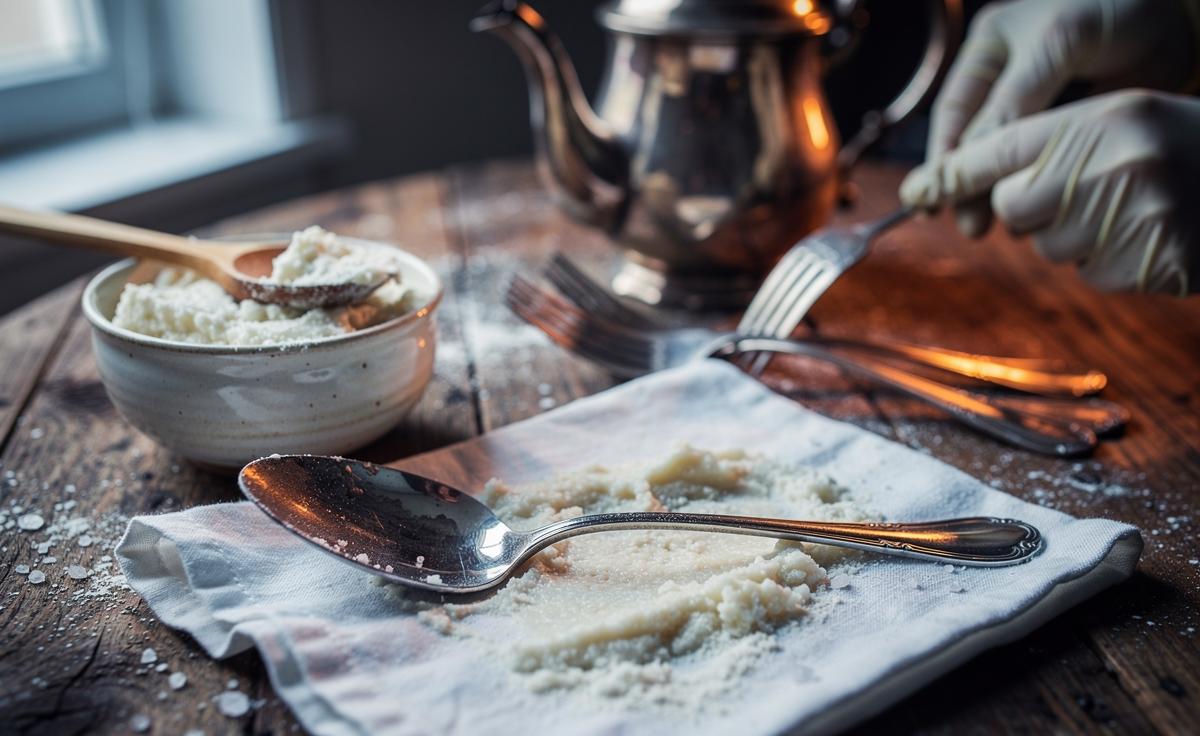
Start with what you’ve got. In a small bowl, combine 2 tablespoons of plain flour with 1 tablespoon of fine table salt. Add just enough warm water—teaspoon by teaspoon—to form a supple, spreadable dough, similar to soft putty. Some home crafters add a few drops of mild washing-up liquid to help wet greasy residues; that’s optional. Avoid strong acids on plated items. Always test on an inconspicuous spot first, especially with silver plate or pieces that carry oxidised detailing.
Preparation matters. Wash the silver in warm, soapy water, then rinse and dry thoroughly. Apply pea-sized dabs of dough and massage with a soft cotton cloth, moving with the grain of the metal, not across it. For patterned areas, use a soft-bristled brush and a feather touch. Work for 30–60 seconds per area, then let the paste sit for 2–3 minutes so moisture can loosen stubborn films.
Rinse under warm water, ensuring no salt remains in crevices—salt forgotten in seams invites corrosion. Pat dry with lint-free cloth and buff to a high shine. If tarnish lingers, repeat lightly rather than pushing harder. Never attack silver with aggressive pressure; it’s the consistency of care, not brute force, that saves plating and retains crisp engravings. Avoid this method on silver with intentional dark patina, niello, or porous gemstones mounted nearby; mask those areas or choose a different approach.
Comparing Natural Agents: Dough, Bicarbonate, and Acids
Not all natural methods do the same job. Some polish mechanically; others alter tarnish chemically. Choosing well saves time and the finish. The flour-and-salt dough is a steady all-rounder. A bicarbonate bath with aluminium foil can undo heavy tarnish fast via electrochemical reduction. Mild acids—vinegar or lemon—cut mineral films and fingerprints but risk discolouring certain finishes if left too long. Toothpaste? Sometimes useful, often too abrasive. The best method depends on alloy, plating thickness, and design detail.
| Agent | Mechanism | Best For | Watch Out |
|---|---|---|---|
| Flour + Salt Dough | Gentle abrasion, light ionic loosening | Routine polishing, mixed flatware sets | Salt in crevices; test on plated items |
| Bicarbonate + Aluminium Foil | Electrochemical tarnish reversal | Heavy, uniform tarnish on solid silver | May strip intentional patina; avoid with glued stones |
| White Vinegar or Lemon | Acid dissolves films, brightens surface | Spot cleaning watermarks and residues | Potential etching; rinse immediately |
| Non-Gel Toothpaste | Abrasive polish | Quick touch-ups on sturdy sterling | Scratches on plate; whitening additives stain |
Match the method to the piece. For heirloom plate, favour the dough and patience. For a well-used sterling ladle gone charcoal, the bicarbonate-and-foil bath quickly restores brightness, then the dough refines the finish. Whatever you choose, rinse thoroughly, dry completely, and buff. That last step locks in glow by smoothing microscopic grooves that would otherwise trap airborne sulphur.
Storage, Prevention, and Long-Term Care
The smartest polish is the one you barely need. Once the silver gleams, store it to slow the clock. Use anti-tarnish strips or cloth pouches, and tuck in silica gel to curb humidity. Keep pieces away from rubber bands, wool felt, and household paints that off-gas sulphur compounds. Rotate tableware into regular use; paradoxically, frequent washing keeps tarnish at bay. After contact with eggs, onions, or mayonnaise, wash and dry promptly.
Line drawers with untreated cotton. Stand knives blade-down so handles—often filled with pitch—stay dry. For display, sealed cases help, though you’ll still need a quarterly buff. When polishing, choose soft microfibre and keep motions light. If in doubt about an antique with crisp hallmarks or a darkened pattern, get a jeweller’s opinion before polishing. Hallmark clarity is part of value; aggressive methods soften edges.
A simple maintenance rhythm works: light dough polish once a season, quick dusting cloth once a month, storage checks after damp spells. Avoid ultrasonic cleaners for pieces with glued or delicate stones. Should plating look thin or patchy, seek professional replating rather than repeated abrasion. Remember, preservation is the aim; shine is the pleasant consequence.
Humble ingredients—flour, salt, and water—can make a tired tea service sing again, coupling soft abrasion with tidy chemistry to lift tarnish while respecting craftsmanship. The method is inexpensive, quiet, and satisfying, a small domestic ritual that punches above its weight. Keep it gentle, rinse well, dry thoroughly, and silver will repay your patience with a deep, mirror-like glow. In a world of bright bottles and harsh pastes, restraint wins. What piece in your cupboard would you bring back to life first, and what story might it tell once it shines?
Did you like it?4.5/5 (20)