In a nutshell
- 🍋 Why it works: Citrus terpenes—especially limonene—gently dissolve grime and revive sheen on finished wood, delivering optical clarity with a thin, well-buffed coat.
- ⚗️ DIY polish: Mix 100 ml white mineral oil with 10–15 drops lemon essential oil; swap in jojoba if preferred, and add 5–10% beeswax for extra protection; avoid lemon juice–oil blends.
- 🧽 Method: Dust first, apply a few drops to microfibre, work with the grain, then buff dry until it squeaks; patch-test, use sparingly, and avoid unfinished wood.
- 🪵 Surface fit: Ideal for lacquer, varnish, shellac, and hardwax finishes; skip citrus on unsealed oak/chestnut/ash where acids hit tannins; for boards, use food-grade mineral oil only.
- ⚠️ Pitfalls and safety: Olive oil may turn sticky; go light on French polish; wash off old silicone residues before polishing; dry and dispose of oily rags safely to prevent self-heating.
In British homes, there’s a quietly effective cleaning trick that smells like summer and shines like a professional polish: lemon on wood. This isn’t just about a pleasant fragrance. It’s about how citrus oils can dislodge dulling grime, revive tired finishes, and leave a protective sheen that feels dry, not greasy. When used intelligently—matched to the right surface, mixed with a suitable carrier, and buffed with patience—lemon-led polishes can make tables, bannisters, and cabinets look freshly finished. Used correctly, a lemon polish doesn’t mask a surface; it wakes it up. Here’s how the chemistry works, what to mix, and the pitfalls to avoid.
Why Lemon Oil Works on Wood
The power of lemon lies in its terpenes, especially limonene, a gentle solvent that softens greasy residues and lifts oxidised waxes clinging to a finish. That solvency is balanced by the emollient slip of a carrier oil, which fills micro-scratches and enhances the way light bounces off a sealed surface. The result is a clean, quiet gloss. Not wet. Not plastic. Just brighter grain and a sense of depth. This is why a thin application often outperforms a heavy, smeary coat.
Crucially, we’re not feeding bare timber with lemon juice. We’re cleaning and conditioning finished wood—lacquer, shellac, varnish, catalysed coatings, even hardwax oil—where the polish stays on top, polishing the film rather than saturating the fibre. On old waxed furniture, the citrus component helps revive the topcoat before you buff. On newer polyurethane finishes, it improves slip for buffing and leaves a low-build sheen. Think optical clarity, not thickness. Used sparingly, lemon oil blends fingertip smudges and faint haze without disturbing the underlying finish.
The Simple Home Polish: Ratios, Method, and Surfaces
For most furniture, pair lemon with a stable carrier. A reliable, fuss-free mix is 100 ml of white mineral oil (also called liquid paraffin BP) with 10–15 drops of lemon essential oil. It lays thin, buffs quickly, and won’t go rancid. If you prefer a plant oil, choose jojoba (technically a wax) for better stability than olive oil. Some home traditions use 2 parts olive oil to 1 part lemon juice, but the water and acid in lemon juice can mark raw patches and react with tannin-rich species such as oak. If you can smell vinegar, you’re cleaning; if you can smell lemon, you’re polishing.
| Ingredient | Role | Typical Ratio | Notes |
|---|---|---|---|
| White mineral oil | Carrier/conditioner | 100 ml base | Food-safe grade ideal for boards; non-drying, stable |
| Lemon essential oil | Solvent, scent, shine | 10–15 drops per 100 ml | Lifts grime; do not use neat |
| Jojoba oil | Plant-based alternative carrier | Swap 1:1 for mineral oil | Resists rancidity better than olive oil |
| Beeswax (optional) | Added protection | 5–10% melted into carrier | Boosts sheen and water resistance |
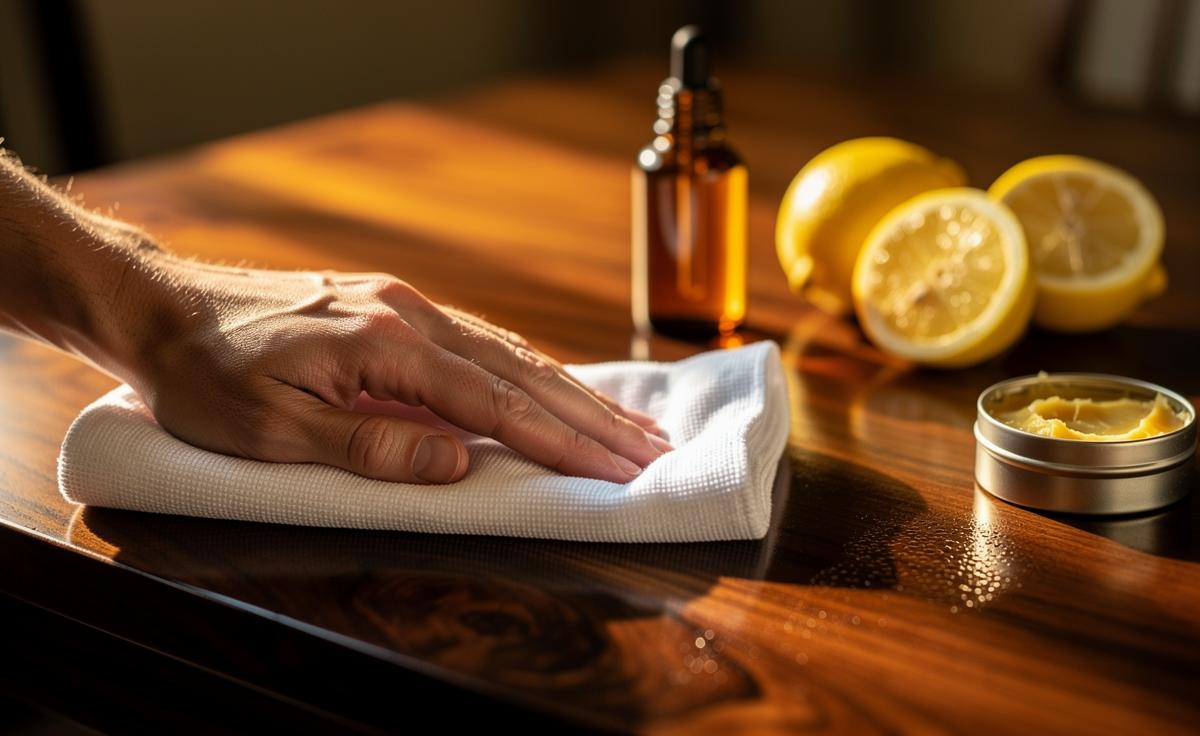
Method is simple. Dust first. Dampen a clean microfibre with a few drops of polish, never soaking the cloth. Work with the grain, light pressure, quick coverage. Then take a dry cloth and buff until the surface squeaks. That final buff matters; it sets the shine and leaves a dry touch. For kitchen tables and bannisters, repeat monthly; for display pieces, quarterly is enough. Patch-test on an inconspicuous area and avoid open-pored, unfinished wood where citrus and water can blotch. If the test patch darkens unevenly or feels tacky after five minutes, stop and reassess.
Deeper Care: Nourishing, Protecting, and Avoiding Pitfalls
Polish keeps a finish looking lively, but it doesn’t replace structural care. If a surface is abraded or watermarked into the finish, a lemon blend won’t reverse that. Instead, clean, polish, then protect. A small addition of beeswax in your lemon-oil recipe creates a micro-film that improves water beading and finger-mark resistance. On antiques with French polish (shellac), go especially light. Citrus will brighten, but heavy solvent action can dull or print a soft finish. Less is safer on period pieces—buff, don’t soak.
Mind compatibility. Olive oil can oxidise and turn sticky, particularly on heat-exposed furniture; jojoba or mineral oil sidestep that. For chopping boards, skip essential oils entirely and use plain food-grade mineral oil; lemon scent is nice, but not critical for food gear. Avoid citrus on unsealed oak, chestnut, or ash where acids can react with tannins, causing grey or black discolouration. If a surface is silicone-contaminated from old spray polishes, a mild soap wash and clear water rinse, fully dried, will help the lemon mix bite correctly. Dispose of oily cloths safely—spread flat to dry, then bin—because any oil-soaked rag can self-heat. Shine is technique: thin coat, long buff, and a light hand.
Lemon-led polishing is a small ritual with outsized results. It refreshes the finish, lifts the grain, and makes a room smell cheerfully clean without heavy perfumes. Choose the right carrier, test, and buff like a pro, and you’ll get consistent, camera-ready sheen. The secret is restraint: a few drops, a patient buff, and a schedule that matches how you actually live with the piece. Think care, not camouflage. Which piece of wood in your home is begging for a gentle citrus revival, and what finish will you be working with first?
Did you like it?4.5/5 (24)