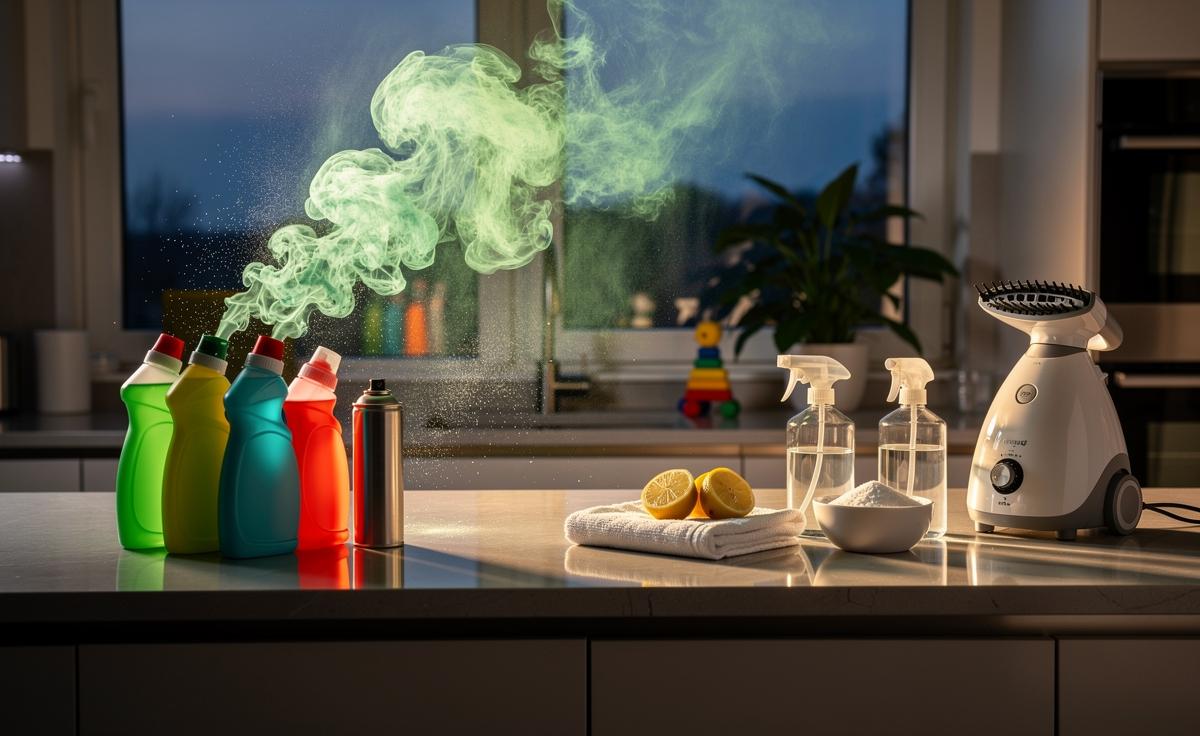
In a nutshell
- 🚫 Hidden toxins: common cleaners hide VOCs, quaternary ammonium compounds (quats), bleach, and ammonia; aerosols boost inhalation risks and mixing products can release hazardous gases.
- 🫁 Health impacts: frequent exposure links to headaches, wheeze, dermatitis, and potential endocrine disruptors; routine biocides can drive antimicrobial resistance, with children and people with asthma most affected.
- 🌊 Environmental toll: biocides harm aquatic life, fragrances persist, and indoor VOC loads rise; single-use plastics amplify the footprint from production to disposal.
- 💷 Money drain: you pay for water and perfume; switch to a simple toolkit—microfibre, mild surfactant, bicarbonate of soda, citric acid, and steam—to clean better for less.
- ✅ Safer strategy: choose fragrance-free products with short, transparent labels; ventilate; reserve targeted disinfection (e.g., dilute hydrogen peroxide) for genuine risks; never mix cleaners.
Open your cupboard and you’ll find trusted brands promising sparkle, scent, and safety. Yet the reality is murkier than the marketing. Many common cleaning products fill our homes with volatile organic compounds (VOCs), harsh disinfectants, and persistent fragrances that linger in lungs and fabrics long after the sprays have dried. You don’t need a laboratory to understand this—your nose, your skin, your breathing are already telling you something is wrong. The gloss on the bottle disguises a chemistry set that can pollute indoor air, strain waterways, and even fuel antimicrobial resistance. If that sounds dramatic, it’s because we’ve normalised risk. It’s time to pause, read the label, and rethink what “clean” truly means.
Hidden Toxins in Everyday Sprays
The word “fresh” is doing heavy lifting. Many supermarket cleaners rely on fragrance blends that can emit dozens of VOCs, some reacting indoors to create secondary pollutants. Those “antibacterial” claims? Often powered by quaternary ammonium compounds (quats) such as benzalkonium chloride, which persist on surfaces and skin. Bleach (sodium hypochlorite) and ammonia are marketed as household heroes, yet their fumes can irritate airways, and mixing them—even accidentally—can release hazardous gases. None of this is rare; it’s simply hidden in plain sight, disguised by bright colours and ocean-breeze names.
Look closely at “multi-purpose” labels and you’ll find formaldehyde releasers, solvents, and optical brighteners that add shine but not hygiene. Aerosolised cleaners atomise chemicals into fine droplets you inhale as you scrub. The cumulative exposure matters. A quick spritz before guests arrive, a daily kitchen wipe-down, a bathroom blitz at the weekend—small moments that add up to a constant background of chemical load. You’re not just cleaning; you’re changing indoor chemistry. And while ventilation helps, consumers shouldn’t have to open every window just to make their living room breathable.
Here’s the uncomfortable truth: the routine products we trust to protect our families can introduce the very irritants we try to keep out. When safer, simpler ingredients will do the job, there is little justification for a cocktail of volatile solvents, persistent quats, and scented residues embedding in textiles and dust.
Health Risks You Can’t Ignore
Short-term effects are hard to miss: stinging eyes, headaches, a scratchy throat after a bathroom blitz. For those with asthma or allergies, fragranced cleaners can become a trigger. But the subtler risks deserve attention too. Repeated exposure to quats has been associated with skin irritation and can select for tougher microbes, complicating future infection control. Fragrance mixtures may contain potential endocrine disruptors like certain phthalates, and VOCs can contribute to indoor air pollution levels that outstrip a busy street on a still day. Clean should never mean coughing fits, eczema flare-ups, or a child’s wheeze after mopping the floor.
| Chemical | Common Use | Immediate Risk | Longer-Term Concern | Safer Swap |
|---|---|---|---|---|
| Bleach | Toilet/bathroom disinfection | Irritant fumes | Chlorinated by-products | Targeted hydrogen peroxide; soap and hot water |
| Quats | Antibacterial sprays/wipes | Dermatitis | Antimicrobial resistance | Non-disinfectant surfactant cleaners; steam |
| Fragrances | All-purpose, floor, laundry | Headache, wheeze | Possible endocrine effects | Fragrance-free or essential-oil-free options |
| Ammonia | Glass/streak-free cleaners | Eye/throat irritation | Indoor VOC buildup | Water, microfibre, diluted vinegar on glass |
Disinfection has a place—after raw meat contamination, gastrointestinal illness, or in healthcare contexts—but routine daily disinfectant use is unnecessary and counterproductive. Mechanical cleaning with a good surfactant removes grime and the majority of microbes without dousing your home in biocides. Prioritise fragrance-free formulas, short ingredient lists, and transparent labelling. If a label refuses to tell you what’s inside, that silence is not a safety claim; it’s a warning sign.
Environmental and Financial Costs Add Up
Every squirt that swirls down the drain meets a river eventually. Many biocides are toxic to aquatic life, while certain fragrances and preservatives can persist and bioaccumulate. The bottle itself isn’t innocent either. Single-use plastic triggers an endless loop of production, shipping, and disposal. We clean our sinks, then dirty our seas. Indoors, aggressive solvents boost VOC levels that react with ozone and other compounds, reducing the quality of the very air you pay to heat in winter.
And the money? It’s not pretty. Branded sprays sell you mostly water at a premium, padded by marketing and perfume. A simple toolkit—microfibre cloths, a mild surfactant cleaner, bicarbonate of soda for gentle abrasion, and citric acid for limescale—covers almost every task at a fraction of the price. Refill concentrates slash packaging and cupboard clutter. Steam handles many tough jobs without chemistry at all. When you tot up the monthly spend on specialised products—glass, oven, floor, bathroom, kitchen, “fabric refreshers”—the numbers sting more than a bleach plume.
Clean is a function, not a fragrance. By switching to low-toxicity basics and refill systems, you’ll reduce waste, protect waterways, and cut bills. Your home won’t just look cleaner; it will be cleaner—fewer residues, fewer fumes, fewer headaches.
There’s a better way to scrub, shine, and sanitise only when necessary. Choose fragrance-free formulas with short, plain-English ingredient lists. Use hot water, elbow grease, and microfibre for daily tasks; reserve targeted disinfectants like dilute hydrogen peroxide for genuine risks. Ventilate while you clean, store chemicals out of children’s reach, and never mix products. When the promise of “fresh” relies on masking odours with VOCs, it is not freshness—it’s camouflage. If a simpler basket can deliver a safer home and a lighter footprint, why not switch today—and which product will you kick out first?
Did you like it?4.3/5 (24)