In a nutshell
- 🌡️ Rising winter temperatures trigger “false springs,” disrupt phenology, and cause mismatches between cues and conditions—waking hibernators, mis-timing bird nesting, and boosting parasites and pathogens.
- 🪲 Food webs under stress: early, erratic insect emergence decouples prey from predators; woodland birds miss peak caterpillars; river and marine species like Atlantic salmon face desynchronised migrations.
- 🏞️ Habitats rewritten: warmer winters accelerate peat decomposition and flooding in wetlands, heighten pest survival in woodlands, and drive marine heatwaves and invasive gains along coasts.
- 🧭 Adaptation toolkit: diversify structure and create microhabitats, connect climate refugia, re-wet peat, enable beaver-led river restoration, and use nature-based solutions in towns and farms.
- ⏰ Act now: align management with shifting seasons via real-time data and citizen science, back long-term policy and funding, and protect “cold pockets” to buy time for species to adjust.
Britain’s winters are no longer reliably cold and crisp. They are softer, interrupted by balmy spells, punctuated by rain rather than snow. For wildlife habitats, that shift is not a gentle inconvenience but a deep structural change. Species evolved to the drumbeat of frosts, short days, and predictable scarcity. Now, the rhythm stutters. When winter warms, the calendar of the living world slips out of sync. Buds break early, insects hatch sooner, and predators hunt to a different timetable. The consequences are subtle at first, then dramatic. Some winners, many losers. The UK sits at a biological crossroads, its peatlands, woodlands, and coastal seas all feeling the heat of a season that forgets how to be winter.
Shifting Seasons and the Ticking Ecological Clock
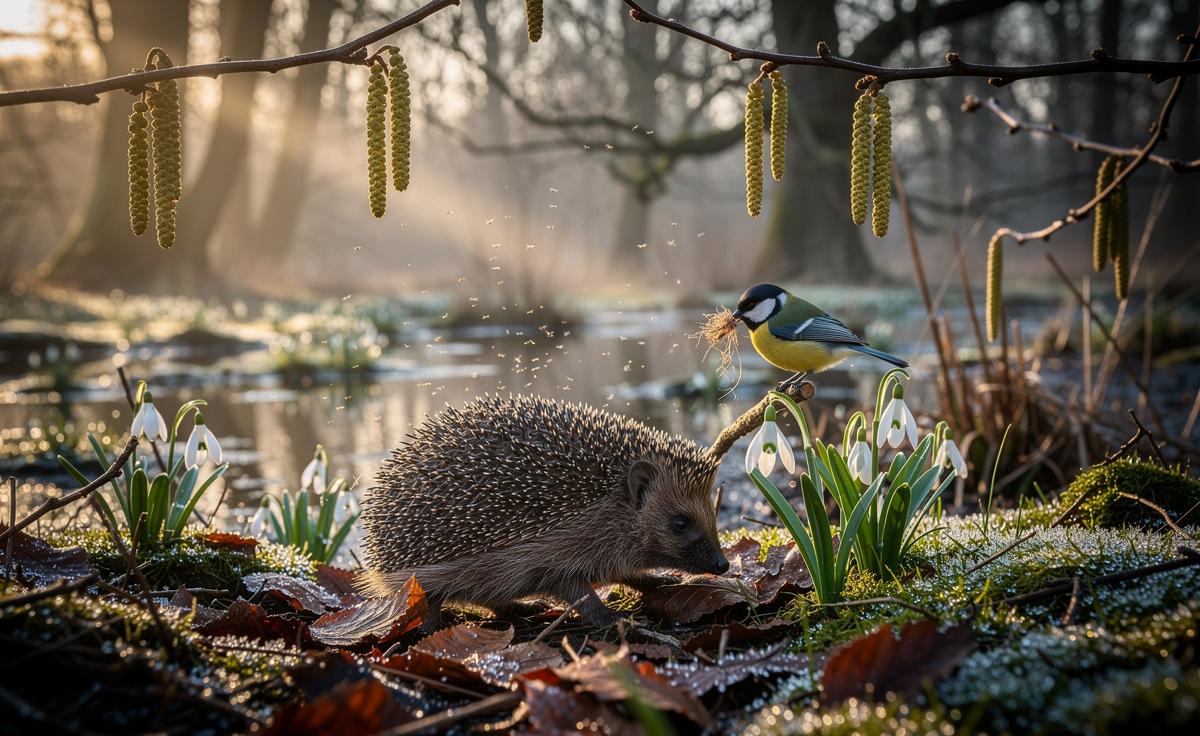
Every habitat runs on time. Not human time, but phenology—the schedule of budding, breeding, emergence, and migration. Rising winter temperatures bring more frost-free days and frequent “false spring” events. Trees flush early; a sharp cold snap then burns tender tissue, wasting energy reserves vital for the real spring. The gap between cues and conditions widens, and the cost lands on plants and the animals that depend on them. In UK woodlands, bluebells and birch nudge forward; hazel catkins dangle in January. It looks picturesque. For wildlife, it can be perilous.
Hibernators are especially exposed. Hedgehogs, bats, and dormice may rouse repeatedly during warm spells, burning fat they cannot replace. Birds read the wrong signals: some migrants arrive before peak insect abundance, while resident species begin nesting on the strength of mild nights only to be hit by cold rain that chills chicks and reduces prey activity. Parasites and pathogens also enjoy warmer winters. Ticks quest longer; fungal diseases overwinter more successfully; mosquito vectors creep north. Mildness is not mercy. It is pressure, sustained and relentless, on the ecological clock that once ticked with reassuring regularity.
Food Webs Under Stress: From Insects to Apex Predators
When winter warms, the base of the food web shifts first. Insects emerge earlier, sometimes in pulses separated by rainstorms. Pollinators can be active on Christmas week, then vanish when a late cold snap arrives. That stop–start pattern ripples upward, disrupting energy transfer from leaves to larvae to birds and mammals. Great tits and other woodland birds time broods to match the flush of caterpillars; if caterpillars peak early, chicks starve in a landscape that still looks green. On farmland, aphids overwinter better, boosting spring populations and pesticide pressure, which then hits beneficial predators.
Fish feel the change too. Atlantic salmon rely on winter-cold cues to coordinate smolt migration; mild winters can desynchronise river flows, marine entry, and plankton blooms. Raptors and foxes chase prey that no longer behaves predictably. The result is mismatched meals, weaker young, and harder choices for conservationists.
| Trophic Link | Winter Warming Effect | Example Species | Likely Outcome |
|---|---|---|---|
| Plant → Insect | Early budburst; erratic frost damage | Oak → Winter moth | Mismatched timing; lower larval survival |
| Insect → Bird | Asynchronous emergence and nesting | Great tit, pied flycatcher | Chick food shortages; reduced fledging |
| Plankton → Fish | Shifted bloom windows | Atlantic salmon smolts | Weaker cohorts; higher marine mortality |
| Small mammal → Predator | Unstable winter activity | Short-tailed vole → barn owl | Erratic prey supply; failed broods |
Wetlands, Woodlands, and Seas: Habitats Rewritten by Warm Winters
British wetlands evolved with seasonal freeze–thaw cycles that structure soil, detain water, and slow decomposition. Warmer winters accelerate microbial activity, releasing carbon and weakening the sponge effect that reduces floods. In peatlands, lower frost frequency can raise methane emissions while also making peat more vulnerable to desiccation and fire in later dry spells. When winter loses its cold, hydrology unravels. Floods arrive faster, linger longer, and wash away invertebrates that birds depend on when early breeding attempts begin.
Woodlands tell a parallel story. Earlier leaf-out alters light on the forest floor, squeezing spring ephemerals like wood anemone. Warmer winters help pests persist—oak processionary moth, pine weevils, and bark beetles survive in higher numbers, compounding drought stress. Some trees push growth before roots can supply them, lowering resilience to late frosts. Along coasts, the sea is changing, too. Marine heatwaves now intrude into winter, flipping plankton communities, challenging cod recovery in the North Sea, and reshaping prey for seabirds such as kittiwakes and puffins. Kelp forests, crucial nurseries, are less stable under relentless temperature creep.
Intertidal zones see quieter winters, which sounds benign. It isn’t. Invasive invertebrates and algae gain a foothold without cold die-back, outcompeting natives. Storms, loaded with rain rather than snow, deliver freshwater pulses that stress estuarine species. The map of British habitats is being redrawn not by bulldozers but by the thermometer.
Adapting on the Edge: What Conservation Must Do Now
We cannot rebuild winter, but we can buy time. Conservation needs adaptive management shaped around uncertainty. Create microhabitats and diversify structure: mixed-age woodlands, wetter peat, scruffier field margins. These buffer temperature swings and spread risk across species and guilds. Diversity is insurance. Expand and connect reserves to form climate refugia and corridors that let species track shifting windows of suitability. Beavers can re-engineer rivers to slow floods and stabilise food webs; in peatlands, re-wetting and sphagnum restoration lock in carbon and cool microclimates.
Timing matters. Adjust grazing, mowing, and coppicing to evolving phenology, not the calendar. In rivers, reshape flows to mimic winter pulses that cue fish. Consider cautious assisted migration for plants trapped by fragmented landscapes, backed by monitoring and genetic safeguards. Embrace nature-based solutions in towns—street trees, ponds, rain gardens—to blunt urban heat that now extends into winter. Data is power: citizen science on budburst, pollinator activity, and nesting can update management in real time. And policy must align—credible net zero, resilient farming schemes, and long-term funding that recognises that the new winter is already here.
Winters that once reset the countryside now remix it. Some species will pivot; many will not, unless we change the odds with smarter landscapes, better water, and more room for nature to adapt. The choice is stark but not hopeless. Every hectare restored, every corridor connected, every cold pocket protected extends the future’s options. As the season softens, our response must harden into action—pragmatic, fast, and rooted in evidence. What role will you, your community, or your organisation play in shaping habitats that can survive a winter that refuses to be winter?
Did you like it?4.5/5 (26)