In a nutshell
- ☕️ Coffee grounds deliver physical exfoliation that lifts dull cells for brighter skin; they also provide antioxidants and caffeine for a refreshed look—use fine grounds for face, coarse for body, and a gentle touch.
- 🧴 Build a balanced scrub by pairing grounds with nourishing carriers like jojoba or sweet almond, plus buffers such as honey, yoghurt, or oats; aim for a 2:1 wet-to-dry paste and patch test if sensitive.
- 🛁 For best results: work on damp skin, massage in light circles (30–120 seconds), avoid delicate or broken areas, then rinse lukewarm; seal with a moisturiser and daytime SPF; limit to 1–3 times weekly.
- 🔬 Keep expectations realistic: caffeine doesn’t “melt” cellulite; the main win is smoother texture and radiance; avoid scrubs during rosacea/eczema flares or inflamed acne, and choose low-comedogenic oils if clog-prone.
- ♻️ Bonus gains include low-waste reuse of spent grounds; mix fresh, store cleanly, and use water-based blends within a week for safety—simple formulas deliver the most consistent glow.
When a grey morning mirrors your complexion, a humble kitchen staple can change the picture. Used thoughtfully, coffee grounds sweep away dullness, revive texture, and leave skin feeling awake. The trick is in pairing this gritty, aromatic by-product with the right natural exfoliants and skin-loving add-ons so it buffs without biting. Done right, it is inexpensive, low-waste, and surprisingly elegant. Done wrong, it can be scratchy and dehydrating. Consider this your journalist’s brief on the brew: what makes coffee work on skin, how to build a balanced scrub, and smart techniques that turn a DIY blend into a polished ritual.
Why Coffee Grounds Wake up Your Skin
Coffee grounds are a classic physical exfoliant: tiny particles that manually dislodge dead cells clinging to the surface. That top layer scatters light. Remove it, and skin reflects more evenly, appearing brighter. The grounds’ irregular edges create mild abrasion that, used with care, quickens the look of cell turnover. Size matters. Finer grounds are kinder to the face; coarser suits elbows, heels, and legs. Freshly ground beans tend to be sharper. Spent grounds from your cafetière are softer and often gentler.
There’s more than grit. Coffee carries antioxidants (notably chlorogenic acids) that help neutralise free radicals on the surface, useful after urban exposure. It contains caffeine, a vasoconstrictor that can temporarily reduce redness and puffiness, delivering that “awake” impression. The scent helps too. It feels energising. Used with a light hand, coffee can refresh without stripping. But balance is crucial: overzealous scrubbing roughens the barrier and invites irritation. Think of it as polishing, not scouring. Two minutes. Gentle, circular movements. Rinse before the skin warms and sensitises. Your skin should feel smooth, not squeaky.
Building a Balanced Scrub With Natural Allies
The best coffee scrub is a blend, not a solo act. Grounds provide the buff, while natural carriers cushion and nourish. Choose textures that slip, seal, or soothe. Jojoba oil mimics skin lipids and reduces drag. Sweet almond oil adds glide and vitamin E. Coconut oil is occlusive but can clog for some; keep it body-only if you’re congestion-prone. For water-based comfort, stir in yoghurt (lactic acid for gentle chemical exfoliation) or honey (a humectant with calming properties). Oats bring beta-glucans to soften the scrub’s edge. A 2:1 ratio of wet to dry creates a spreadable paste.
Patch test first if your skin is sensitive or reactive. Fragrance and essential oils can elevate the experience, but one drop too many stings. Keep scents optional. Below is a simple guide to pairing ingredients with goals.
| Ingredient | Primary Role | Best For | Notes |
|---|---|---|---|
| Coffee grounds | Physical exfoliant | Dull, rough areas | Use fine grind for face, coarse for body |
| Jojoba oil | Light emollient | Combination to oily | Low comedogenic; reduces friction |
| Sweet almond oil | Nourishing emollient | Normal to dry | Vitamin E supports barrier comfort |
| Honey | Humectant, soothing | Dehydrated, sensitised | Sticky; mix well to avoid clumps |
| Yoghurt | Mild chemical polish | Uneven texture | Lactic acid brightens gently |
| Oats (ground) | Buffer, calming | Reactive skin | Softens scrub’s bite |
How to Use It for Maximum Glow
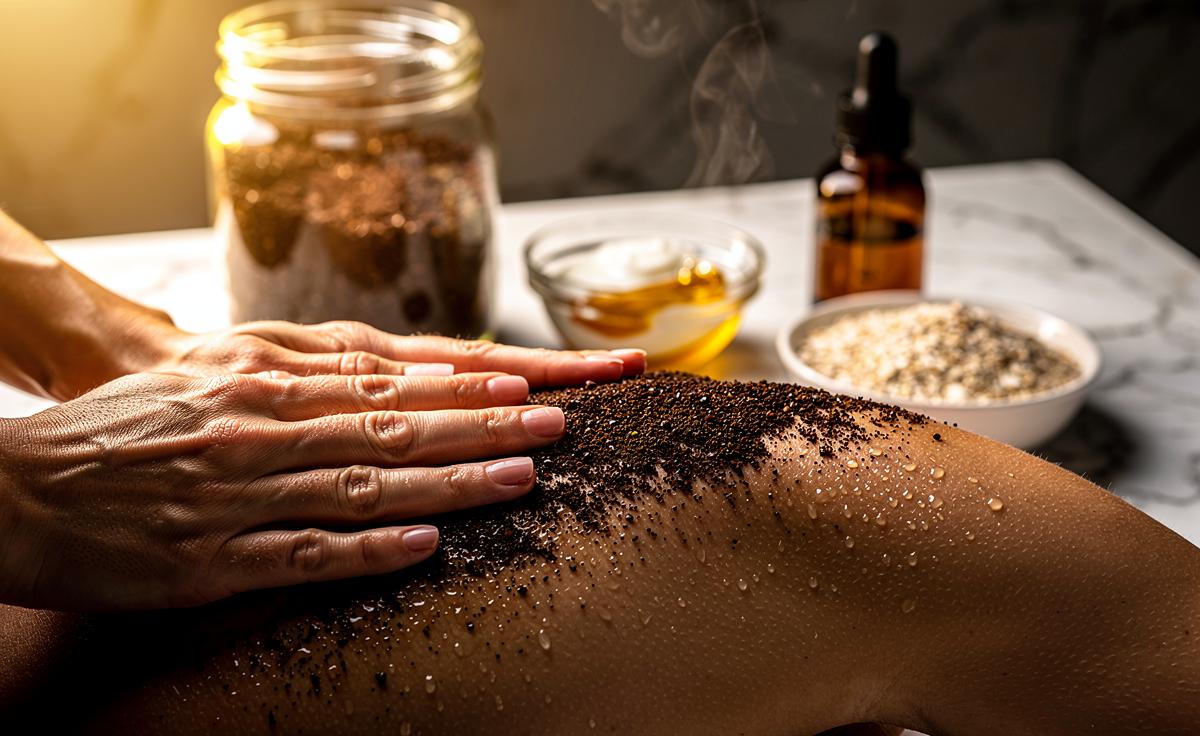
Start in the shower or over the sink where mess is manageable. Wet skin first; damp skin reduces drag. Scoop a walnut-sized amount and warm it between your fingers. Apply with light, circular motions. Face: 30 seconds across the T-zone, 30 across cheeks and jaw. Body: up to two minutes from ankles upwards to encourage circulation. Avoid thin, delicate areas—eye contour, fresh cuts, or active breakouts. If it stings or feels scratchy, stop and dilute with more carrier.
Rinse with lukewarm water. Pat, don’t rub. Follow immediately with a barrier-supporting moisturiser to lock in hydration. In daytime, finish with broad-spectrum SPF; newly smooth skin is more light-sensitive. Frequency matters: once weekly for dry or sensitive types, twice for normal, up to three for robust, oilier skins. Overuse leads to rebound dullness via irritation. Tidy tip: place a mesh drain catcher to trap grounds and protect pipes. For a finishing flourish on legs, a drop of body oil post-shower gives a camera-ready sheen that lasts.
Evidence, Myths, and Realistic Results
Does caffeine “melt” cellulite? No. It can’t dissolve fat. But it may reduce the look of puffiness via vasoconstriction and water shift, which is why post-scrub skin can appear tighter for a few hours. Antioxidants offer genuine surface-level protection from environmental stressors, though rinsing limits contact time. The core benefit remains mechanical: removing dead cells so light bounces cleanly. Expect radiance, improved makeup laydown, and silkier limbs. Expect miracles? Never. Consistency, not force, delivers glow.
There are caveats. Overly coarse particles may cause microtears, especially on thin facial skin or when used dry. Keep pressure light and blends cushiony. If you have rosacea, active eczema, or inflamed acne, skip scrubs during flares and choose non-abrasive options. Comedogenicity is personal: coconut oil can congest some, while jojoba rarely does. Sustainability is a win here—reusing grounds avoids waste—but store the mix in a clean jar and use within a week if water-based to avoid spoilage. When in doubt, keep it simple: three ingredients, fresh mix, short massage.
A coffee grounds scrub is a small ritual with big sensory reward: the scent, the slip, the swift reveal of brighter skin. It’s cost-effective, low-waste, and customisable to season and skin mood. The rule is simple: polish gently, nourish generously, protect daily. Pair the buff with hydrating layers and sunscreen, and the results compound. Ready to rewrite your morning routine with a brew that works beyond the cup—what blend will you whip up first, and how will you tailor it to your skin’s changing needs?
Did you like it?4.6/5 (21)