In a nutshell
- 🥛 A warm milk soak leverages natural lactic acid to gently exfoliate and hydrate cracked heels, with milk fats and proteins soothing skin for overnight softness.
- 📏 Method: 300–500 ml warm whole milk + warm water to ankle height, soak 15–20 minutes, light buff, then apply urea (10–25%) or lactic acid cream (5–12%), seal with an occlusive, and wear cotton socks overnight.
- 🧪 Expectations: AHAs break down corneodesmosomes and boost stratum corneum hydration; see smoother edges by morning, then repeat 2–3 nights weekly before moving to maintenance.
- ⚠️ Safety: Skip soaks if skin is bleeding, weeping, or infected; seek advice if you have diabetes, neuropathy, or poor circulation; avoid with dairy allergy or weeping eczema; assess for fungal signs.
- 🧴 Alternatives: Opt for urea 20–25%, lactic acid 5–12%, or low-strength salicylic acid; reinforce with glycerin-rich creams, petrolatum, silicone heel sleeves, and gentler cleansing habits.
Cracked heels creep up quietly. One day it’s a faint line, the next it’s a painful fissure that snags on socks and spoils your stride. Among the gentlest home fixes is the humble milk soak, a throwback remedy that owes its softening power to the naturally occurring lactic acid found in dairy. It’s simple. It’s soothing. And yes, it can make a visible difference overnight by loosening dead skin while hydrating the newer layers beneath. The secret is mild, controlled exfoliation paired with deep moisturising. Here’s how it works, why it’s kind to skin, and the smartest way to put it to use tonight.
What Makes Milk a Gentle Exfoliant
Milk contains lactic acid, an alpha-hydroxy acid (AHA) prized for softening rough skin without the sting associated with sharper acids. Unlike aggressive peels, lactic acid is a keratolytic that targets the “glue” between dead skin cells, nudging them to shed in thinner, even layers. It also acts as a humectant, drawing water into the outer skin to plump and smooth. This dual action—exfoliate and hydrate—explains why cracked heels often feel silky after a well-timed soak.
There’s more than acid at play. The fats in whole milk lend a soothing, occlusive veil, while proteins help reduce tightness after soaking. Warmth matters, too. A tepid bath softens keratin, the tough protein that forms heel calluses, making it easier for lactic acid to do its work. Crucially, the effect is subtle. You won’t see sheets of skin peeling; you’ll feel roughness melt into flexibility. That’s better for compromised heels, where aggressive filing can deepen fissures. Consider it a reset: less scraping, more science-backed softness.
The Overnight Milk Soak, Step by Step
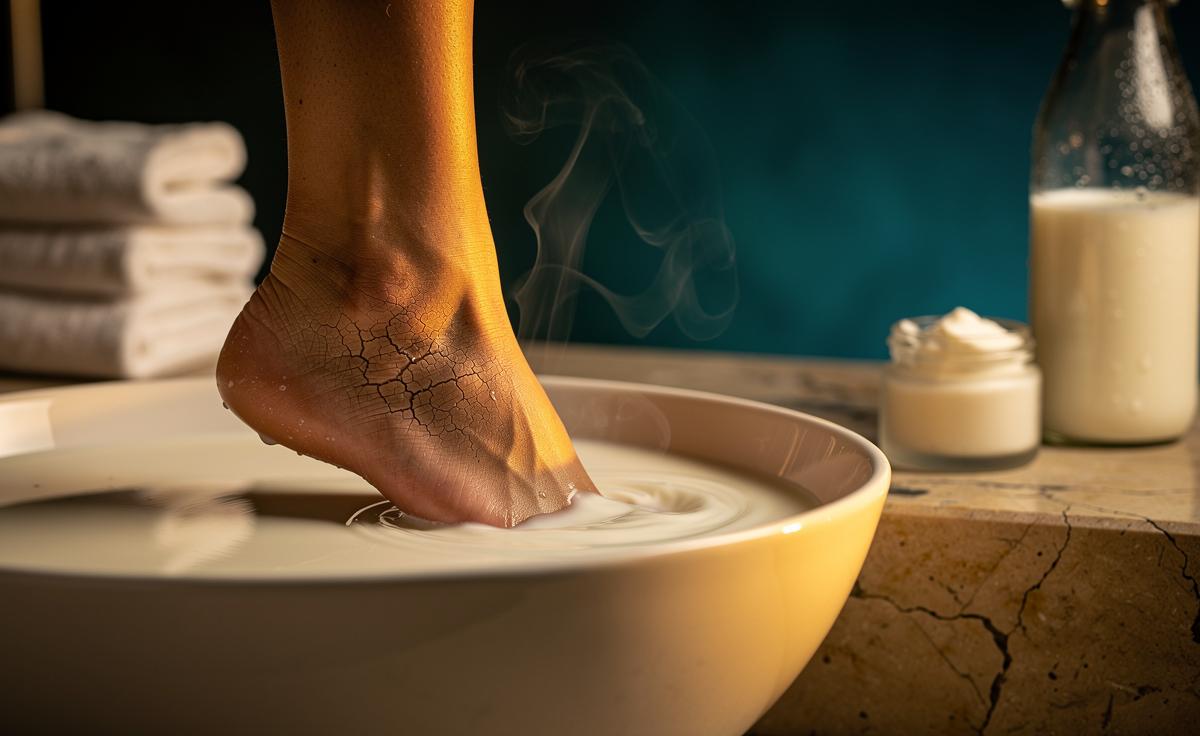
Set up a shallow basin. Add 300–500 ml of warm whole milk, then top with warm water to ankle height (about 2–3 litres total). Soak for 15–20 minutes. If you like, stir in a teaspoon of honey for extra humectancy. Gently pat heels, then use a soft washcloth or fine-grit foot file with light pressure—no sawing. Rinse, pat dry, and apply a thick layer of urea (10–25%) or lactic acid cream (5–12%). Seal with an occlusive like petrolatum or a ceramide-rich balm. Slip on cotton socks. Sleep. The occlusion supercharges hydration and locks the lactic acid’s gains in place. By morning, expect softer edges and less snagging. Repeat 2–3 nights weekly until cracks settle.
| Item | Amount | Purpose |
|---|---|---|
| Whole milk (warm) | 300–500 ml | Lactic acid for gentle exfoliation; fats soothe |
| Warm water | 2–3 litres | Softens keratin; comfortable soak temperature |
| Honey (optional) | 1 tsp | Humectant to enhance hydration |
| Urea cream or lactic acid cream | Pea-sized per heel | Boosts exfoliation and moisture post-soak |
| Petrolatum/occlusive + cotton socks | Thin layer | Seals in water overnight for lasting softness |
Evidence and Expectations: What Results to Look For
In dermatology, lactic acid in the 5–12% range is a staple for xerosis and keratosis because it breaks down corneodesmosomes (the rivets between dead cells) while improving stratum corneum water content. Translation: skin flexes instead of cracking. A milk soak is milder than a leave-on AHA, but the warm-water softening plus low-level lactic acid explains why heels often feel transformed by morning. Expect smoother edges, not a miracle cure of deep fissures in one night. That’s normal. Consistency matters more than drama.
Good signs: reduced whitened rims around cracks, fewer snags on bedding, less tenderness when walking. If calluses are thick, alternate nights with a urea cream, which can dissolve hard keratin more assertively than milk alone. Take it steady. Over-exfoliation backfires, inviting stinging and rebound roughness. Think incremental wins—soften, seal, heal. After visible improvement, shift to maintenance once or twice weekly, especially in winter or after long stints on hard floors.
When to Skip the Soak and Smarter Alternatives
Not every heel is a candidate. Do not soak if your heels are bleeding, weeping, or show signs of infection (spreading redness, heat, pus). If you have diabetes, neuropathy, or poor circulation, consult a clinician or podiatrist before any home foot care. People with dairy allergies or eczema prone to weeping should also avoid milk soaks. If the skin between toes looks mushy or itchy, consider possible fungal involvement; focus on drying measures and speak to a pharmacist about an antifungal.
Alternatives abound. For stubborn calluses, a urea cream at 20–25% nightly under socks can outpace milk on thickness while remaining gentle. Those who tolerate acids may prefer a lactic acid lotion (5–12%) or a low-strength salicylic acid foot cream for targeted keratolysis. Daytime, switch to heavy-duty emollients—glycerin-rich creams and petrolatum. Limit hot showers and harsh soaps that strip lipids. Use a silicone heel sleeve for mechanical protection if cracks tend to reopen. Patch test anything new on a small area first. The best regimen is the one you’ll repeat without irritation.
Soft heels change how you move. Quietly, but unmistakably. A simple milk soak leverages lactic acid’s gentle chemistry and old-fashioned common sense—soften, slough, then seal—to restore comfort fast. Keep expectations realistic, treat the cracks with respect, and build a routine you can maintain through cold snaps and sandal seasons alike. If you tried it tonight and woke to smoother steps, what will you add next—urea for heft, a better occlusive, or perhaps a weekly ritual that turns foot care into a small, sustaining pleasure?
Did you like it?4.6/5 (21)