In a nutshell
- 🌅 Exposing yourself to morning light within 30–120 minutes of waking helps reset the circadian clock, improving sleep timing, mood, and metabolic rhythms.
- 📊 Evidence points to benefits: studies link earlier light exposure to lower BMI and better sleep; UK Biobank data show evening types face higher mortality risk—though the longevity link remains indirect.
- 🛠️ Practical protocol: spend 20–30 minutes outdoors facing the sky (longer if cloudy), move gently, avoid staring at the sun, and reduce bright screens in the evening; a 10,000-lux light box is a fallback.
- ⚠️ Safety first: people with retinal disease, migraines, bipolar disorder, or on photosensitising medications should seek medical advice; shift workers and high-latitude residents may need supervised light therapy.
- ✅ Big picture: a low-cost, low-risk habit that steadies body clocks, supports sleep and metabolism, and may promote healthy ageing—try a two-week morning-light experiment.
Few health ideas feel as disarmingly simple as this: step outside soon after you wake. No supplements. No subscriptions. Just daylight. A growing body of research suggests that brief, regular exposure to morning light may tune the body’s internal clock in ways that ripple across sleep, metabolism, and mood. This small habit looks deceptively modest, yet it touches systems linked to healthy ageing. Is it the elusive “easy win” we crave, or another wellness fad dressed in optimism? Here is what scientists have learned, how to try it safely, and the questions still hovering at the edge of the evidence.
What Scientists Mean by a “Morning Trick”
When researchers talk about a morning trick for longevity, they are usually pointing to one behaviour: bright light exposure within the first one to two hours of waking. Outside light is the important part. Even on a grey British morning, natural illuminance dwarfs typical indoor lighting. Your retina relays that light to the suprachiasmatic nucleus—the brain’s master clock—resetting hundreds of daily rhythms that govern hormone release, body temperature, and energy use. That reset anchors your 24-hour cycle so you fall asleep earlier, sleep more soundly, and wake more alert.
Why might this add up to longer life? Timing, not just quantity, shapes biology. Aligning the clock helps melatonin taper at the right time, nudges cortisol to peak appropriately, and can improve the rhythm of insulin sensitivity that wanes as the day wears on. Scientists call it circadian alignment. In animal models, clock alignment reduces chronic inflammation and guards against metabolic dysfunction. Human trials are smaller, but they consistently show better sleep quality and daytime functioning when morning light becomes routine. The trick is straightforward: more daylight, earlier in the day, most days of the week.
The Evidence: Light, Clocks, and Longevity
Let’s be clear about what we know. Evidence is strongest that morning light improves sleep timing and mood; links to lifespan are indirect but persuasive. In the UK Biobank, a large cohort study, people with an “evening” preference had a modestly higher risk of all-cause mortality over follow-up compared with “morning” types. This doesn’t prove cause, but it fits a broader pattern: later, irregular schedules correlate with poorer metabolic and mental health outcomes. Morning light is a practical lever to shift that schedule earlier.
Northwestern University researchers reported that earlier daytime light exposure predicted lower body mass index, independent of physical activity and caloric intake. Small clinical studies show that bright light delivered in the morning advances circadian phase, easing sleep onset and improving mood in seasonal and non-seasonal depression. Better sleep and steadier metabolic rhythms are established pillars of healthy ageing. That’s the plausible chain: morning light → earlier, more robust circadian rhythms → better sleep and metabolic control → lower long-term risk. Importantly, no trial has proven that light viewing alone extends human lifespan. But the biological mechanisms, and the consistency of observational data, make it a sensible, low-cost bet.
How to Try It: A Practical, Low-Cost Protocol
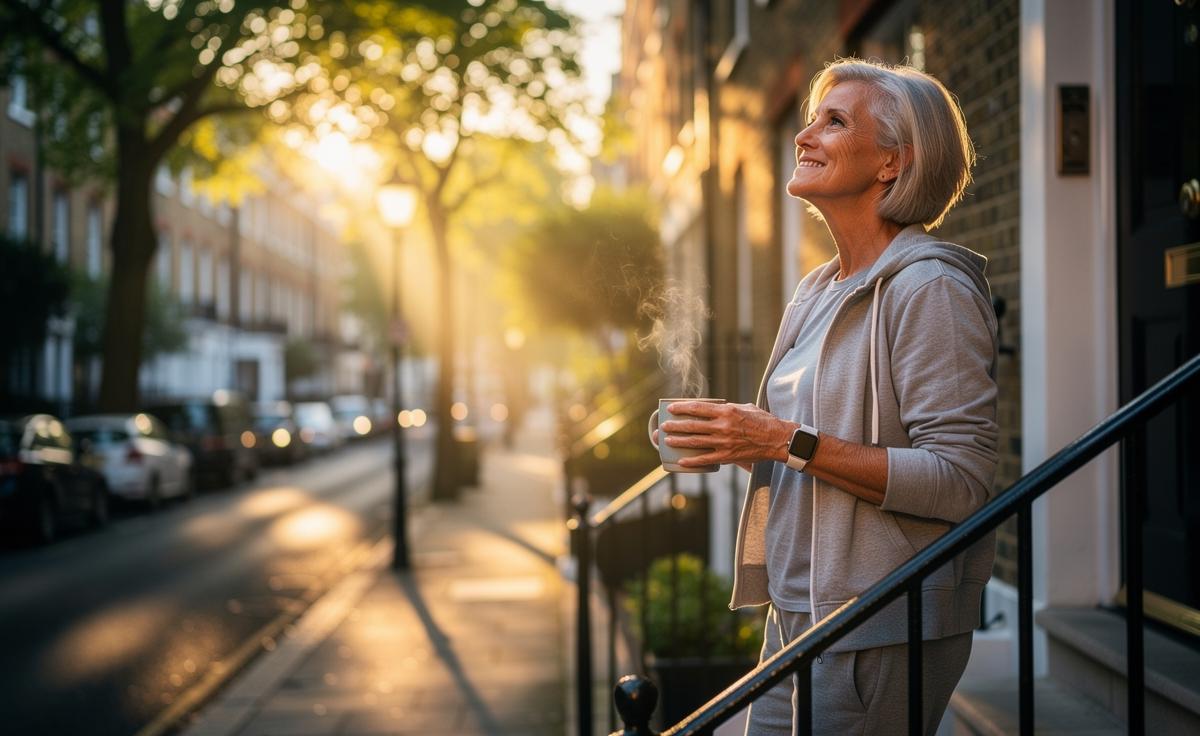
Think of this as a morning dose, not a workout. Within 30–120 minutes of waking, spend 20–30 minutes outdoors. Don’t stare at the sun; simply face the open sky. A brisk walk is ideal. On bright summer days, 5–10 minutes may suffice; on overcast winter mornings, aim for longer. Indoors behind glass doesn’t cut it—the light intensity drops dramatically. If you wear sunglasses, choose lighter tints during this window or go without briefly, unless medically advised otherwise. Consistency beats perfection; three to five days a week already helps.
Stack benefits sensibly. Try a short walk, hydrate, and consider a protein-rich breakfast to stabilise energy. Avoid intense late-night light, which pushes the clock the wrong way. If you can’t get outside, a certified 10,000-lux light box used on a side angle (never directly into your eyes) for 20–30 minutes after waking is a fallback—check with a clinician first if you have eye conditions or take photosensitising medications.
| Step | Timing | Duration | Notes |
|---|---|---|---|
| Get outside | Within 30–120 minutes of waking | 20–30 minutes (longer if cloudy) | Face the sky; don’t stare at the sun |
| Move gently | During exposure | 10–30 minutes | Walk or cycle; boosts alertness |
| Light hygiene | Evening | 2–3 hours pre-bed | Dim screens; warm light to protect melatonin |
Who Should Be Careful and What We Still Don’t Know
This habit is safe for most, but not everyone should dive in. If you have retinal disease, glaucoma, severe migraines, bipolar disorder, or take medications that increase light sensitivity, seek medical advice before using bright light therapy or extending exposure. For shift workers or those at high latitudes in winter, achieving consistent morning daylight is tricky. A clinically approved light box can help, yet clinical supervision matters. Skin protection still applies: use shade or hats as appropriate; you’re after light to the eyes, not sunburn. Never look directly at the sun.
Uncertainty remains. Observational studies can’t fully untangle whether people who choose earlier light also enjoy healthier routines, stronger social rhythms, or socioeconomic advantages that reduce risk. Genetics shapes chronotype, too; not everyone can become a lark. And while mechanistic evidence linking circadian alignment to healthy ageing is robust, direct trials testing morning light against hard longevity outcomes don’t exist. That said, the risk–benefit calculus favours trying it: it’s free, quick, and often immediately noticeable in sleep timing and morning energy. As public-health nudges go, this one is refreshingly actionable.
In the end, the “simple morning trick” is simply light, timed to meet our biology. It steadies the body’s clocks, which in turn steadies daily life. The pathway to longer, healthier years likely runs through better sleep, calmer metabolism, and less inflammation; morning light nudges all three in the right direction. Small habits, repeated, compound powerfully over time. Will you test it yourself—twenty minutes outside after waking for the next two weeks—and see whether your nights deepen, your mornings sharpen, and your days feel more aligned?
Did you like it?4.5/5 (29)