In a nutshell
- 🧠 Poor indoor air affects more than lungs—scientists link PM2.5, VOCs, and NO₂ to reduced cognitive performance, disrupted sleep, and raised blood pressure.
- 🏠 Hidden culprits in UK homes include gas hobs, frying and toasting, fragranced cleaners, new furnishings, and mould from damp—each small source adds up.
- 🔬 CO₂ isn’t toxic at typical levels but signals stale air that often co-exists with other pollutants, correlating with drowsiness and poorer decision-making.
- 🛠️ Practical fixes: run extractor hoods, use pan lids, choose low‑VOC products, keep humidity at 40–60%, vacuum with HEPA, and adopt a shoes-off policy.
- 🌬️ Prioritise ventilation—open windows or create cross-breezes during pollution peaks; consider HEPA purifiers and induction hobs when upgrading.
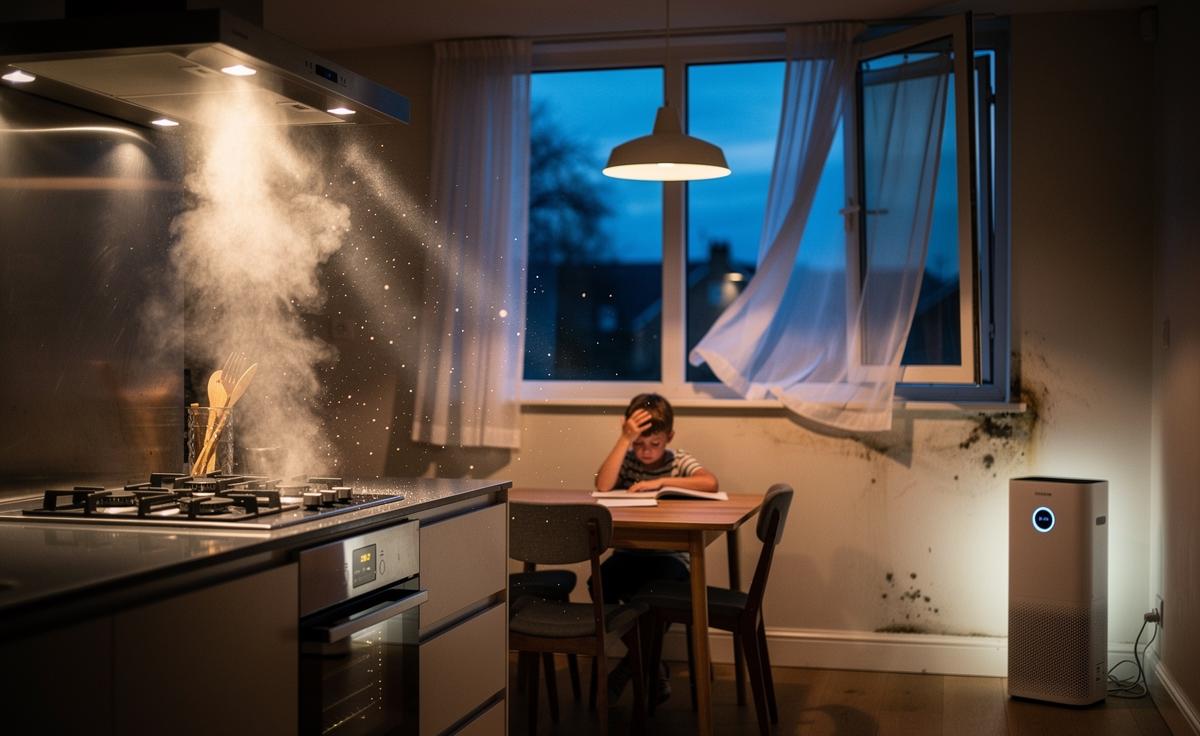
Most of us think of smog as an outdoor story, yet the true drama unfolds behind our front doors. Scientists now say the air inside UK homes can be two to five times more polluted than outside, even on a grey London day. That matters. We spend close to 90% of our time indoors, breathing a complex cocktail from cooking, cleaning, furniture, and damp. The surprising bit isn’t just about coughs or itchy eyes. It’s about brain fog, disrupted sleep, blood pressure, and immune resilience. What you breathe in your kitchen this evening can shape how clearly you think tomorrow morning. Here’s what the research reveals—and the simple steps that make the biggest difference.
What Scientists Now Know About Indoor Air
Indoor air is not empty space; it’s an active mixture of tiny particles and gases. Researchers track PM2.5 (fine particulate matter), VOCs (volatile organic compounds), nitrogen dioxide (NO₂), ozone, and mould spores. Cooking on gas hobs, pan-frying, scented candles, spray cleaners, and damp corners all contribute. The health story has widened beyond the lungs. Studies link poor indoor air to impaired cognitive performance, slower decision-making, headaches, and lower productivity. Children are particularly sensitive; so are older adults and those with asthma or heart disease.
Here’s the twist that surprises many: CO₂ build-up from occupied rooms isn’t toxic at household levels, but it signals stale air, often co-existing with other pollutants that affect alertness. Elevated indoor PM2.5 and VOCs can nudge up blood pressure and trigger inflammatory responses. Nighttime matters too. Pollutants and excess humidity can inflame airways, fragment sleep, and exacerbate snoring, creating a loop of daytime fatigue and irritability. Clean, well-ventilated rooms are not just nicer to be in—they’re a quiet foundation for sharper thinking and steadier mood. That is the “surprising way” indoor air exerts its influence: it tunes the body’s background settings, often invisibly.
The Hidden Culprits in Your Home
The usual suspects sound homely: frying Sunday bacon, simmering curries, a winter’s evening candle, a spritz of bleach in the bathroom. Gas hobs emit NO₂; toasting and searing release ultrafine particles. Strongly fragranced cleaners and air fresheners add VOCs that can irritate airways. Damp walls host mould, whose spores and fragments are potent triggers for respiratory symptoms. Even newly purchased sofas or DIY projects can off-gas chemicals. Pets contribute dander; vacuuming can briefly resuspend dust. Each item seems trivial. Together, they add up.
Understanding the pattern helps. Peaks follow activities: cooking, showering, cleaning, lighting a candle. The solution is not panic. It’s timing and control—ventilate when you pollute, reduce sources where possible, and manage moisture. The table below outlines common indoor pollutants, where they come from, how they may affect you in the short term, and a quick fix you can use today.
| Pollutant | Main Source | Typical Effects | Quick Fix |
|---|---|---|---|
| PM2.5 | Frying, toasting, wood stoves | Irritated eyes/throat, reduced indoor clarity | Use extractor on high; lids; open window |
| NO₂ | Gas hobs, gas heaters | Airway irritation, asthma symptoms | Ventilation; consider induction when upgrading |
| VOCs | Cleaners, paints, air fresheners | Headache, dizziness, odours | Low-VOC products; switch to unscented |
| Mould spores | Damp and condensation | Sneezing, coughing, musty smell | Fix leaks; 40–60% humidity; HEPA vacuum |
| CO₂ (stale air marker) | People in closed rooms | Drowsiness, lower alertness | Open vents/windows; schedule fresh-air breaks |
Small shifts in daily habits cut the peaks that do the damage. Think of indoor air as a tide: the aim is to smooth the surges and keep a gentle flow.
Small Changes With Outsized Health Benefits
Start with ventilation. Use your cooker hood every time you cook, on high, and run it for 10–15 minutes after. If it recirculates, crack a window to create a cross-breeze; if it vents outside, keep filters clean. Put lids on pans, use back burners to align with the hood, and toast lightly. These tiny tweaks slash PM2.5 in minutes. In bathrooms, run extractor fans beyond the shower and dry tiles to reduce mould risk.
Target sources. Choose low-VOC paints and unscented cleaning products; microfibre cloth plus warm water handles much of the grime. Keep indoor humidity between 40–60% with a hygrometer; dehumidify if needed. Vacuum weekly with a HEPA machine, mop hard floors, and adopt a shoes-off rule to cut outdoor dust. For occupants with allergies or high roadside exposure, a room air purifier with a genuine HEPA filter helps—but ventilation nearly always beats gadgets for the first win. Finally, plan upgrades: when a hob or boiler reaches end-of-life, consider induction and high-efficiency heating. It’s practical, and often quieter.
Indoor air quality is a quiet health lever hiding in plain sight. The gains arrive not as drama, but as calmer mornings, clearer thinking, and fewer sniffles. Treat the kitchen like a gym for your lungs: warm up the extractor, keep form tight, cool down the room. Notice how your home smells after cooking, how your bedroom feels at 3 a.m., how you focus during calls. These are your instruments. What one change will you test this week to make the air you breathe a daily advantage rather than a hidden risk?
Did you like it?4.5/5 (29)