In a nutshell
- 🧪 The $1 citric acid hack acts as a powerful, near-odourless descaler that melts limescale and soap scum, delivering sparkling taps, kettles, and shower glass for pennies per bottle.
- 💧 It works by lowering pH and chelating calcium and magnesium, breaking down calcium carbonate and soap films; safe on stainless steel, glass, and ceramic, but avoid marble, limestone, travertine, concrete, and unsealed grout.
- 🛠️ Simple method: mix 1–2 tbsp citric acid per 500 ml warm water, apply for 3–10 minutes, wipe, and always rinse; use stronger soaks for kettle elements, showerheads, and aerators.
- ⚠️ Key safety rules: do not mix with bleach, label bottles clearly, wear gloves if sensitive, spot-test delicate finishes, and rinse between separate cleaning steps (e.g., degreasing, then descaling).
- 💷 Big savings and smart swaps: citric acid is far cheaper than branded descalers, shelf-stable, and eco-friendlier; lemon juice works in a pinch but is weaker—optional scent via essential oil only adds fragrance.
Britain loves a bargain, and this one costs less than a bus fare. Hidden in plain sight on the baking aisle or at the discount shop, a small sachet of citric acid—about $1—is quietly upending how we scrub taps, shine kettles, and revive shower screens. No influencer fluff. Just chemistry. In our tests, a single spoonful dissolved stubborn limescale, lifted soap scum, and neutralised odours with startling ease. The best part? It’s near-odourless, biodegradable, and simple to mix at home. A tiny cost, a big clean, and hardly any elbow grease. Here’s what the hack is, why it works, and how to deploy it safely across your home.
What Is the $1 Hack?
The headline star is humble citric acid powder, sold as a cooking ingredient and DIY descaler. Stir it into warm water and you’ve got a fast-acting, low-fuss cleaner that makes hard water deposits melt away. Think clouded glass shower doors, crusted kettle elements, dulled chrome, even iron steam vents. It’s the same core active you’ll find in many branded descalers—minus perfume, dyes, and a hefty price tag. One sachet can produce litres of effective cleaner for pennies per use, making it a rare case where the thrifty option outperforms the fancy bottle.
Unlike white vinegar, which many people endure for its sharp smell, citric acid is largely odourless and can be mixed more precisely. A common starting ratio is 1–2 tablespoons per 500 ml of warm water for everyday descaling. Need more bite? Increase the concentration slightly and allow longer contact time. It stores neatly in a labelled spray or squeeze bottle. For a kitchen that gleams and a bathroom that actually feels clean underfoot, this is the budget cleaner that overdelivers.
Why It Works: The Science
Hard water leaves mineral deposits—chiefly calcium carbonate—that cling to taps, tiles, and glass. Citric acid, a weak organic acid, lowers pH and chelates metal ions, meaning it binds to calcium and magnesium. That bond breaks the crust’s structure, letting deposits rinse away without aggressive scrubbing. Soap scum is often calcium-stearate, the stubborn film formed where soap meets hard water. By sequestering the calcium, citric acid undermines the glue, so the film slides off. This is targeted chemistry, not brute force.
It’s also gentle—within reason. On stainless steel, glass, ceramic, and many plastics, it cleans beautifully when applied and rinsed promptly. But acids and natural stone are a bad match. Marble, limestone, travertine, concrete, and unsealed grout can etch or dull. Prolonged contact may also tarnish some soft metals and plated finishes. The rule is simple: use on mineral build-up, not mineral-based surfaces. If unsure, spot-test in an inconspicuous corner and check the manufacturer’s care guide for fixtures and appliances.
Step-by-Step: Put the Hack to Work
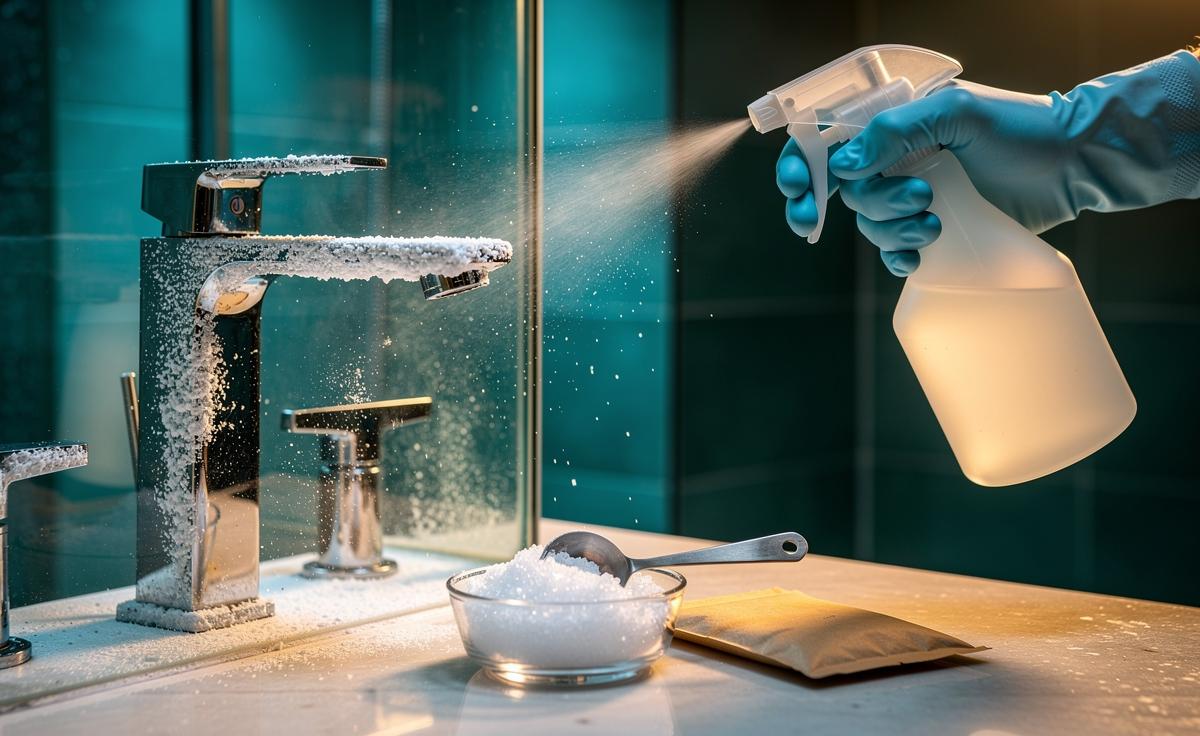
Start with a base mix: 1 tablespoon citric acid per 500 ml warm water in a spray bottle. For heavy scale, use 2 tablespoons. Wear gloves if your skin is sensitive. Mist onto the surface until damp, not drenched. Wait. On glass and taps, 3–5 minutes is often enough; for showerheads or kettle elements, soaking parts in a small bowl of stronger solution can be transformative. Wipe with a non-scratch pad, then rinse thoroughly. Always rinse—you’re dissolving minerals; flushing them away completes the job.
Crucial safety note: Do not mix with bleach. Acids react with hypochlorite to release toxic gas. Keep this cleaner separate, clearly labelled, and store out of children’s reach. For sequential cleaning—say, degrease with washing-up liquid first, then descale with citric—rinse between steps. If you’re treating fixtures with unknown finishes, shorten contact time and repeat rather than “going nuclear” in one pass. The solution also excels at deodorising bins and neutralising alkaline residues after grouting, again followed by a clean water rinse.
| Surface/Task | Mix Ratio | Contact Time | Notes |
|---|---|---|---|
| Kettle Descale | 2 tbsp/500 ml | 10–20 minutes | Heat to warm, not boiling; rinse twice |
| Shower Glass | 1–2 tbsp/500 ml | 5–10 minutes | Use non-scratch pad; squeegee after |
| Tap Aerators | 2 tbsp/300 ml (soak) | 15–30 minutes | Remove aerator; rinse and reassemble |
| Toilet Rim Jets | 2 tbsp/500 ml | 15 minutes | Apply under rim; never mix with bleach |
Costs, Caveats, and Smart Substitutions
At around $1 for a small packet (roughly 100 g), you’ll mix several litres of cleaner. That puts each 500 ml bottle at a few cents, versus pounds for branded descalers. It also streamlines the cupboard: one jar, many tasks. Small cost, big coverage. If you can’t find pure citric acid, bottled lemon juice works in a pinch, but it’s weaker and stickier. Buy the powder if you can; it’s predictable and shelf-stable. Store it dry, clearly labelled, and mix fresh solution every few weeks for best performance.
Mind the exceptions. Avoid marble, limestone, travertine, concrete, and unsealed grout. On aluminium and plated metals, use a mild dilution and very short contact times, then rinse thoroughly. For painted surfaces, test first. If you need degreasing power, pair citric acid with a separate washing-up liquid step—just never in the same bottle. Concerned about fragrance? Add a drop of essential oil to the cooled solution, though it’s cosmetic. The hero is the acid. It’s also kinder to the nose than vinegar and friendlier to waterways than many heavy-duty alternatives when used responsibly.
One ingredient, countless wins: the $1 citric acid hack turns cloudy glass clear, perks up tired taps, and rescues kettles without choking fumes or a bruising scrub. It’s tidy science meeting household reality. Label your bottle, respect the surfaces, and the results will speak for themselves. From flats with hard water to family homes battling bathroom build-up, this is the rare trick that just works. Where will you try it first—and what stubborn spot in your home are you daring this tiny powerhouse to conquer next?
Did you like it?4.5/5 (22)