In a nutshell
- 🧼 Use baking soda to absorb odours at the source, then add essential oils for a light, lasting scent without harsh chemicals.
- 🧪 Simple method: mix 200 g baking soda with 10–20 drops of oils, sieve for even texture, sprinkle lightly (1–2 tbsp/m²), leave 30–60 minutes, then vacuum in overlapping passes.
- 🌿 Choose oils by function: lemon for brightness, lavender for calm, eucalyptus for freshness, peppermint sparingly; keep dilutions modest and rooms ventilated, especially around pets and children.
- 🧵 Safety first: spot test delicate fibres (wool, silk), don’t wet the powder, handle spills before deodorising, and check underlay if odours persist.
- 🗓️ Routine matters: refresh high-traffic areas every two weeks, store blends sealed and dated, and schedule professional extraction once or twice a year for deep hygiene.
There’s a quiet domestic revolution going on underfoot. Households across the UK are ditching synthetic sprays in favour of pantry staples, led by the humble box of baking soda and a small dropper of essential oils. The promise is simple: fresher carpets, lighter air, and fewer ingredients you can’t pronounce. This method doesn’t mask odours; it tackles them where they linger. Results are quick. Costs are low. And the process is satisfying in that old-fashioned, practical way. With the right ratios, good technique, and a little patience, you can revive tired pile without introducing harsh chemicals into your home.
Why Baking Soda Is the Low-Tech Deodoriser Carpets Love
Call it bicarbonate of soda if you prefer, the science is the same. Baking soda is a mild alkali with a crystalline structure that traps odour molecules, especially those caused by acidic compounds from pets, cooking, or damp. It doesn’t perfume the smell away. It absorbs it. That distinction matters. Perfumes often fade fast; sorption keeps working while the powder sits in the fibres. Used correctly, it won’t bleach synthetic carpets, and it’s gentle on most backings.
Odours concentrate in high-traffic areas: hallways, by the sofa, under the desk. That’s where baking soda shines. Sprinkle, dwell, vacuum. The powder’s tiny particles sift down into the tufts and bind the whiff. When you add essential oils at safe, low dilutions, you layer in a clean scent that lingers after vacuuming without overwhelming the room. You also get subtle antimicrobial action from certain oils, though this is a bonus rather than the main event. The aim remains consistent: neutralise the source, then refresh the nose.
There are limits. Deep-set spills, smoke damage, or damp underlay require more than powder. Still, for routine maintenance and post-pet zoomies, bicarbonate is the most reliable, accessible tool you already own.
Step-by-Step: Make a Carpet Refresher With Essential Oils
Gather your kit: 200 g of baking soda, 10–20 drops total of essential oils, a clean jar with a lid, a small sieve, and a vacuum with a strong brush head or turbo tool. Always test in an inconspicuous corner first—especially on wool or silk—and check your carpet maker’s care guide.
Method that works: add the baking soda to the jar. Drip in your chosen oils—start low at 10 drops total for smaller rooms, up to 20 if your space is airy. Seal and shake briskly for 30 seconds. Break up any clumps with a spoon. Pass the blend through a sieve into a bowl to ensure an even, talc-like texture. This step prevents “hot spots” of oil, which can leave concentrated patches of scent.
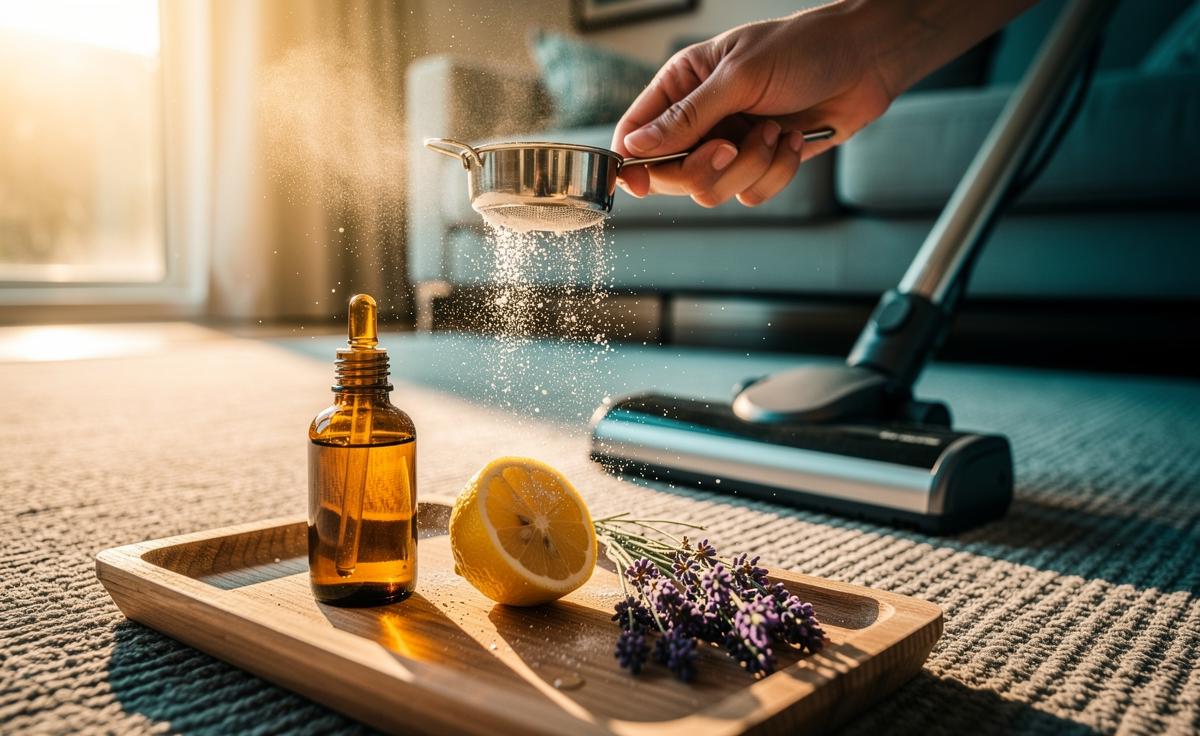
Application is simple. Lightly dust 1–2 tablespoons per square metre, focusing on traffic lanes. Don’t bury the fibres. A thin veil is enough. Leave it to work for 30–60 minutes; on stubborn smells, two hours. During dwell time, keep pets and children out. Vacuum slowly in overlapping passes, north–south then east–west, to lift both powder and odour. Replace bags or empty canisters promptly—what you remove should leave the house, not sit in your vacuum re-scenting the cupboard. If you detect residue, a second vacuum pass the next day finishes the job.
Choosing Oils: Aromas, Functions, and Safe Dilutions
The right oil turns basic deodorising into a signature scent ritual. Think mood and function. Lemon brightens. Lavender soothes. Eucalyptus radiata brings that crisp, after-rain freshness. Blends travel well through fibres, but restraint wins: heavy dosing can feel cloying and may bother sensitive noses. Keep it simple, two oils at most, and stick to the suggested ratios below.
| Essential Oil | Aroma Profile | Best For | Suggested Drops (per 200 g) | Safety Note |
|---|---|---|---|---|
| Lemon (expressed) | Bright, zesty | General freshness, cooking odours | 6–10 | May be phototoxic on skin; keep off hands and eyes |
| Lavender (true) | Floral, soft herbal | Bedrooms, calm spaces | 6–12 | Typically gentle; still ventilate well |
| Eucalyptus radiata | Crisp, camphoraceous | Musty rooms, winter air | 4–8 | Not for very young children’s rooms |
| Sweet orange | Juicy, cheerful | Living areas, quick resets | 8–12 | Can oxidise; use fresh oil |
| Peppermint | Cool, minty | High-traffic zones, alert feel | 2–6 | Strong; avoid around infants |
| Tea tree | Medicinal, clean | Pet areas (odour control) | 2–6 | Use cautiously around cats; ventilate |
Pets are sensitive to concentrated aromas. Keep treatment rooms well-ventilated and let the scent settle before re-entry. Avoid undiluted oil contact with paws or noses. Citrus oils are uplifting but can oxidise; buy in small bottles and store cool and dark. Preferable blends for most homes: lavender + lemon (bedrooms), orange + eucalyptus (living room), or a sparing peppermint solo for a brisk hallway refresh.
Safety, Stains, and Troubleshooting: Getting Results Without Risk
Baking soda is a deodoriser, not a stain remover. Spills first, powder later. Blot liquids promptly with white towels, working from the edges inward. Once dry, the deodorising blend can address lingering odour. Never add water to the baking soda on the carpet—moisture plus powder can cake inside the pile and be hard to extract.
Material matters. On wool, reduce dwell time and dose. On silk or viscose, skip powders altogether and consult a professional. Loop-pile carpets hold granules more stubbornly; use the sieve for extra-fine dispersion and vacuum meticulously. If you own a bagless vacuum, wipe the canister after emptying so residual scent doesn’t accumulate. For persistent pet smells, repeat the treatment a day later and consider lifting the underlay corner to check for historical seepage; odour from below will keep returning.
Storage and routine bring consistency. Keep your pre-mixed jar sealed and label the blend and date. Refresh the jar monthly to prevent oil oxidation. As a rule of thumb, lightly refresh every two weeks in busy spaces, monthly elsewhere, and schedule a professional hot-water extraction once or twice a year. If anyone at home has scent sensitivities, halve the drops or run baking soda alone—still effective, just quieter on the nose.
This simple pairing—baking soda and thoughtfully chosen essential oils—delivers a crisp, clean underfoot experience without leaning on propellants or mystery solvents. It’s frugal, adaptable, and easy to weave into weekend chores. The house smells like itself, just tidier. And there’s satisfaction in seeing the vacuum pull away that fine dust, knowing it’s taking the odour with it. Ready to try your first blend, or will you design a signature scent that changes with the seasons?
Did you like it?4.2/5 (21)