In a nutshell
- ❄️ The science: Ice adds thermal mass and a latent heat buffer, reducing temperature swings and compressor cycling, helping stabilise the freezer’s climate and smoothing energy use.
- ⚡ Efficiency and noise: A steadier load can mean quieter nights and fewer power peaks; not a bill-halver, but a meaningful smoothing effect in busy households.
- 🛡️ Food safety and resilience: More consistent cold limits partial thaw; ice doubles as an emergency backup in outages—move bottles to the fridge to protect perishables and medication.
- 🧊 How to do it right: Use plastic bottles/boxes filled to 80–90%, avoid glass, position ice at the sides/back, and keep vents clear for airflow; rotate, rinse, and label “fridge rescue.”
- 🧺 Everyday convenience: Turn bottles into reusable cold packs for lunches and shopping; boil water for clearer cubes and build small habits that make the hack stick.
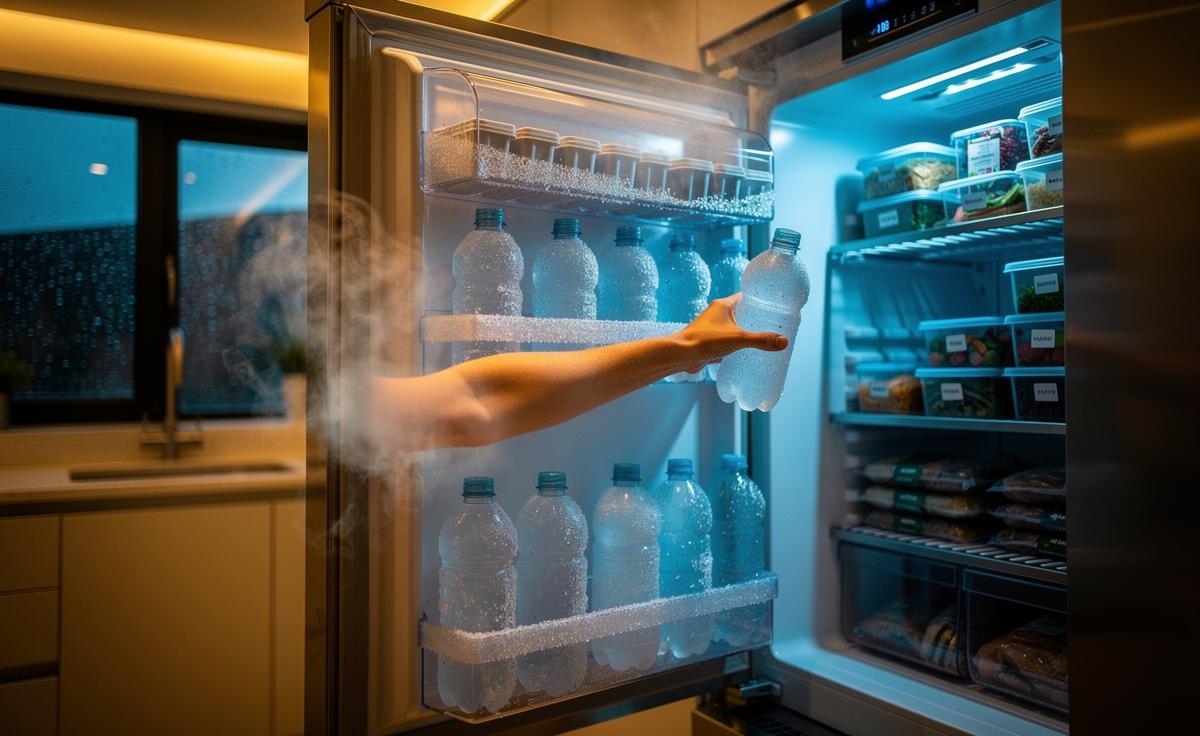
Across Britain’s kitchens, a quiet domestic revolution has begun. Families are slipping plastic bottles and trays of frozen water into every spare corner of the freezer. It sounds daft at first, a fad born on social media. Yet the logic is striking. Ice adds thermal stability, helps keep food safer for longer and can even trim energy use. Parents talk about calmer appliances, fewer food scares and an emergency reserve when the lights go out. This is no gimmick; it’s a practical response to higher energy costs and unpredictable weather. We looked into the science, the day-to-day payoffs and the best way to do it without losing precious space for Sunday’s leftovers.
The Science Behind Ice-Filled Freezers
Your freezer works hardest when temperatures swing. Every time the door opens, warm air rushes in and the unit has to pull heat back out. Fill some of that space with ice and you add thermal mass, which resists rapid temperature change. The real star is latent heat: water absorbs a lot of energy when melting. That energy buffer smooths temperature spikes and can cut the frequency of compressor cycling. Stable temperatures mean less strain on the motor and fewer costly peaks in power draw. In a well-organised freezer, that stability can translate to subtle but meaningful energy savings over time.
There’s physics at play you can feel. Open the door, count to five, close it, and the temperature inside rebounds faster if it’s packed with ice blocks rather than pockets of air. Air is a poor heat sink. Ice is excellent. While results vary by appliance model and household habits, families report quieter nights as compressors chug less and freezers recover faster after the kids go grazing. It won’t halve your bill, but it can smooth the ride, which matters in shared homes where the door opens often. Think of ice as a shock absorber for your fridge-freezer’s climate.
Everyday Payoffs: Freshness, Safety, and Emergency Readiness
Food safety hinges on consistent cold. Chilled items should stay below around 5°C, while frozen foods thrive well below zero. When a freezer is partly empty, temperature swings creep in, raising the risk of softening ice cream, icy fish, and the dreaded partial thaw. Blocks of ice reduce fluctuation, keeping frozen goods properly frozen and making “use by” margins less nerve-racking. Stable cold buys time and confidence for busy households. There’s also practicality. Pop an ice bottle into a cool bag for school lunches or a park picnic; it’s a reusable cold pack you already own.
Then there’s resilience. Storms, local outages, or grid hiccups can happen without warning. A freezer lined with ice holds cold longer, slowing thaw and giving you hours—sometimes a day or more—before food is at risk. In a pinch, you can move a couple of bottles into the fridge to protect dairy and leftovers. Households storing temperature-sensitive medication gain added peace of mind. No drama, no rush to cook everything at once. Just a built-in reserve.
| Benefit | How Ice Helps |
|---|---|
| Energy Smoothing | Thermal mass reduces compressor cycling and peaks. |
| Food Safety | More stable temperatures limit partial thaw and refreeze. |
| Emergency Backup | Iced bottles keep freezers and fridges cold during outages. |
| Everyday Convenience | Reusable cold packs for lunch boxes and shopping runs. |
| Noise Reduction | Fewer start–stop cycles mean a quieter appliance. |
How to Do It Right Without Wasting Space
Strategy matters. Use plastic bottles or food-safe boxes filled to about 80–90% to allow for expansion as water freezes. Avoid glass; it can crack. Stash bottles upright in door racks or along the sides, and drop stackable ice blocks into spare gaps. Leave a hand’s width around vents so air can circulate. Overpacking smothers airflow and makes the motor work harder. Keep everyday items front and centre, ice towards the back or base where the cold is deepest. When space is tight after a big shop, simply lift out a bottle or two; flexibility is the point.
Think hygiene. Use tap water, but rinse containers periodically and rotate your ice so it doesn’t absorb freezer odours. If your freezer smells, a small open box of bicarbonate of soda can help. Label a couple of bottles “fridge rescue” so everyone knows which to move during a power cut. For ice taste in drinks, boil and cool water before freezing to reduce cloudiness. And choose sizes that fit your life: one-litre bottles for door shelves, slim bricks for drawers, a tray of cubes for quick chilling. Small, repeatable habits turn this hack into a household standard. Done right, you’ll keep cold steadier without surrendering precious space for meals and batch cooking.
The surprise is how ordinary ice solves several modern headaches in one go. Lower stress on the appliance, tighter food safety margins, a built-in cushion when the grid hiccups, and a stash of instant cold for days out. It’s thrifty, reversible, and cleverly simple. Ice is the quiet workhorse of a steadier kitchen. Will this catch on beyond the early adopters? It’s already happening, drawer by drawer, bottle by bottle. If you tried it for a month—tracked noise, food quality, and convenience—what would you notice first, and what clever twist would your household add to make it your own?
Did you like it?4.4/5 (26)