In a nutshell
- 🍋🧪 Odour science: bacteria metabolise sweat and skin debris; lemon’s citric acid lowers pH to hinder growth, while baking soda dries the interior and adsorbs volatiles — the winning combo is acidity + dryness.
- 🧰 Recipe and method: make a dry sachet per shoe with baking soda 2 tbsp + citric acid 1 tsp + dried lemon peel 1 tsp (optional 2–3 drops lemon oil); place overnight (8–12 h), and use paste only on removable, colourfast insoles.
- 🧠 Safe use and care: be gentle with leather/suede (sachets only), rotate shoes, air briefly in sunlight, refresh sachets monthly, and store the blend airtight; back it up with hygiene — hot-washed socks and timely insole replacement.
- 🛠️ Troubleshooting and notes: for stubborn smells add activated charcoal, dry soaked shoes before treatment, and replace entrenched insoles; the dry mix limits neutralisation and activates with humidity; skip if there’s mould, fungal issues, or delicate heritage leather.
- 🌍 Payoffs: a budget-friendly, planet-friendly fix that avoids aerosols and harsh fragrances, quietly resetting footwear between wears — a small habit with a big freshness payoff.
There’s a simple trick for shoes that smell like they’ve done a marathon without you. Harness a kitchen duo: lemon and baking soda. One brings acidity, the other gentle alkalinity and moisture control. Together, they tackle the bacterial brew that turns clean sweat into a sour fug. You get science, not perfume; a fix, not a mask. It’s budget-friendly, fast, and kinder to the planet than throwaway spray cans. Keep the method dry, measured, and material-safe, and your trainers, brogues, or boots will thank you. Below, the chemistry, the recipe, and the pitfalls to dodge.
Why Acidity Beats Shoe Odor
Sweat itself is mostly water and salt. Harmless. The smell stems from odour-causing bacteria digesting sweat and skin debris, releasing volatile fatty acids, amines, and sulfur compounds. Enter lemon. Its citric acid drops the local pH, nudging that micro-ecosystem away from the range bacteria prefer. Break the conditions, blunt the stink. Those bright citrus oils add a clean top note while the acid quietly does the heavy lifting.
Sodium bicarbonate (baking soda) complements this by absorbing moisture — the fuel for bacterial growth — and adsorbing some volatile molecules. Deodorising isn’t about dousing; it’s about changing the environment inside the shoe. Dry shoes smell less because bacteria struggle when water is scarce. Acidity lowers activity, dryness starves the culprits, and gentle abrasion from fine powder disrupts residue film where microbes cling.
One caution: mix too much liquid lemon with bicarbonate and you trigger fizzing, rapid neutralisation, and a damp mess that can mark insoles. The smart move is a dry lemon-bicarbonate blend in a breathable sachet. It leverages acidity when there’s slight moisture present, without soaking materials. Simple, tidy, effective.
The Lemon and Baking Soda Deodorizer Recipe
This recipe is engineered for overnight freshness without wetting the interior. It’s a sachet-based system that lets the chemistry work quietly while you sleep. Do not pour liquid lemon juice straight into shoes; moisture can stain leather, weaken adhesives, and feed new bacteria. Instead, use a dry blend that activates mildly in response to residual humidity inside the shoe.
| Ingredient | Amount (per shoe) | Function | Notes |
|---|---|---|---|
| Baking soda (sodium bicarbonate) | 2 tbsp | Moisture and odour adsorption | Food-grade; fine grain works best |
| Citric acid powder | 1 tsp | pH control, odour neutralisation | Sold for jam-making; avoid large doses |
| Dried lemon peel or zest | 1 tsp | Fragrance, mild acidity | Completely dry to avoid clumping |
| Optional: lemon essential oil | 2–3 drops | Fresh scent | Keep away from pets; avoid overuse |
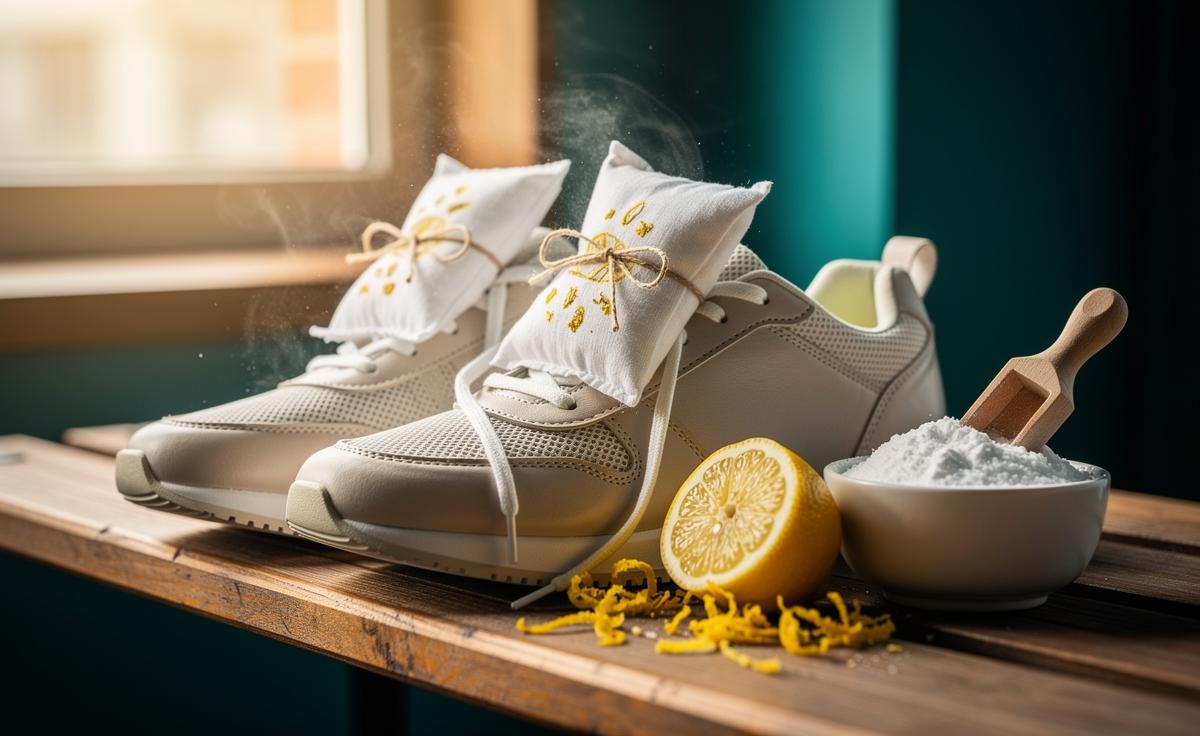
Method: Mix the powders thoroughly, stir in the dried peel, then add essential oil if using and blend again. Spoon into two breathable cotton bags, coffee filters, or clean socks tied off. Pop one sachet into each shoe after wear. Leave 8–12 hours. Tap out any loose dust before wearing. For removable insoles, treat them separately for faster results.
Want a targeted clean for stubborn spots? Make a quick paste (1 tbsp bicarbonate, 1 tsp lemon juice, a drip of water). Apply only to removable, colourfast insoles for five minutes, then wipe and dry thoroughly. Skip this on leather or suede; the dry sachet is gentler and safer.
How to Use It Safely and Effectively
Consistency wins. After each long wear, insert the sachets. Alternate shoes to extend their life and freshness. The powder pulls moisture, the acid knocks back microbe activity, and the lemon aroma signals clean. Replace sachet contents monthly or sooner if they cake or lose scent. For fabric trainers, you can also air them in a sunny spot for a short spell; UV light helps, and warmth speeds drying.
Material matters. For smooth leather, never rub acidic pastes directly on the lining; instead, keep the blend contained in its bag. With suede or nubuck, use only the sachets and brush the nap gently after airing. Dyed interiors can be sensitive; test on a hidden area if you ever consider pastes. Store any spare blend in an airtight jar, away from humidity and heat, to preserve the citric acid and keep the bicarbonate free-flowing.
Finally, think hygiene. Wash socks hot. Rotate pairs. Trim insoles that are beyond saving and replace them. Freshness is cumulative: clean feet, dry shoes, smart chemistry.
Troubleshooting, Science Notes, and When to Skip
No joy after two nights? Increase contact time to 24 hours and refresh the powder. Consider adding a teaspoon of activated charcoal to each sachet for stubborn odours; it broadens adsorption of volatile compounds. If shoes are soaked with sweat from sport, dry them first with newspaper or a fan before deploying sachets — chemistry can’t outpace puddles. Persistent vinegar-like or cheesy notes usually signal entrenched bacteria in the insole foam; replace the insole for a step-change.
Science footnote: acid and base neutralise. So why combine them? In a dry state, reactions are limited; the blend waits for ambient humidity. That slight moisture triggers a gentle, localised reaction producing CO₂ that can lift residues while still lowering microbe-friendly pH zones. Meanwhile, the bicarbonate continues to adsorb moisture and some odours. Balance matters, hence the modest citric acid dose.
Skip this method if there’s visible mould, a suspected fungal infection, or delicate heritage leather. In those cases, clean professionally or use manufacturer-approved products. If your feet itch, peel, or crack, treat the cause first — deodorising alone won’t solve a skin condition. For everyday funk, though, this lemon-bicarb duo earns its keep.
Shoe odour doesn’t need aerosols or gimmicks. It needs drier interiors, a nudge in pH, and a clean citrus note that signals fresh rather than fake. The lemon and baking soda deodoriser hits all three, cheaply and with a little chemistry on your side. Keep the blend dry, bagged, and refreshed, and it will quietly reset your footwear between wears. Small habit, big payoff. What tweaks will you try first — a charcoal-boosted sachet, a longer overnight treatment, or a full insole refresh to pair with your new routine?
Did you like it?4.7/5 (25)