In a nutshell
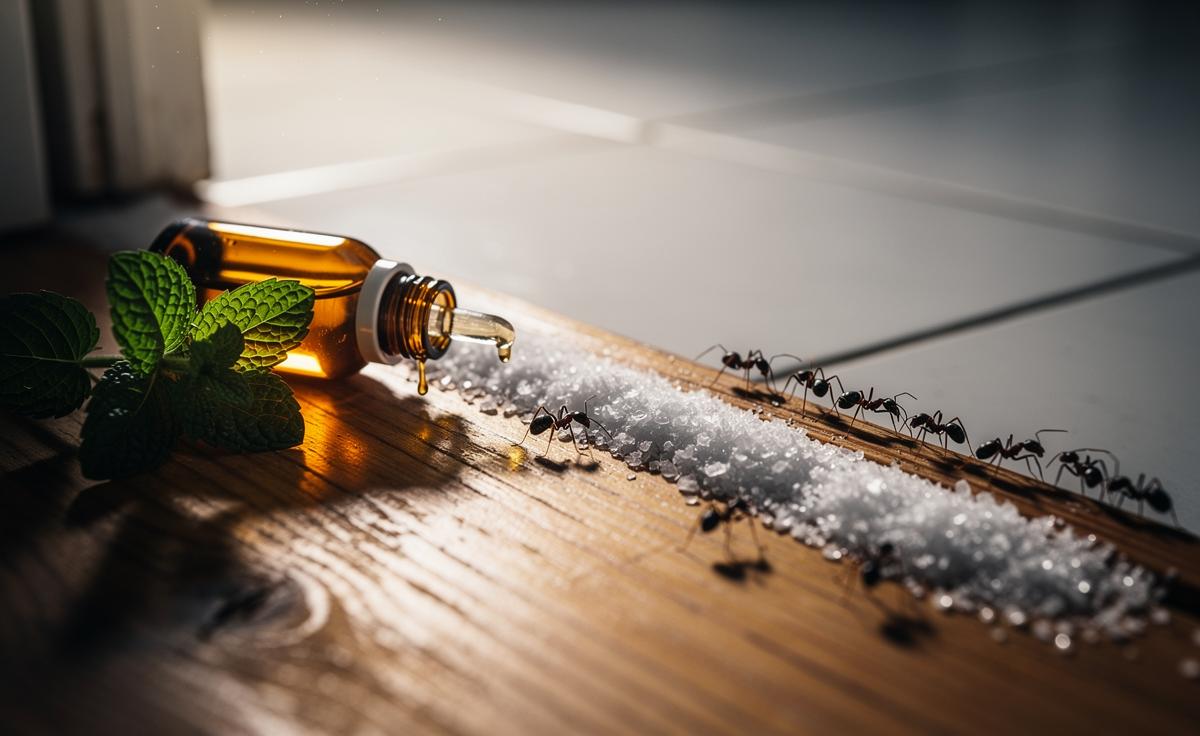
- 🐜 Peppermint oil masks ants’ pheromone trails while salt leaves a desiccating film—together forming an invisible behavioural barrier that disrupts scouting and entry.
- 🍃 Simple recipe: 500 ml water + 1–2 tsp salt + 10–20 drops peppermint essential oil + a few drops washing-up liquid; shake well, patch test, and reapply regularly.
- 💧 Targeted application: light spray lines along thresholds, skirting boards, and windowsills; try a thin dry salt ridge misted with peppermint; keep lines narrow and avoid saturating surfaces.
- ⚠️ Safety first: essential oils are potent—avoid skin/eye contact, ventilate, and keep from children; protect pets (especially cats, birds, and fish), and patch test on stone or unsealed wood.
- 🧰 Limits and escalation: this repels, it doesn’t kill; pair with hygiene and gap sealing, use targeted baits for nests, and seek professional help for persistent or structural infestations.
For homeowners weary of sugar trails and tiny invaders, a simple cupboard fix has surprising clout: a blend of salt and peppermint oil. This humble pairing doesn’t poison. It deters. Fast. The salt lays down a drying, gritty film that ants avoid; the peppermint throws a pungent aromatic shield across their pheromone highways. Combined, they create an “invisible barrier” at skirting boards, door thresholds, and windowsills, turning entry points into no-go zones. It’s cheap, low-tech, and satisfying. Not a miracle. Yet remarkably effective when applied with care and topped up regularly. For many kitchens and garden rooms, this is the first line of defence that actually sticks.
Why Salt and Peppermint Repel Ants
Ants navigate by pheromone trails. Disrupt the scent, and the column scatters. Peppermint oil, rich in menthol and related compounds, overwhelms the ants’ chemoreceptors and masks those signals. Think of it as noise drowning out a radio station. Strong, minty noise. Ants hesitate, circle, then retreat. It looks almost theatrical. The effect is not drama. It’s sensory overload.
Salt contributes in quieter ways. Dissolved and dried on a surface, it leaves microcrystals that create a harsh, desiccating texture. Some species treat saline zones like hot gravel. Others will cross, but only reluctantly, diverting just enough to miss your worktop sugar bowl. The clever bit is synergy: the scent cloud keeps scouts off-course while the saline film makes each attempted crossing unpleasant.
There’s a practical bonus. Salt helps the solution dry into a thin residue that persists after the peppermint’s initial blast has faded. It isn’t a pesticide and won’t wipe out a nest. Instead, it’s a behavioural barrier that buys you time to clean, seal gaps, and store food tightly—key steps that make the detour permanent rather than temporary.
Mixing the Solution and Where to Use It
The recipe is simple and forgiving. For a 500 ml trigger spray, dissolve 1–2 teaspoons (5–10 g) of table salt in warm water. Add 10–20 drops of peppermint essential oil (roughly 0.2–0.4% dilution), plus a tiny dash of washing-up liquid to help the oil disperse. Shake hard. Test on an inconspicuous patch. Spray light, even lines where ants march or enter—thresholds, the underside of windowsills, the back edge of worktops. Reapply every few days or after mopping.
| Component | Ratio/Quantity | Purpose | Best Locations |
|---|---|---|---|
| Water | 500 ml | Carrier for even coverage | General surfaces |
| Salt | 1–2 tsp (5–10 g) | Desiccating film and texture | Thresholds, skirting boards |
| Peppermint oil | 10–20 drops | Scent barrier to mask trails | Entry points, trails |
| Washing-up liquid | 3–4 drops | Emulsifier for oil | In the mix, not direct |
Prefer a dry line? Sprinkle a thin, tidy ridge of fine salt where the plinth meets the floor, then mist with peppermint spray to bind it. It looks almost invisible on light flooring. Keep applications narrow and targeted—more is not better, and saturation can stain some finishes. Outdoors, focus on doorsteps and the base of doorframes, not flowerbeds; salt can scorch plants and soil life. Wipe and refresh after rain.
Safety, Limitations, and When to Escalate
Used sensibly, this is a low-risk household remedy. Still, observe a few rules. Essential oils are potent; avoid direct contact with skin and eyes. Store the bottle out of children’s reach. Do not spray onto polished stone, unsealed wood, or delicate varnish without a patch test. On natural stone, skip the detergent and use a cloth dampened lightly with the solution to control contact.
Pets matter. Cats can be sensitive to essential oils; never mist near food bowls, bedding, or litter trays. Birds dislike strong volatiles. Ventilate, apply sparingly, and let surfaces dry before letting animals back in. If you keep fish tanks, cover them during application. The smell disperses quickly in a well-aired room, but the scent barrier remains detectable to ants longer than to humans.
Results vary by species and severity. Heavy summer influx? Pair the barrier with hygiene tactics: swift crumb control, sealed bins, dry sinks at night. Seal cracks with decorator’s caulk. If you find winged ants or persistent ingress from a single spot, consider a protein or sugar-based bait away from the kitchen, following label instructions. The spray repels; baits eliminate. When the aim is eradication rather than deflection, professional advice is sensible—especially around electrics and structural voids.
Done well, the salt-and-peppermint routine turns a fraught morning—ants parading past the kettle—into a non-event. It’s inexpensive, quick to mix, and adaptable to most surfaces with a light touch. Not a silver bullet, yet a genuinely practical fix that nudges behaviour and buys you calm while you tidy, seal, and plan longer-term control. If you try it this week, where will you draw your first “invisible barrier”, and what changes in traffic will you look for over the next few days?
Did you like it?4.5/5 (30)