In a nutshell
- 🚗 Prioritise tyres and handling: choose all-season or winter rubber, maintain correct pressures, rotate regularly, and check suspension and alignment for stable grip in volatile conditions.
- 🛢️ Manage critical fluids: use the right engine oil viscosity, test coolant, refresh brake fluid, and keep proper screenwash to protect performance from freeze, heat, and heavy rain.
- 🔋 Safeguard electrics: load‑test the 12V battery, confirm alternator health, and for EVs enable preconditioning; service air-conditioning and replace the cabin filter for clearer demisting.
- 👀 Boost visibility: fit fresh wiper blades, apply a hydrophobic coating, clean lenses, set correct headlight aim, and use dipped beams and fog lights appropriately.
- 🧰 Be weather‑ready: carry an emergency kit (torch, high‑vis, blanket, power bank, first‑aid), treat door seals, clear drains, and confirm comprehensive breakdown cover.
The British weather is on a tear. One week it’s balmy, the next it’s sleeting sideways, and summer heat now arrives in abrupt, dehydrating bursts. That volatility punishes vehicles. Tyres harden, batteries struggle, seals shrink, and drivers are left firefighting problems that could have been pre‑empted. Preparation beats reaction every single time. This season, think holistically: grip, fluids, visibility, electrics, and emergency readiness. A few smart checks and small upgrades will transform how your car copes with extremes, from saturated motorways to heat‑baked city streets. Below is a practical, UK‑focused guide to keep you moving smoothly, safely, and confidently when the climate won’t sit still.
Seasonal Tyre Strategy and Suspension Checks
Your tyres are your only contact with the road. Everything else is secondary when the surface turns slick or scorching. Prioritise tread and compound. In the UK, all‑season tyres offer balanced performance as temperatures swing; if you regularly see snow or rural ice, consider a dedicated set of winter tyres. Heat changes pressure and carcass behaviour, so check tyre pressure monthly and before long trips. Aim for the manufacturer’s recommended PSI when the tyres are cold. Under‑inflation invites aquaplaning; over‑inflation reduces the contact patch and can lengthen braking distances on wet tarmac. Don’t forget your spare or repair kit—dead weight until the worst day of your year.
Grip is a system, not a single component. Worn shock absorbers and tired bushes limit stability in crosswinds and on rutted, waterlogged roads. Ask a trusted garage to inspect for leaks, uneven tyre wear, and sloppy steering response; that often flags poor alignment. Wheel alignment corrects pull in gusty conditions and sharpens turn‑in during sudden downpour evasions. Rotate tyres front to rear every 6,000–8,000 miles to even out wear. If you tow or carry heavy loads, recalibrate pressures accordingly. In volatile weather, stable contact is your safety net, so maintain the whole chain: rubber, geometry, and damping.
Fluids, Battery Health, and Climate Management
Rapid shifts in temperature stress every fluid in your car. Use manufacturer‑approved engine oil with the correct viscosity—thinner oils help cold starts, but hot days demand shear stability. Check coolant concentration for freeze and boil‑over protection, and ensure the radiator is free of debris. Top up screenwash with a proper additive; plain water encourages algae and freezes easily. Brake performance depends on uncontaminated brake fluid; moisture ingress lowers boiling point and can trigger fade after long descents. Fluids are cheap insurance against failures that strand you at the worst moment. For diesels and direct‑injection petrols, follow schedules for fuel‑system cleaners and particulate filter regeneration.
| System | What to Check | Seasonal Note |
|---|---|---|
| Engine Oil | Level on level ground; correct viscosity | Cold starts vs. hot‑weather shear stability |
| Coolant/Antifreeze | Strength with tester; leaks and hose condition | Freeze and boil protection during swings |
| Screenwash | Fill with proper additive | Bug splatter in heat; de‑icing in cold snaps |
| Brake Fluid | Age and moisture content | Replace typically every 2 years |
Electrics dislike extremes. Test the 12V battery load capacity; weak units fail after cold nights and heatwaves alike. Clean terminals and ensure the alternator is charging correctly. For EVs and plug‑in hybrids, enable battery preconditioning and cabin pre‑heat/cool while plugged in to protect range and comfort. Replace the cabin (pollen) filter to improve demisting and reduce allergens during gusty, pollen‑rich spells. Finally, verify the air‑conditioning system’s refrigerant level and condenser condition; it demists in winter as effectively as it cools in summer.
Visibility, Seals, and Emergency Readiness
See and be seen. Replace streaking wiper blades, clean the screen inside and out, and apply a hydrophobic coating that beads rain for clearer motorway vision. Check headlight aim after carrying loads and clean lenses to restore output. On misty mornings, use the rear demister early to prevent heavy condensation; if demist is slow, the cabin filter or heater flap may be at fault. Good visibility buys time, and time prevents collisions. Don’t drive on sidelights in downpours—use dipped beams so others actually see you. If fitted, ensure fog lights work and know when to use them legally.
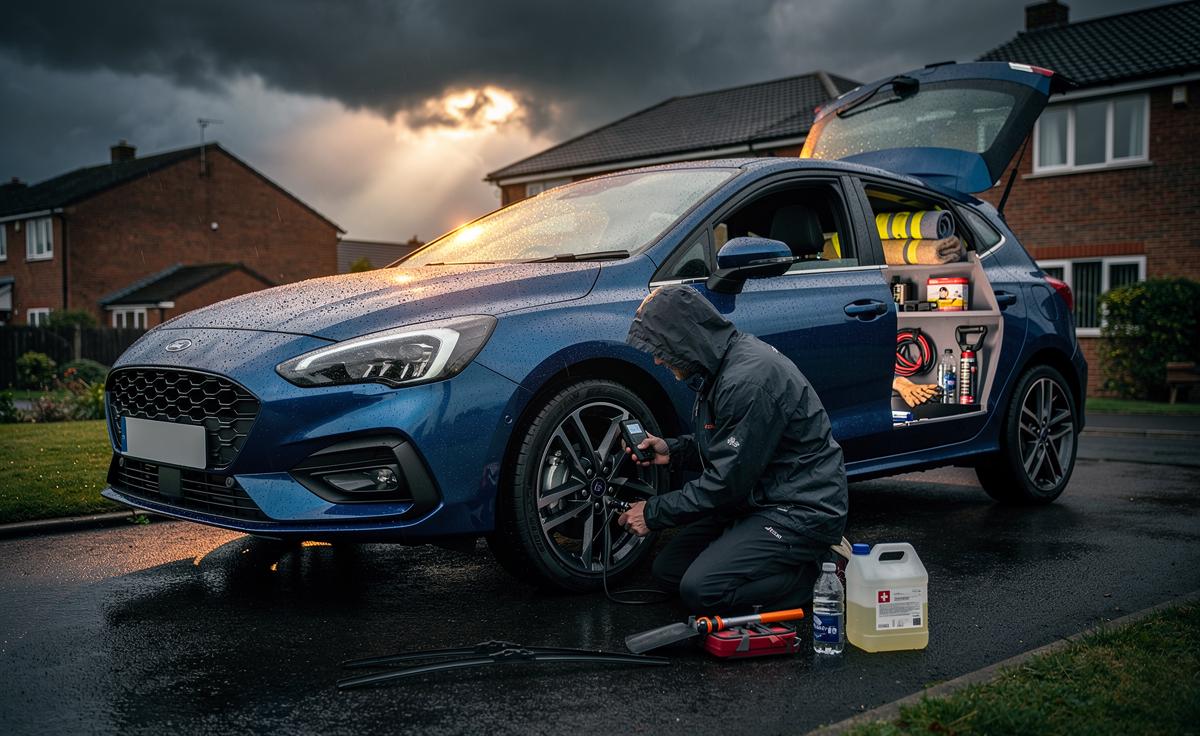
Weatherproof the shell. Treat door and window seals with silicone to resist shrinkage and stop wind whistle. Clear scuttle drains to prevent water ingress into the cabin or ECU area. Lubricate locks before frost arrives. Build an emergency kit: torch, reflective triangle, high‑vis vest, blanket, gloves, phone power bank, first‑aid kit, and a compact shovel if you travel rural routes. Include non‑perishable snacks and water. Keep a can of tyre sealant if you don’t carry a spare, and learn how to use it. A small boot kit turns a crisis into a delay. Confirm you have breakdown cover that includes home start and severe‑weather assistance.
Climate volatility is now the baseline, not the exception. Treat your car like a system, tune each link—tyres, fluids, electrics, visibility, and preparedness—and you’ll feel the difference on the first wet‑dry‑windy commute. Schedule checks to the forecast, not just the calendar. Keep a simple log so small issues don’t compound. Prepared drivers stay mobile when conditions turn against everyone else. What will you adjust this week—rubber, fluids, or visibility—to make your next weather swing feel routine rather than risky?
Did you like it?4.5/5 (21)