In a nutshell
- 🧠 Hidden biological triggers: check for thyroid issues, iron deficiency, perimenopause, blood sugar swings, and medication side effects with your GP.
- 💡 Lifestyle and environment: reduce blue light at night, manage caffeine/alcohol, flatten glucose spikes with protein and fibre, and seek morning daylight.
- 🧩 Psychological patterns: spot perfectionism, reassurance seeking, and intolerance of uncertainty; use exposure and acceptance skills to retrain the threat response.
- 🏃 Actionable week plan: morning light and movement, a caffeine curfew, a daily downshift breath practice, and a scheduled “worry window.”
- 🤝 Support routes: consider NHS Talking Therapies, pharmacist medication reviews, and social accountability to sustain small, compounding changes.
Anxiety rarely arrives wearing a name badge. It creeps in through side doors—biology, habits, even the built environment—until life feels constantly on edge. In the UK, we often chalk it up to work stress or family pressures, yet hidden drivers frequently keep the worry cycle spinning. When the cause is concealed, the cure looks elusive. The good news: patterns exist, and they can be tested, tracked, and gently changed. Here’s a clear look at overlooked factors, from hormones and sleep to phones and food, with practical actions you can try this week. Not a miracle plan. A realistic audit of what’s quietly winding your nervous system too tight.
Hidden Biological Triggers You Might Miss
Some anxiety has a body-first origin, not a mind-first one. Thyroid shifts can feel like panic. Iron deficiency can mimic agitation and breathlessness. Perimenopause often brings night surges of adrenaline that masquerade as worry. Even common medications—decongestants, steroids, stimulants—can amp the system. If your anxiety is new, severe, or inexplicable, rule out medical causes with your GP. Then there’s the quiet disruptor list: blood sugar swings, sleep apnoea, long Covid, and a gut microbiome rattled by antibiotics or ultra-processed diets. These don’t “explain away” anxiety. They add fuel.
| Hidden Cause | Typical Clues | What You Can Do |
|---|---|---|
| Thyroid imbalance | Palpitations, heat/cold intolerance | Ask GP for TSH/FT4 tests |
| Iron deficiency | Fatigue, breathlessness, brittle nails | Check ferritin; discuss supplements |
| Perimenopause | Night sweats, cycle changes, mood spikes | Discuss HRT options and sleep support |
| Blood sugar swings | Shakiness, “hangry”, mid-morning crash | Prioritise protein and fibre at meals |
| Caffeine/alcohol rebound | Jitters or 3 a.m. wake-ups | Time caffeine earlier; reduce drinking |
Small corrections can shift the baseline. A caffeine curfew at midday. A ferritin test if you’re depleted. Treating snoring or possible apnoea if mornings feel like jet lag. None of this replaces therapy; it steadies the platform therapy stands on. The nervous system is not a floating mind—it’s physiology all the way down.
Lifestyle and Environment That Quietly Stoke Anxiety
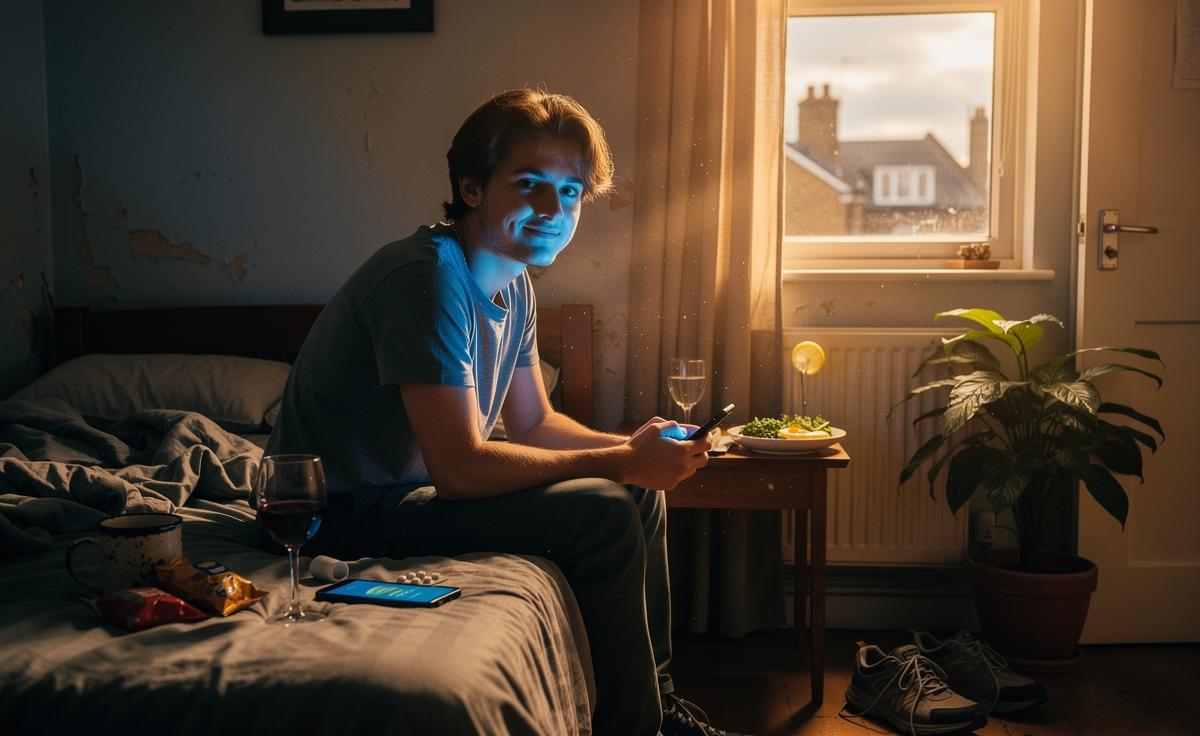
Modern life hums at unsafe volumes. Blue light late at night tells the brain it’s noon, blunting melatonin and raising night-time cortisol. Constant notifications yank attention like a fire alarm. Processed foods spike and crash blood glucose, then your body floods with stress chemistry to compensate. Add commuter noise, cramped housing, and patchy daylight in winter, and you’ve built a perfect storm for hypervigilance. Much of what looks like a mindset problem is actually a nervous system overwhelmed by signals it never asked for.
Make your environment quieter than your thoughts. A simple rule: light in the morning, dark at night. Ten minutes of natural light within an hour of waking pays off at bedtime. Keep screens low and warm after 9 p.m. Try a nightly “digital dusk” box—phones parked, alarms set elsewhere. Shift meals towards protein, fibre, and slow carbs to flatten the glucose rollercoaster. Walk more; even brief brisk bouts reduce baseline arousal. Plants and fresh air help if you work from home; a window opened on the quarter-hour changes the room’s chemistry and your mood.
The result isn’t bliss. It’s bandwidth. With fewer ambient threats, your body stops scanning every shadow. Decisions feel easier, disagreements less explosive. You haven’t toughened up; you’ve turned down the noise. And that makes true resilience possible.
Psychological Patterns That Fly Under the Radar
Anxiety often hides inside admirable traits. Perfectionism looks like diligence. People-pleasing looks like kindness. Over-control looks like responsibility. But the engine beneath is fear: if I relax, something bad happens. Safety behaviours—checking, reassurance seeking, avoidance—solve today’s worry and cement tomorrow’s. The brain learns, unhelpfully, that anxiety prevented disaster, so it dials up the alarm next time.
Watch for tiny tells. You reread emails five times. You delay decisions until the “right feeling” arrives. You ask partners to confirm, again, that everything’s fine. These moves soothe in the moment and stretch the problem over weeks. There’s also an invisible driver: intolerance of uncertainty. Life refuses to guarantee outcomes, but we keep pounding the door for promises. Therapy modalities like CBT teach exposure to uncertainty; acceptance-based approaches teach willingness to carry it without compulsions.
Start gently. Choose one “micro-uncertainty” per day—send the email with one reread, leave a minor message unanswered, make a small purchase without exhaustive reviews. Your brain records the outcome: nothing burned down. Over time, your threat thermometer recalibrates. You feel less tossed by waves because you practised standing in small ones.
What You Can Do This Week
Think audit, not overhaul. Day one: list potential physiological suspects. New meds? More coffee? Heavy periods hinting at low iron? Book a GP chat about TSH, ferritin, B12, and vitamin D if symptoms fit. Day two: morning light, movement, protein-rich breakfast. Even 12 minutes of brisk walking counts. Day three: set a caffeine cut-off by noon and commit to alcohol-free weekdays. The compound effect of tiny changes beats the fantasy of total reinvention.
Daily, practise one nervous-system downshift. Try the 4:6 breath—inhale four seconds, exhale six—for three minutes. Or the “physiological sigh”: two short inhales, one long sighing exhale, repeated 3–5 times. Bank wind-down cues: warm light, paper book, predictable bedtime, cool room. For the mind, schedule a 15-minute “worry window” and redirect concerns there; this stops worry from annexing your day. Jot a three-line plan for any solvable problem; park unsolvables until the window.
Finally, widen support. Speak with your GP about NHS Talking Therapies, peer groups, or perimenopause clinics if relevant. Ask a pharmacist to review side effects. Recruit a friend for evening walks. It’s not weakness to seek help—it’s strategy. You’re not starting from scratch; you’re starting from data.
Anxiety is rarely one thing. It’s a stack of frictions—some biological, some behavioural, some born of the modern world—pressing on the same alarm. When you test assumptions and tweak inputs, the alarm quietens. What follows isn’t perfection, but margin: room to think, room to laugh, room to choose something other than fear. If you mapped your week’s likely hidden triggers—light, food, sleep, beliefs—where would you experiment first, and what small test could you run tomorrow morning?
Did you like it?4.6/5 (27)